

Why Choose a Portable Fuel Dispenser Company for On-Site Refueling?
2026-10-03
Every minute an excavator idles waiting for fuel is money burned. On-site refueling should be simple, but the wrong dispenser turns it into a daily headache. BEILIN has spent years engineering portable fuel dispensers that handle real-world conditions—dust, rough terrain, and tight schedules. Yet many buyers still overlook critical differences in metering accuracy, hose durability, and safety shutoffs. In this post, we break down why choosing a specialized portable fuel dispenser company matters more than you think.
Why On-Site Fueling Beats the Wait at the Depot
Every minute a truck spends driving back to a central depot for fuel is a minute it isn't earning. On-site fueling removes that deadhead trip entirely. A fuel truck comes to your yard, job site, or fleet parking area and tops off vehicles while they sit idle between shifts. Operators keep their keys, crews stay on task, and the equipment is ready to roll when the next job starts. No lines, no wait time, no unnecessary mileage.
The quiet advantage shows up in your labor costs and daily schedule. Drivers don't clock extra time just to reach a pump, and dispatchers don't have to juggle fuel stops around peak traffic. With on-site service, you can schedule top-offs after hours or before sunrise, so the fleet moves at full capacity from the first minute of the day. What used to be a 30-minute detour becomes a zero-minute interruption.
Portable Dispensers Built for Rough Terrain and Tight Spaces
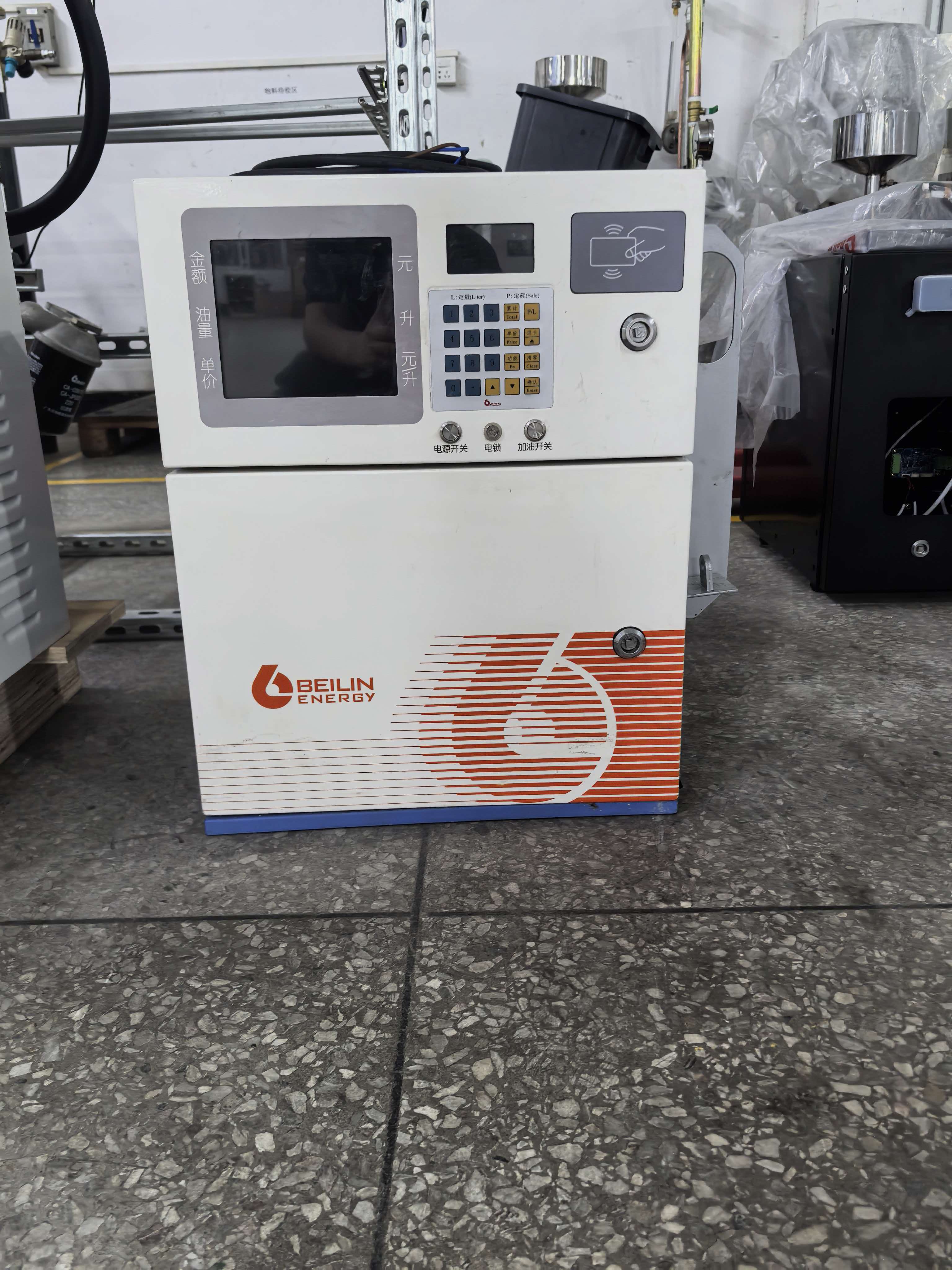
The housing uses a ribbed polycarbonate shell that shrugs off scrapes from loose gravel and keeps internal components aligned even after a day of bouncing across rutted access roads. Four oversized rubber feet with deep treads bite into soft ground, while the low-slung weight distribution prevents the unit from tipping when the terrain suddenly shifts.
A tapered profile and recessed carry handles let these dispensers slide into gaps barely wider than a standard hard hat. The fill port sits on the side rather than the top, so you can reload without pulling the whole unit out from under a pipe rack or crawl space. Quick-release mounting brackets snap onto scaffold poles, door frames, or uneven rock faces without needing a flat surface.
Crews working in trenches, narrow mechanical rooms, or on sloped embankments can station a dispenser right where it's needed instead of hiking back to a central supply point. The sealed lid keeps out dust and splashing water, and the internal pump primes in any orientation, so a unit lying on its side still delivers a steady stream of soap, sanitizer, or cleaning solution.
Metering Accuracy That Protects Your Fuel Budget
Fuel costs don't vanish quietly—they leak through gaps in measurement you never see. Every drop that passes unrecorded is money pulled straight from your operating margin. Accurate metering isn't just a technical detail; it's the difference between a budget that holds and one that unravels before quarter-end. When your flow data reflects reality, you stop guessing and start controlling where every litre goes.
Think of your fuel system as a pipeline of small decisions: when to refill, how much to store, which equipment runs lean. Bad readings distort those decisions. A meter that drifts by a few percent can quietly shift thousands of dollars over a year. The solution isn't just a better sensor—it's a metering strategy that treats accuracy as a cost-saving tool, not a compliance checkbox. That means regular calibration, smart data capture, and hardware designed to stay honest under pressure, temperature swings, and dirty fuel.
The real protection comes when accuracy feeds your planning. You spot abnormal consumption before it becomes a pattern. You invoice with confidence. You negotiate supplier contracts from a position of verified usage. In the end, a fuel budget isn't protected by luck or rough estimates—it's protected by meters that tell the truth, every single day.
Compliance Without the Paperwork: Automated Reporting
Regulatory audits used to mean weeks of chasing down signatures, collating spreadsheets, and praying nothing got lost in an email thread. Modern automated reporting flips that script entirely. Instead of manually assembling evidence, your systems quietly log every relevant action in real time — access changes, data transfers, approval chains — and turn them into ready-to-submit reports the moment an auditor asks. The result is not just faster turnaround, but a level of accuracy that handwritten processes can’t touch.
The real shift is in how teams experience compliance day to day. No more setting calendar reminders to run a monthly checklist or dreading the quarterly review. Automated workflows embed compliance checks directly into ordinary operations, so every transaction is already documented before anyone thinks to ask. When a regulator requests proof, the system serves up a clean, timestamped trail in minutes — not days. That frees compliance officers from being full-time paper pushers and lets them focus on actually improving controls instead of just proving they exist.
Of course, none of this means you can ignore the rules. The point is that automation removes the friction between doing the right thing and showing you did it. By treating reporting as a byproduct of daily activity rather than a separate chore, organizations stay audit-ready without burning out their staff or padding their budgets with overtime. It’s compliance that feels invisible — until the moment you need it, and then it’s simply there.
Emergency Response Fueling When Every Hour Counts
In a crisis, fuel isn't just a commodity—it's the difference between a delayed response and a saved life. Emergency vehicles, backup generators, and field hospitals all depend on a steady, immediate supply of diesel or gasoline. A fueling partner that understands this pressure won't keep you waiting on hold or buried in paperwork; they'll have trucks pre-staged, drivers on call, and contingency routes mapped before the first alarm even sounds.
The real test comes when infrastructure fails. Hurricanes knock out power, floods wash away roads, and wildfires force evacuations along unpredictable paths. Your fuel provider should be able to deliver to sites that aren't on any standard map—using off-road capable tankers, mobile pumps, and direct-to-equipment refueling. That kind of readiness isn't built overnight; it comes from working with teams who've managed federal disaster responses and large-scale blackouts.
Time lost searching for fuel is time stolen from the mission. Whether you're coordinating ambulances across a metro area or keeping a rural clinic's generator running through a winter storm, every hour counts. Choose a supplier that treats your emergency as their own, with 24/7 dispatch, on-site safety briefings, and fuel quality checks that prevent clogged filters or water contamination. The point isn't just to deliver liquid—it's to remove one more variable from an already chaotic day.
Scaling Up: From One Machine to a Full Fleet
When you first bring a single machine online, it’s straightforward: you log in, tweak settings, and watch the logs. But the moment you move to a handful—then dozens—of machines, that manual process collapses under its own weight. Scaling up means accepting that you can’t treat each unit as a pet; they become cattle. Automation moves from a nice-to-have to the backbone of your operation. Scripts that once handled one-off tasks now need to run reliably across the entire fleet, and configuration drift becomes a daily enemy.
A fleet also forces you to rethink communication. Each machine must report its health, receive job assignments, and ship back results without you babysitting every connection. Lightweight protocols or existing messaging systems often fit better than bespoke RPC calls. Task distribution isn’t just about spreading load—it’s about building in redundancy so that when one node goes down, others absorb the work without a user ever noticing. This shift from direct control to orchestration is where many scaling efforts stumble.
Observability changes shape too. On a single box, tailing a log file works fine; across a hundred, you need centralized logging that can correlate events across machines and detect patterns before they become outages. Monitoring moves from “is it up?” to “is it behaving normally?”—a much harder question. And don’t forget configuration: without a source of truth like infrastructure-as-code, you’ll end up with a fleet where no two machines are identical, making debugging a nightmare.
FAQ
Instead of pulling equipment off a job site for refueling, a portable unit lets operators top off machines during shift breaks or scheduled pauses. The meters often include automatic temperature compensation and air eliminators, so you get consistent flow rates and accurate billing without waiting in line. For a mining or earthmoving crew, that can mean an extra 40–60 minutes of productive work per vehicle each day.
A dependable provider will review your fuel types, flow rate requirements, and site conditions before recommending a configuration. They should also offer modular options like hose reels, filtration stages, and data capture for fuel reconciliation. If they only sell you a pump and a meter without asking about your fueling points or expected throughput, you are likely to get a generic setup that underperforms.
Some units are designed for dedicated fuel only, while others feature separate compartments or quick-switch manifolds with clear labeling. The best practice is to request separate hoses and nozzles for each fuel type and ask about internal dead space. A company experienced with mixed-fleet operations will help you avoid expensive misfuelling incidents rather than simply saying their unit is compatible with everything.
Look for emergency shutoffs, breakaway couplings, static grounding reels, and overflow prevention valves. In hazardous areas, the electrical components should match ATEX or IECEx zone ratings. A good supplier will also provide flame arrestors and pressure relief vents as standard, not as costly add-ons, and will walk your team through a site-specific risk assessment before installation.
Modern units can integrate with fleet management software through Bluetooth or cellular modules, recording every transaction by vehicle ID, operator, and timestamp. Pulse outputs and RS-485 ports are common on mid-range models, allowing you to export data for invoicing or usage analysis. The difference is whether the company configures the data fields to match your existing workflow or forces you to adopt their proprietary dashboard.
Yes, but not all units are built the same. In sub-zero conditions, you need heated enclosures, cold-rated seals, and fuel lines that resist cracking. At high altitude, vapor lock can be an issue, so a unit with a lower net positive suction head requirement and a vapor recovery option performs better. Ask the company for references from similar environments instead of relying on generic operating temperature ranges.
Expect routine filter changes, meter calibration checks, and inspection of hoses and seals every 250–500 operating hours. A reliable company will supply a maintenance kit with part numbers, provide remote diagnostics for error codes, and offer on-site training for your technicians. Avoid suppliers that only offer a one-year warranty and no clear spare parts lead times; that usually signals poor after-sales support.
Leasing spreads the initial cost and often includes maintenance, but you may pay more over three to five years if your fuel volumes are high. Buying makes sense when you refuel more than 1,500 gallons per week or need a custom setup for multiple job sites. A transparent company will show you a break-even calculation based on your actual consumption patterns rather than pushing one option.
Conclusion
Choosing a portable fuel dispenser company isn’t just about buying equipment—it’s about removing the hidden costs of sending vehicles and crews back to a central depot. On-site fueling keeps machines working through shift changes, eliminating idle time and unnecessary road miles. The dispensers themselves are engineered for the real conditions many job sites present: uneven ground, narrow access lanes, and tight working radii. They don’t demand a concrete pad or a dedicated fueling island. Metering accuracy also matters more than most operators expect. A poorly calibrated pump can quietly waste hundreds of gallons a month, while a quality portable unit logs each delivery to the tenth of a gallon, so fuel budgets stay predictable and disputes disappear.
Compliance becomes far less painful because automated reporting captures every transaction without a clipboard or a manual spreadsheet. That audit trail is ready when inspectors or finance teams ask for it. In emergencies—storms, grid failures, or sudden equipment breakdowns—a dedicated portable fueling partner can have a unit on site within hours, keeping generators and critical machinery running when every hour counts. And if the operation grows, the same provider can add dispensers without ripping up existing infrastructure. Starting with one machine and scaling to a full fleet feels like a natural progression rather than a major project. The result is a fueling setup that adapts to the job, not the other way around.
Contact Us
Contact Person: Jason
Email: [email protected]
Tel/WhatsApp: 8615876017548
Website: https://www.bei-lin.com/