

White Label FWA Solution: Empower Your Network with Seamless Fixed Wireless Access
2026-05-14
In the race to deliver high-speed connectivity, Fixed Wireless Access (FWA) is no longer just an alternative—it’s becoming the backbone of next-gen networks. But deploying a robust FWA service from scratch can be daunting. Enter IPLOOK's White Label FWA Solution: a ready-to-launch platform that lets you offer seamless fixed wireless access under your own brand, accelerating your time-to-market without compromising on quality or control.
Turbocharge Your Brand with a Ready-to-Deploy Wireless Edge
Launching a wireless edge solution from scratch can drain your resources—months of development, specialized talent, and testing across fragmented ecosystems. A ready-to-deploy alternative flips that script. You’re not building infrastructure; you’re skipping straight to execution. It’s wired for agility, designed to slip into your existing stack without forcing a forklift upgrade.
Think of it as the secret weapon for brands that need speed without compromise. Pre-integrated with multi-access connectivity, security baked in at the hardware level, and orchestration that doesn’t require a PhD to manage. You gain the kind of low-latency responsiveness that makes real-time applications sing—whether it’s immersive retail, smart logistics, or factory-floor automation. No more wrestling with compatibility quirks or waiting on carrier roadmaps.
What really sets a ready-made edge apart is how it reshapes your ROI timeline. Instead of bleeding cash into R&D, you’re matching your investment to immediate value. It’s the difference between betting on a prototype and deploying a market-proven engine. Your brand hits the ground running, with a wireless edge that’s less about theoretical potential and more about tangible momentum.
Why White-Label FWA Beats Building from Scratch
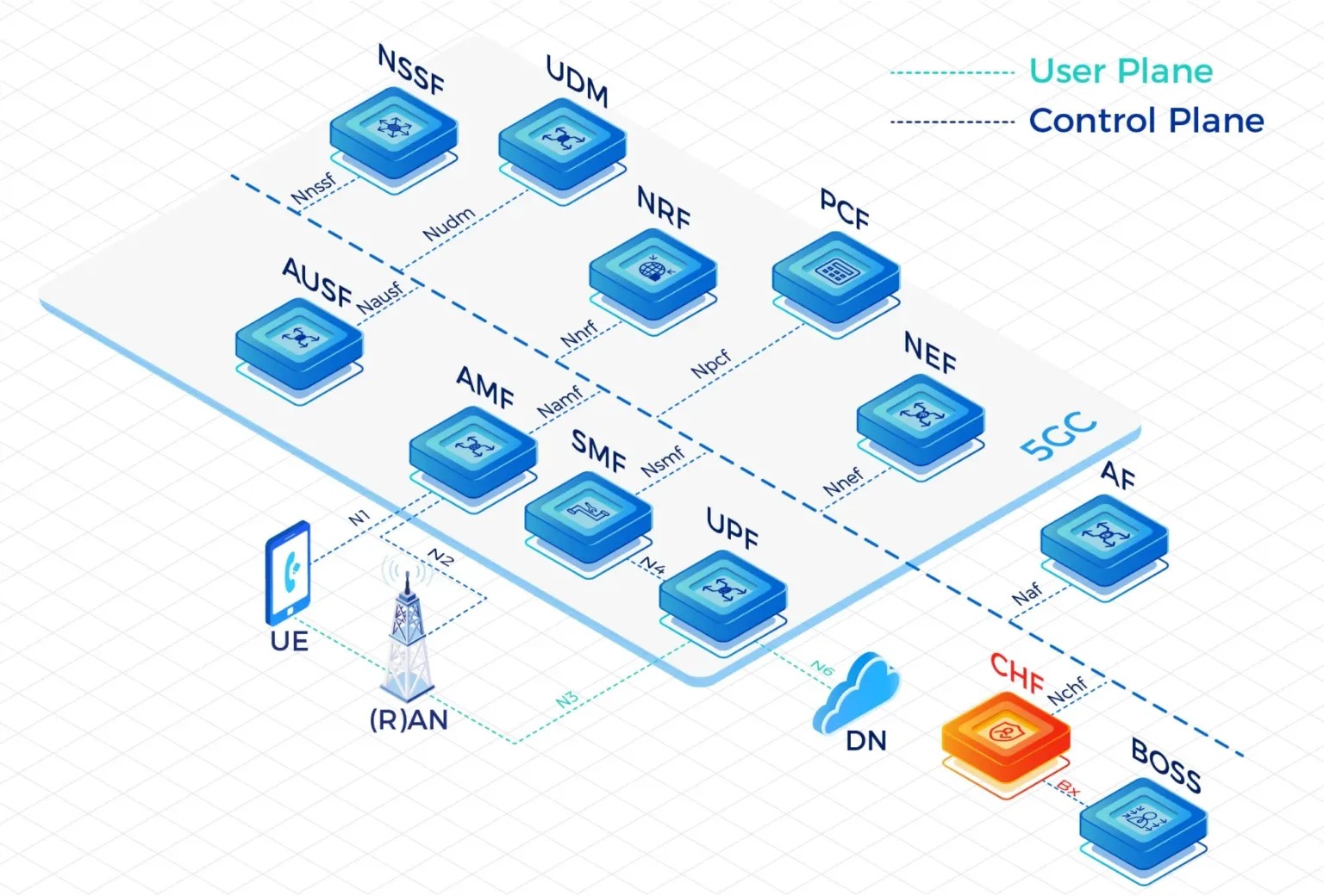
Building a fixed wireless access platform from the ground up often sounds ambitious, but the reality is a brutal drain on time and engineering resources. You’re not just coding a few features—you’re wrestling with hardware compatibility, firmware quirks, and real-world signal behavior that no lab can fully replicate. Most teams discover halfway through that their initial timeline was laughably optimistic, and by then they’re already deep into debugging things like beamforming algorithms and interference mitigation that carrier-grade systems have refined over years.
White-label FWA flips the script. Instead of spending twelve to eighteen months reinventing the wheel, you get a hardened solution with the bugs already shaken out. The underlying tech has been deployed across dozens of networks, meaning the weird edge cases—like handoff drops at cell edges or traffic spikes during firmware updates—are handled from day one. You still get to layer your own branding, tweak the portal, and adjust throttling policies, but you skip the part where you accidentally brick a bunch of customer premises equipment during a mass rollout.
The market doesn’t wait for perfect engineering. ISPs that cobble together homegrown platforms often find themselves losing ground to competitors who went live six months earlier with a white-label package that simply works. That early mover advantage compounds fast, especially in underserved areas where being first to deliver reliable broadband locks in loyalty before anyone else shows up. White-label isn’t about cutting corners—it’s about pulling a mature toolkit off the shelf so your team can focus on coverage, support, and the stuff that actually makes subscribers stick around.
Plug-and-Play Integration That Feels Native
Once you plug in the module, it instantly mirrors your current system's visual rhythm. There’s no awkward adjustment period—the fonts, spacing, and interaction patterns simply fall in line. It's like adding a new room to a house that already matches the paint, flooring, and light switches without anyone needing to redecorate.
Under the hood, the integration borrows your existing authentication flows, error-handling logic, and keyboard shortcuts. Users won't see a foreign login screen or encounter alien toast messages. Everything behaves as if it was built by the same team, leaving your product's personality untouched.
Even power users notice the difference. Context menus, drag-and-drop behaviors, and loading states all inherit the platform’s quirks—right down to the animation curves. The toolset doesn't scream for attention; it quietly extends what you already have, making the upgrade feel more like a natural evolution than a third-party attachment.
How Seamless Connectivity Transforms User Loyalty
When everything just works together, it’s hard to imagine switching to another brand. This kind of effortless experience builds a sense of reliability that goes beyond simple satisfaction. You don’t need to hunt for settings or jump through hoops—things happen the way you expect them to, and that predictability nurtures loyalty over time.
It’s about creating a rhythm in daily life. When devices, apps, and services connect without friction, they start to feel less like tools and more like natural extensions of your habits. Checking your schedule, streaming music, or getting directions becomes so deeply integrated that any alternative seems jarring by comparison.
This subtle stickiness is hard to replicate with features alone. A competitor might offer a similar product, but if moving to it means disrupting that seamless flow, users will likely stay put. True loyalty isn’t bought by discounts—it’s earned by consistently making life feel a little more fluid, every single day.
Slash Time-to-Market Without Sacrificing Quality
Shipping fast isn’t about skipping steps—it’s about eliminating waste. The teams that move quickest have usually obsessed over trimming anything that doesn’t directly validate a customer need. Instead of building exhaustive specs upfront, they sketch a lightweight prototype and get it in front of real users within days. The feedback loop becomes the quality check: you catch misfires before they harden into months of wasted code. Speed and polish aren’t enemies; they just demand a different rhythm of iteration.
Automation is the quiet engine here. When repetitive tests, builds, and deploys run without human intervention, your engineers stop babysitting pipelines and start improving the product. But the real edge comes from treating automation as a living system—regularly pruning flaky tests, refining heuristics, and making sure the fast lane stays paved. A lean, reliable CI/CD setup doesn’t just squash bugs early; it gives everyone the confidence to release on a Friday afternoon without holding their breath.
Culture fixes the rest. When “quality” means shared ownership rather than a gatekeeping QA phase, everyone starts thinking about edge cases while they code. Pairing juniors with seniors, holding blameless post-mortems, and celebrating quick rollbacks as much as successful launches—these signals compound. They tell the organization that moving fast and staying reliable aren’t trade-offs; they’re the same muscle, strengthened by trust and clear-eyed pragmatism.
The Future of Fixed Wireless, Wrapped in Your Identity
Imagine a world where your home internet isn’t just a utility, but an extension of who you are. Fixed wireless access is evolving beyond speed and latency metrics—it’s becoming a personal conduit, shaped by your habits, preferences, and digital DNA. Rather than a generic pipe into your household, next-generation networks adapt to you, prioritizing the services you care about most, whether that’s seamless 8K streaming, lag-free cloud gaming, or a fortress of privacy for your smart home devices. This isn’t about the network knowing your name; it’s about the network bending to your needs without you ever having to configure a setting.
The shift turns connectivity into a tailored experience, weaving your identity into the very fabric of the signal. As AI-driven edge computing meets the millimetre-wave spectrum, your connection learns from your rhythms—boosting bandwidth when you’re in a creative sprint, dialing down latency for a critical video call, or insulating your IoT gadgets from broader internet chatter. It’s a future where your wireless link feels less like a one-size-fits-all service and more like a custom-made garment, fitting precisely around the contours of your daily digital life.
But the true magic lies in how this identity-embedded connection redefines mobility and place. Your profile doesn’t stay trapped at home; it rides with you to a temporary office, a vacation rental, or a coffee shop, instantly replicating your secure optimized environment anywhere there’s a compatible fixed wireless node. The boundary between personal network and public access blurs, replaced by a portable bubble of personalized connectivity. This is the future of fixed wireless—not just a faster alternative to cable, but a living, breathing service that carries your digital self wherever you go.
FAQ
It's a fixed wireless access platform that lets you offer broadband services under your own brand name, without building the underlying infrastructure. You get a ready-made network and back-end tools, while your customers see only your company's identity.
Instead of relying on cables running to each location, FWA uses radio signals from a base station to deliver connectivity. This avoids the cost and time of digging trenches, making it ideal for areas where laying fiber isn't practical.
You skip the huge capital outlay and years of network construction. It lets you enter the market fast, focus on customer relationships, and still build a distinct brand, all while leveraging proven technology from a partner.
Absolutely. Everything from the subscriber portal interface to the packaging and billing can reflect your logo, color palette, and tone. Your customers won't see the provider behind the scenes—they'll only experience your brand.
Regional ISPs, electric co-ops, property management firms, and even municipalities often find it valuable. Essentially, anyone with a community footprint or existing customer base that wants to add broadband without the heavy lifting.
In many cases, it's a matter of weeks rather than months. Since the network core is already operational, the main tasks are branding setup, on-site radio installation, and customer onboarding. Speed to market is a key selling point.
Yes, the architecture is designed to expand easily. You can add more sectors or small cells in high-demand zones, and the back-end systems handle increased traffic without requiring you to re-engineer the platform.
Most providers include 24/7 monitoring of the core network, proactive troubleshooting, and a help desk for your team. Some also offer field installation training, sparing you from having to become a wireless engineering expert overnight.
Conclusion
White-label fixed wireless access solutions let you hit the ground running with a fully functional, carrier-grade network that wears your brand from day one. Instead of sinking months into development and infrastructure build-out, you get a turnkey wireless edge that’s been hardened in real-world deployments. The foundational advantage is speed: you bypass the costly trial-and-error phase and leap straight to a market-ready service. Beyond acceleration, these solutions are engineered to blend into your existing ecosystem so smoothly that subscribers will perceive the entire experience as your own native offering. From the onboarding portal to the end-user app, every touchpoint is customizable to reflect your identity, fostering trust without the usual pain of third-party integrations.
Seamless connectivity is the cornerstone of lasting user relationships—when the connection never falters, neither does loyalty. A pre-integrated FWA stack eliminates the complexity that often trips up homegrown networks, driving down churn through rock-solid performance and automatic updates. This lets you focus on what matters: refining customer experience and expanding coverage, all while drastically cutting time-to-market from years to weeks. As fixed wireless evolves with new spectrum and multi-gigabit speeds, your platform stays ahead without reinvention because the underlying technology roadmap is managed for you. In the end, you’re not just reselling connectivity; you’re delivering a future-proof service wrapped in a brand experience that feels entirely yours.
Contact Us
Contact Person: Shimmy
Email: [email protected]
Tel/WhatsApp: 85253392231
Website: https://www.iplook.com