

Triisopropanolamine's Substantial Role in Modern Industrial Applications
2026-07-15
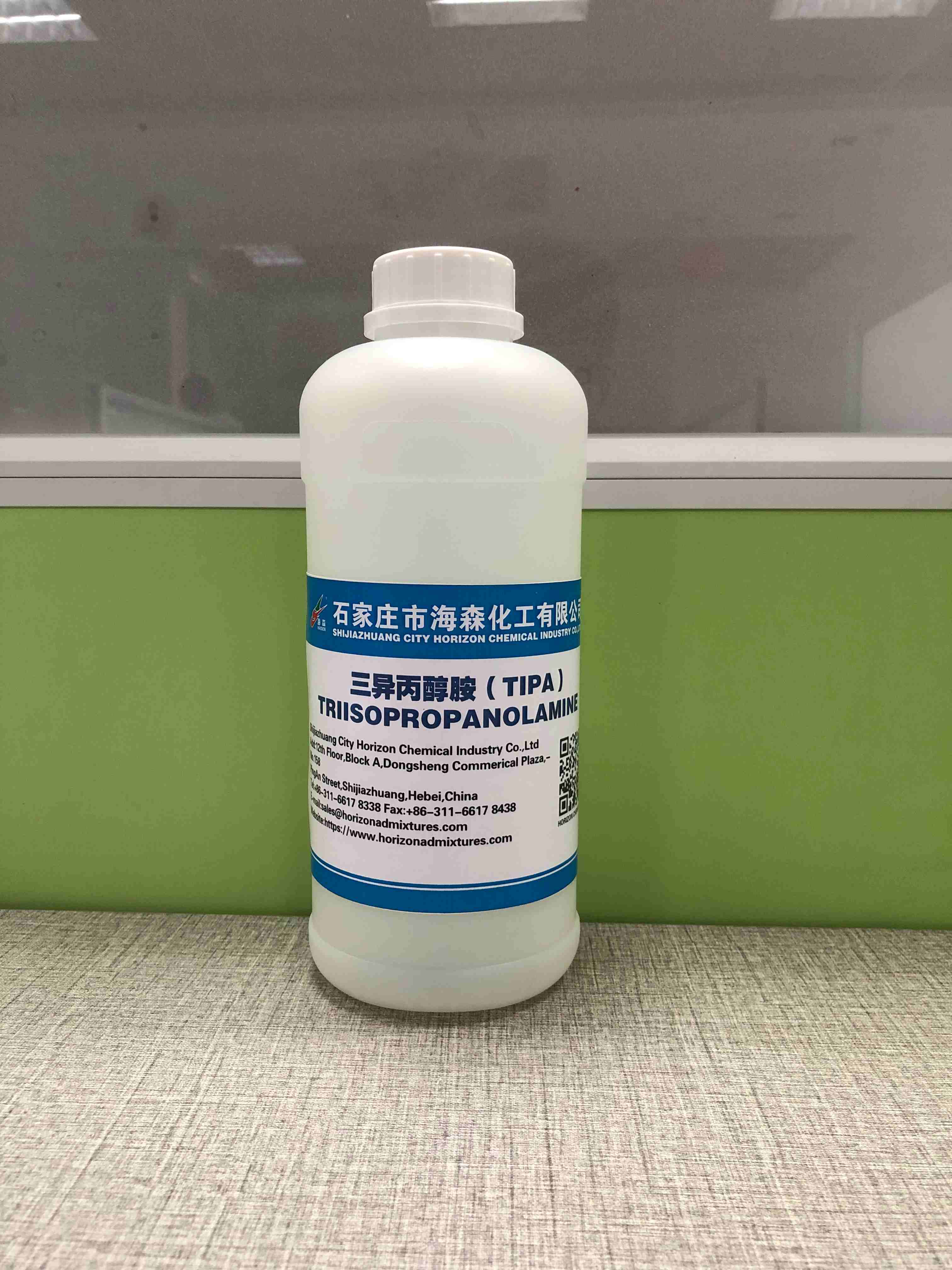
From high-performance cement grinding aids to advanced polyurethane systems, triisopropanolamine (TIPA) quietly powers some of the most demanding industrial processes. Yet, its critical role often goes unnoticed. As global manufacturers strive for efficiency and sustainability, the right specialty chemicals make all the difference. At HAISEN, we recognize that understanding TIPA’s versatile chemistry is key to unlocking next-generation performance. In this post, we explore how this unsung hero shapes modern industry—and why it deserves a closer look.
The Unseen Workhorse in Cement Additives
Most discussions around high-performance concrete spotlight flashy nanomaterials or exotic polymers, yet true durability often hinges on a far more modest ingredient: finely ground limestone. This unassuming powder, frequently tucked into blended cements at levels that barely register on a spec sheet, fights chemical attack and temperature swings without ever demanding the limelight. It fills the microscopic voids that let moisture and sulfates creep in, quietly boosting density while shrugging off the heat of hydration that cracks less thoughtful mixes.
Beyond just plugging gaps, the same limestone powder fuels a hidden chemical dance. As cement hydrates, it provides nucleation sites that spark earlier strength development, buying precious time on tight construction schedules. Meanwhile, the calcium carbonate reacts ever so slowly with alumina phases, creating carboaluminates that lock away aggressive ions before they can corrode reinforcing steel. It's a slow, patient chemistry that plays out over decades—nature's own version of a time-release shield, baked right into the matrix.
The beauty of this workhorse is its quiet adaptability. You won’t find it in architectural monographs, but it’s there in the foundations of wind turbines, bridge piers that shrug off freeze-thaw cycles, and sewage pipes that resist biogenic acid. It slips into the mix without fanfare, often replacing a portion of clinker and by doing so, cuts the carbon shadow of every ton poured. In an industry chasing the next wonder admixture, it's worth remembering that sometimes the most revolutionary performance comes from the simplest, most overlooked stone.
Supercharging Cleaning Power in Modern Detergents
Modern detergents have undergone a quiet revolution, moving far beyond simple soap and water. At the heart of this leap are advanced enzyme systems that target specific stains—proteases tackle protein-based marks like blood or grass, amylases break down starches, and lipases cut through greasy residues. These biological catalysts work in synergy, often boosted by stabilizers that keep them active across a wide range of temperatures, ensuring a deep clean even in cold water.
Surfactant technology has also taken a giant stride forward. Traditional surfactants are now paired with specialized co-surfactants and polymers that prevent soil from redepositing onto fabrics. This dual-action approach lifts dirt from fibers and suspends it in the wash water until it’s rinsed away, leaving clothes visibly brighter without extra scrubbing. Some formulations even incorporate intelligent pH buffers that adjust as the wash progresses, optimizing cleaning performance for both acidic and alkaline spots.
Beyond the chemistry, the physical delivery system of active ingredients plays a crucial role. Encapsulation techniques protect fragile components like enzymes and oxygen-based bleaches until the exact moment of contact with stains. This controlled release not only maximizes potency but also extends shelf life, meaning that a single dose can unleash a sustained cleaning action from start to finish. The result is a detergent that works smarter, not harder, adapting to the unique demands of each load.
Metal Protection Without Compromise
When it comes to safeguarding metal surfaces, half measures simply won't do. Our approach starts at the molecular level, forming an impermeable barrier that bonds directly with the substrate. This isn't a temporary coating that washes away or wears thin after a few cycles; it's a permanent defense engineered to handle extreme temperatures, corrosive chemicals, and relentless abrasion without peeling or cracking. We've eliminated the trade-offs that plague conventional protectants—no more choosing between flexibility and hardness, or between eco-friendly formulas and industrial-grade resilience.
What truly sets us apart is the rigorous testing protocol behind every batch. We simulate decades of wear in accelerated aging chambers, expose samples to salt spray beyond any standard, and verify adhesion under pressures that would strip other products in seconds. The result is a finish that maintains its integrity in environments where failure isn't an option, whether on offshore rigs, chemical processing equipment, or precision tooling. Clients often tell us they forgot about corrosion once they switched—and that's exactly the point. Protection should be so thorough that it becomes invisible.
Behind the scenes, our development team refuses to accept the status quo of material science. We've replaced solvents that off-gas harmful VOCs with carrier systems that are both safer and more effective at penetration. We wouldn't call it innovation for marketing's sake; it's simply a refusal to let outdated chemistry hold back performance. From the field reports we receive, it's clear that users notice the difference—not because we shout about it, but because their assets stay out of the scrapyard and on the job, year after year.
Breathing New Life into Gas Purification
The field of gas purification has long grappled with trade-offs between efficiency, cost, and environmental impact. Traditional methods often lean heavily on energy-intensive processes or consumable media that end up as hazardous waste. But a quiet revolution is underway, driven by materials science and process innovation. Researchers and engineers are rethinking the very architecture of purification systems, moving away from brute-force approaches toward designs that mimic natural filtration, use self-regenerating sorbents, or harness low-grade heat that would otherwise be vented. The result is a new generation of solutions that don't just clean gas streams—they fundamentally alter the economics and sustainability of industrial emissions control.
At the heart of this transformation are advanced materials that challenge conventional limits. Metal-organic frameworks, for instance, can be tuned at the molecular level to capture specific contaminants while letting other gases pass unhindered. Their high surface areas and chemical versatility allow for breakthrough performance in carbon capture, biogas upgrading, and removal of trace impurities. Elsewhere, biohybrid systems are gaining ground, using enzymes or engineered microorganisms to metabolize pollutants in real time. These approaches slash the need for high temperatures and pressures, cutting operational costs by as much as half in some pilot projects. It's a shift from treatment as a blunt instrument to precision intervention, tailored to the unique fingerprint of every gas stream.
What makes this moment particularly exciting is the convergence of digital tools with these physical breakthroughs. Real-time sensors and adaptive controls allow purification systems to adjust on the fly to fluctuating gas compositions, maintaining optimal performance without human intervention. Predictive maintenance algorithms spot filter degradation before it becomes a failure, while digital twins simulate process changes to wring out every last percentage point of efficiency. Together, these innovations are turning gas purification from a static, often overlooked back-end operation into a dynamic, intelligent asset. The result is not just cleaner air, but more resilient and profitable industrial operations.
Enhancing Performance Across Coatings and Polymers
Coatings and polymers often need to strike a delicate balance between flexibility, durability, and resistance to environmental factors. A well-designed additive package can subtly shift these properties, allowing a single resin system to meet diverse application demands without extensive reformulation. The right combination not only improves surface hardness but also preserves the underlying material's ability to withstand impact and thermal cycling.
Real-world performance hinges on how additives interact with the polymer matrix. For instance, certain surface modifiers migrate to the interface during curing, creating a microscopically smooth yet tough exterior that resists scratches and chemical attack. Meanwhile, internal reinforcements can boost cohesion, reducing wear in high-contact areas. This dual action—surface enhancement combined with bulk property improvement—delivers noticeable longevity in everything from automotive clear coats to industrial flooring.
Beyond mechanical attributes, aesthetics and processing behavior also benefit from thoughtful formulation. Flow and leveling agents help achieve a flawless finish right out of the mold or spray gun, cutting down on post-processing steps. UV stabilizers and antioxidants preserve color and gloss over years of outdoor exposure, while processing aids lower energy consumption during mixing and extrusion. Together, these elements transform a basic coating or polymer into a high-performance solution tailored for demanding environments.
Charting a Sustainable Path for Industrial Amines
The industrial amines sector stands at a crossroads, facing mounting pressure to reconcile its essential role in everyday products with the urgent need for reduced environmental impact. From agricultural sprays to pharmaceutical intermediates, these nitrogen-based compounds are ubiquitous, yet their conventional production often leans heavily on petrochemical feedstocks and energy-intensive processes. Shifting toward bio-based raw materials, such as plant oils or agricultural residues, offers a tangible starting point. Companies are already exploring the catalytic conversion of renewable alcohols into amines, bypassing finite fossil resources. This isn't merely a substitution exercise—it's about rethinking entire supply chains to prioritize low-carbon inputs and circularity from the very first step.
Process innovation is rewriting the rulebook on how amines are manufactured. Traditional methods frequently involve harsh reagents, high temperatures, and the generation of substantial waste streams, including toxic byproducts. Emerging techniques like continuous flow chemistry and enzymatic catalysis promise a dramatically smaller footprint. For instance, tailored enzymes can now perform selective amination under mild, aqueous conditions, slashing energy demands and eliminating the need for protective solvents. Meanwhile, electrochemical synthesis is gaining traction, using electricity—ideally from renewable sources—to drive reactions that once relied on stoichiometric metals. These advancements transform waste prevention from an afterthought into a core design principle, enabling facilities to operate with closed-loop water systems and recoverable catalysts.
A truly sustainable path cannot be forged in isolation; it demands collaboration across the value chain and a willingness to redefine performance metrics. Downstream users, from formulators to consumer goods brands, are increasingly asking for amines with verified low-carbon footprints and safer toxicological profiles. In response, producers are adopting life-cycle assessments and digital tracking tools to provide transparency and drive continuous improvement. Simultaneously, recycling and recovery schemes are extending the useful life of amine-based products, particularly in high-volume applications like carbon capture solvents and epoxy curing agents. By aligning technical ambition with market expectations and restoring natural systems wherever possible, the industry is beginning to chart a course that balances economic resilience with genuine ecological responsibility.
FAQ
Triisopropanolamine, often abbreviated TIPA, is an amino alcohol synthesized through the reaction of propylene oxide with ammonia. The process yields a viscous, strongly alkaline liquid or a crystalline solid at lower temperatures, widely used as a neutralizing agent and surfactant.
TIPA is particularly effective in cement grinding because it not only reduces energy consumption and improves mill throughput but also significantly enhances late-age strength development. Unlike some alternatives that primarily boost early strength, TIPA helps achieve higher ultimate compressive strengths, which is critical for structural applications.
It acts as a polyfunctional additive, influencing cement hydration kinetics by forming complexes with calcium ions on particle surfaces. This interaction modifies the microstructure of hydrates, leading to improved workability, reduced water demand, and increased long-term durability of hardened concrete.
TIPA serves as a chemical solvent in gas sweetening operations, efficiently absorbing acidic gases like hydrogen sulfide and carbon dioxide from natural gas or refinery streams. Its low viscosity and good thermal stability make it suitable for both bulk removal and deep purification in amine-treating units.
The cement and construction industries are major consumers, using TIPA as a high-performance grinding aid and concrete additive. Beyond that, it finds applications in metalworking fluids as a corrosion inhibitor, in paint and coating formulations, and in oil and gas processing.
While both are alkanolamines, TIPA typically offers superior performance in cement grinding for later-age strength, whereas triethanolamine (TEA) is often used for early strength enhancement. Many modern formulations blend the two to balance short-term and long-term properties, but TIPA remains preferable when ultimate durability is the priority.
Triisopropanolamine is readily biodegradable and presents low acute aquatic toxicity, which is advantageous compared to some older amine additives. However, its concentrated form is a skin and eye irritant, so proper personal protective equipment and ventilation are recommended during handling, along with corrosion-resistant storage tanks.
Recent advances focus on synergistic combinations of TIPA with other additives, such as polycarboxylate ethers, to create multifunctional cement admixtures that reduce carbon footprint and improve efficiency. There is also growing interest in formulating low-alkaline TIPA-based products for use in sensitive construction environments.
Conclusion
Triisopropanolamine (TIPA) operates behind the scenes as a multifunctional amine that quietly underpins performance across a range of industries. In cement manufacturing, TIPA acts as a grinding aid and strength enhancer, modifying particle surfaces to improve efficiency without compromising long‑term durability. Its complexing ability makes it a natural fit for detergent formulations, where it boosts cleaning power by stabilizing enzymes and sequestering hardness ions, all while maintaining a favorable environmental profile. The same chelating talent extends to metalworking fluids, where TIPA provides robust corrosion protection for ferrous and non‑ferrous metals, forming a protective film that prevents oxidation without leaving problematic residues.
Beyond these traditional roles, TIPA is carving out a place in gas purification processes, effectively absorbing acid gases like CO₂ and H₂S, which is critical for emissions control and biogas upgrading. In the coatings and polymers sector, it functions as a versatile neutralizer and crosslinking catalyst, enhancing adhesion, stability, and cure speed in waterborne systems. As industries shift toward greener chemistries, TIPA’s favorable biodegradability and low toxicity profile position it as a sustainable choice. Collectively, these attributes underscore TIPA’s quiet indispensability, demonstrating how a single amine can harmonize performance, protection, and environmental care across modern industrial applications.
Contact Us
Contact Person: Sam Lee
Email: [email protected]
Tel/WhatsApp: 86-311-6617 8338
Website: https://www.horizonadmixtures.com/