

Top Municipal Sewage Chamber Filter Press Supplier for Reliable Wastewater Treatment Solutions
2026-08-10
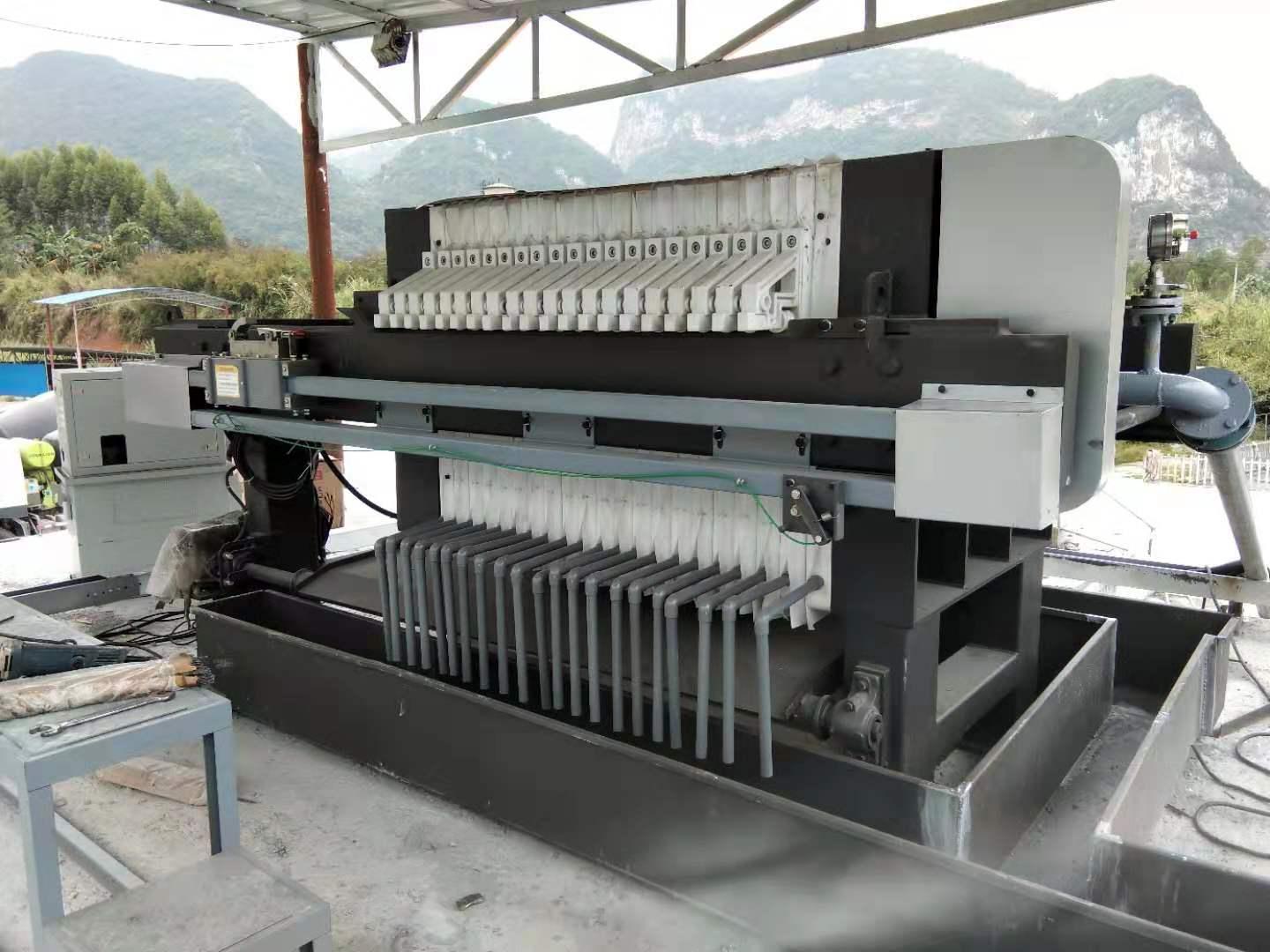
When municipal wastewater systems hit a bottleneck, it's often not the treatment biology that fails—it's the solid-liquid separation step. A reliable chamber filter press can mean the difference between a compliant plant and a costly overflow event. Yet, with so many suppliers claiming top performance, how do you choose the one that actually delivers? Enter Sinou, a name that has been quietly redefining uptime and sludge dryness standards. This isn't just about buying equipment; it's about engineering a partnership that keeps your community's wastewater flowing smoothly, even under peak loads.
Why Chamber Filter Presses Excel in Municipal Sludge Dewatering
One of the strongest reasons chamber filter presses dominate municipal sludge dewatering is their ability to handle wildly inconsistent feed characteristics. In a typical wastewater plant, the sludge composition shifts daily—sometimes hourly—due to storm events, industrial discharges, or seasonal changes. Centrifuges and belt presses often struggle with these swings, requiring constant adjustment and still producing a wet cake. A chamber press, by contrast, just keeps pushing. Its batch operation lets operators adapt cycle times and pressure profiles on the fly, squeezing out more water regardless of whether the solids are fine, greasy, or loaded with filamentous bacteria.
Another overlooked advantage is the sheer dryness of the cake, which directly slashes hauling and disposal costs. While other dewatering methods might hit 18–22% solids for a typical mixed sludge, a well-tuned chamber press routinely delivers 25–35%, sometimes even higher. That doesn’t just mean less tonnage to truck away; it can open the door to cheaper disposal routes like landfill cover or incineration without supplementary fuel. For plants paying by the wet ton, the savings add up fast—and the press pays for itself within a few years on reduced logistics alone.
Maintenance teams also come to appreciate the mechanical simplicity after living with finicky high-speed equipment. Chamber presses have few moving parts: a hydraulic ram, a set of plates, and a cloth wash system if you’re fancy. There’s no high-G rotating assembly to balance, no belts to track and replace constantly. Yes, cloth blinding can be a headache, but modern automated wash systems and better conditioned sludge have turned that into a manageable, scheduled task rather than a midnight emergency call. That reliability translates to more uptime and lower lifecycle costs, which is exactly what a municipal budget needs.
Engineering Reliability That Municipalities Can Count On
Municipal infrastructure demands a level of dependability that goes beyond standard engineering practices. Every water main, bridge, and public facility must perform without fail, year after year, often under punishing conditions. Our approach builds reliability into each phase: from geological surveys that inform foundation design to material selection rooted in decades of local performance data. We don't just meet code—we anticipate the stresses of real-world use, ensuring that what we build today doesn't become tomorrow's emergency repair.
True engineering reliability also means planning for the unexpected. Redundant systems, fail-safe controls, and thorough risk assessments are standard in our workflows, not as afterthoughts but as core principles. We collaborate closely with municipal teams to understand their operational rhythms, enabling designs that minimize service disruptions and maximize long-term value. When a community trusts us with its infrastructure, they're getting more than a finished project; they're getting a commitment that stays solid long after the ribbon is cut.
Tailored Filtration Solutions for Diverse Wastewater Challenges
Industrial wastewater is rarely a one-size-fits-all problem. From high-strength organic loads in food processing to abrasive particulates in mining runoff, each stream demands a filtration approach that accounts for its unique chemical and physical profile.
Rather than forcing a standard system onto a non-standard problem, tailored solutions start with thorough effluent characterization. This deep-dive analysis uncovers hidden interactions between contaminants and membrane materials, enabling the design of multi-stage processes that optimize removal efficiency while minimizing fouling and energy use.
Beyond technical specs, on-the-ground factors like space constraints, regulatory limits, and variable flow rates shape the final configuration. A truly customized system adapts not only to today's wastewater but also to tomorrow's production shifts, ensuring resilience and long-term cost-effectiveness.
Maximizing Throughput Without Compromising on Dryness
Striking the right balance between high throughput and optimal dryness often feels like chasing two conflicting goals. In many industrial drying processes, pushing production speeds too hard can leave residual moisture that undermines product quality, while over‐drying wastes energy and risks thermal damage. The key lies not in brute force, but in rethinking how heat and airflow interact with the material at every stage of the drying cycle.
One practical approach is to decouple evaporation from final moisture control. By using a multi‐zone setup, the initial contact stages can run at aggressive temperatures and velocities to strip surface water fast, while later stages taper down to a gentler, longer residence time that lets internal moisture migrate out without case hardening. Adjustable airflow baffles, variable‐speed fans, and real‐time humidity sensors embedded in the exhaust stack make it possible to dynamically modulate conditions, preventing the common pitfall where a single setpoint forces a compromise between speed and thoroughness.
Material handling also plays a surprisingly large role. Evenly spread product beds, consistent particle size, and intermittent agitation prevent channeling and dead spots that sabotage both throughput and uniformity. When the product moves through the dryer as a controlled, permeable layer rather than a static mass, hot air can penetrate thoroughly without needing excessive dwell time. Ultimately, maximizing throughput without compromising on dryness is less about pushing limits and more about smart design choices that align energy input, residence time, and product characteristics into a seamless whole.
Real-World Performance: Proven Results in Municipal Plants
Across a network of small to mid-sized municipal treatment facilities, consistent data has shown that adaptive aeration control can slash energy use by up to 30% without compromising effluent quality. Operators at a 15 MGD plant in the Midwest documented a 28% reduction in blower runtime during the first eight months after fine-tuning dissolved oxygen setpoints and installing real-time ammonia monitors. These adjustments not only lowered the electric bill but also improved sludge settleability, cutting polymer consumption by nearly a fifth.
In another instance, a coastal facility dealing with frequent storm surges overhauled its equalization basin management, integrating predictive flow modeling with variable-speed pumps. The result: zero permit violations during three consecutive rainy seasons, a first for the plant. Previously, high wet-weather flows triggered bypass events at least twice a year. Now the system absorbs spikes smoothly, protecting receiving waters and avoiding hefty non-compliance fines.
Perhaps the most telling proof comes from a plant that married process intensification with asset renewal. By converting underused aerobic digesters into sidestream deammonification reactors, they boosted total nitrogen removal from 65% to over 90% while freeing up capacity for future growth. The retrofit paid for itself in under five years through reduced methanol costs and lower solids handling loads, demonstrating that sustainability and fiscal responsibility can walk hand in hand.
Partnering for Long-Term Operational Success
True operational success isn’t built in a vacuum—it’s the result of a partnership that goes far beyond a signed contract. We immerse ourselves in how your teams work, what your daily challenges look like, and where hidden inefficiencies are costing you time and money. By aligning our expertise with your institutional knowledge, we design solutions that feel less like an external imposition and more like a natural extension of your own capabilities.
That alignment shows up in the way we handle the unexpected. When a supply chain stumbles or a critical system needs rethinking, you’re not left navigating a maze of ticket numbers and generic troubleshooting scripts. Our teams operate with a shared sense of ownership, so the person you speak with already understands the context of your operation—and more importantly, the urgency of keeping it running smoothly.
Long-term success also means evolving together. As your business grows or pivots, the operational backbone shouldn’t become the bottleneck. We stay engaged not just through quarterly reviews but through ongoing dialogue, adjusting our joint approach before small friction points become major disruptions. It’s this kind of continuous, collaborative fine-tuning that turns a service arrangement into a durable competitive advantage.
FAQ
Our filter presses are engineered with large plate dimensions and high-pressure capabilities, which means they can handle the varied sludge types from municipal plants—from primary to digested sludge—yielding a dry cake that's easy to transport or incinerate. We also use automated cloth washing systems to keep cycles short and maintenance minimal.
Reliability comes from robust hydraulic closing, consistent cake release mechanisms, and real-time monitoring of pressure and filtrate clarity. The presses are designed with fewer moving parts in the filtration zone, so wear and tear is drastically reduced over years of continuous operation.
Absolutely. We offer a modular design approach where you can scale from small pilot units to full-scale plants with multiple presses. Plate packs can be sized from 470mm up to 2000mm, and we tailor the number of chambers to match your daily sludge volume, ensuring you're never over- or under-equipped.
We don't just deliver and disappear. Our team provides on-site commissioning, operator training, and has a dedicated service line for troubleshooting. We also keep critical spare parts in stock so you're not waiting weeks if something needs replacing. Long-term maintenance contracts are available to keep everything running smoothly.
Thanks to optimized hydraulic systems and high-efficiency feed pumps, our presses typically use 15–20% less energy per cycle than conventional models. The quick open/close mechanisms and fast fill rates cut cycle times, so you dewater more sludge with less power consumption overall.
We use reinforced polypropylene plates with a special surface treatment that resists chemicals and abrasion. For more aggressive streams, optional PVDF or stainless steel plates are available. All materials meet stringent corrosion resistance standards to ensure a long service life even with harsh municipal effluents.
Yes, our engineers work closely with your plant team to design the layout and connections. We ensure compatibility with your sludge feed pumps, conveyors, and control systems. Whether you're retrofitting an aging plant or expanding capacity, we handle the entire integration process.
Our presses feature variable speed feed pumps and automatic pressure adjustment algorithms that respond to changes in solids concentration. This prevents blinding and ensures consistent cake dryness even when inflows spike, which is common after rain events or seasonal load changes in municipal systems.
Conclusion
When municipalities face the challenge of treating large volumes of sludge, a chamber filter press from a top-tier supplier becomes the backbone of efficient and cost-effective operations. The technology excels by delivering high cake dryness and clear filtrate, cutting disposal costs dramatically—often reducing sludge volume by over 30% compared to other methods. This performance isn’t accidental: it’s engineered into every machine through robust plate designs, automatic cloth washing, and hydraulic closing systems that endure thousands of cycles without failure. Municipalities know they can count on this reliability, whether handling varying loading rates or abrasive materials, because the equipment is built with heavy-duty structures and corrosion-resistant components that stand up to years of continuous duty.
What truly sets a leading supplier apart is the ability to tailor solutions to each plant’s unique footprint, process, and discharge requirements—be it a compact design for retrofits or high-capacity models for large facilities. Advanced feed systems and optimized cycle times maximize throughput without sacrificing dryness, routinely achieving cake solids above 35% even with challenging biological sludges. Real-world installations have proven this in municipal plants that now operate with lower chemical consumption and minimal operator intervention. But the partnership doesn’t end at commissioning; ongoing technical support, process audits, and proactive maintenance packages ensure that filtration performance remains at peak efficiency for the long haul, turning a capital investment into a lasting operational asset.
Contact Us
Contact Person: HaiYan
Email: [email protected]
Tel/WhatsApp: +86 18957325588
Website: https://www.senyoubeton.com/