

Top Mesoporous Silica Innovations Reshaping Drug Delivery and Catalysis
2026-09-07
From targeted drug delivery to greener catalytic processes, mesoporous silica has moved beyond the lab bench and into real-world impact. Yet not all silica is equal—pore architecture, surface chemistry, and scalability decide whether an innovation stays a paper or becomes a product. In this article, we explore the top mesoporous silica breakthroughs reshaping two critical fields, and highlight how Zhonglian is turning these material advances into reliable, industrial-scale solutions.
When Pore Size Dictates Drug Release Kinetics
Pore size is often treated as a secondary parameter in drug delivery systems, yet it can completely override chemical composition when it comes to release kinetics. In mesoporous silica, for instance, a pore diameter below 2 nm tends to produce a sustained, diffusion-limited profile because the drug molecules must navigate a tortuous network that slows their escape. Once the pores widen beyond 6 nm, the same drug can be released in a burst within hours, as the dominant barrier shifts from steric hindrance to simple concentration gradients at the particle surface. This binodal behavior is not gradual—there is a threshold zone where small changes in pore architecture lead to orders-of-magnitude differences in release rate.
The influence of pore size becomes even more pronounced when the carrier is designed to respond to physiological triggers. For pH-sensitive polymers, narrow pores may collapse or swell unevenly upon protonation, trapping the payload inside and producing an irregular, stepwise release curve. In contrast, larger pores allow the swelling front to propagate uniformly, yielding a near-zero-order release. This explains why two formulations with identical drug loading and surface chemistry can behave so differently in vivo: the pores dictate not only how much drug moves, but also whether that movement follows Fickian diffusion, anomalous transport, or a polymer-relaxation-dominated mechanism.
Practical formulation work often neglects pore size because it is harder to measure than bulk properties like particle size or zeta potential. However, ignoring it leads to failed bioequivalence studies and poor scale-up. A robust screening strategy should map release kinetics against pore diameter using a series of templated carriers, then lock the optimal pore range before optimizing other variables. Only by treating pore size as a primary design lever can one achieve the kind of predictable, tuneable release profiles that modern therapeutics demand.
The Quiet Shift Away from Bare Silica Surfaces
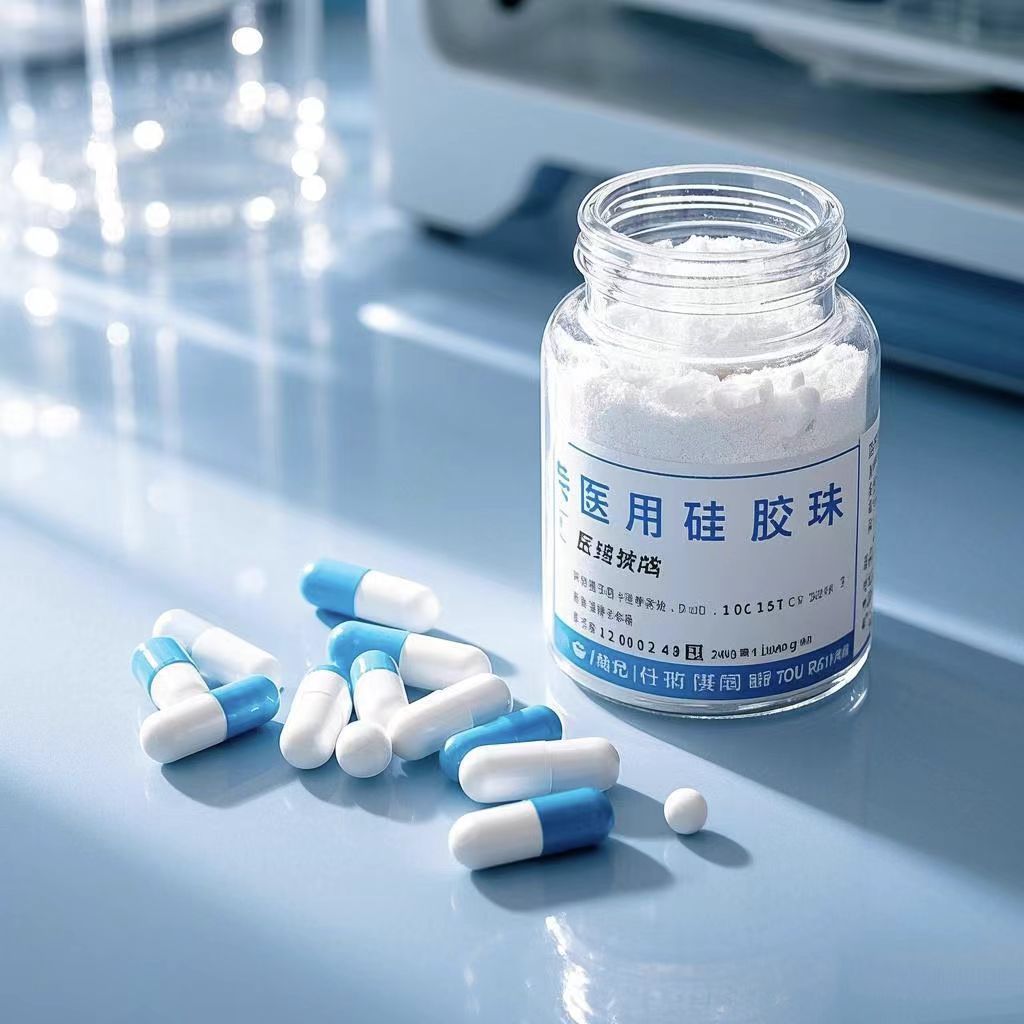
For years, bare silica reigned as the default in separation science and catalysis. Its predictable chemistry and well-characterized pores made it a safe choice. But behind closed lab doors, researchers started noticing the same nagging issues: peak tailing with basic analytes, irreversible protein binding, and a frustrating sensitivity to mobile phase pH. These weren't dramatic failures, just a slow accumulation of limitations that nudged people toward alternatives.
The shift didn't happen with a single breakthrough. Instead, it crept in through hybrid particles, surface-charged modifications, and polymer coatings that quietly solved the old pain points. A bonded phase here, a sterically protected silane there—each tweak made bare silica feel a little more like a relic. Journals began filling with methods that skipped traditional silica entirely, opting for materials that tolerated harsher conditions and gave sharper peaks without heroic conditioning steps.
None of this means silica is dead. It still anchors most columns and catalysts under the hood. But the conversation has changed. When selecting a surface now, the first question isn't "why not silica?" but "what do you actually need from the interface?" That subtle inversion—from default to deliberate choice—marks the quiet yet decisive move away from relying on bare silica surfaces.
Gatekeeping Molecules That Respond to Their Environment
Molecular gatekeepers rarely announce themselves. They sit within a polymer matrix or on the rim of a pore, inert until a specific cue—a drop in pH, a photon, a shift in redox potential—flips their conformation. That flip is the whole trick: a hydrophobic pocket becomes hydrophilic, a bulky group swings aside, a hydrogen bond network collapses. For drug delivery, this means a carrier can circulate quietly, then dump its payload exactly where the local environment turns acidic or hypoxic. For catalysis, it means a reactive site stays buried until the substrate itself opens the door.
One classic family uses light. Azobenzenes isomerize from trans to cis under UV, shrinking the distance between their phenyl rings by nearly 3.5 angstroms. Thread that group into a rotaxane ring and you have a molecular shuttle whose gate opens and closes with no chemical waste. Spiropyrans do something similar but switch from a closed, colorless form to an open, merocyanine form that carries charge. Redox-active gates, built around ferrocene or viologen, respond to an electrode rather than a photon—ideal for implantable devices where a small voltage can release a drug on demand. The appeal is not just the trigger, but the reversibility: flip the stimulus back and the molecule returns to its original state, ready for another cycle.
What still limits these systems is fatigue. After thousands of switching cycles, side reactions accumulate—oxidation at the wrong site, a ring that slips off its axle, a photochrome that bleaches. Biological settings add another layer: enzymes may degrade the gate itself, or a pH drop may not be sharp enough to discriminate between diseased and healthy tissue. Yet the field is moving toward redundancy and error correction, designing gates that require two orthogonal signals before opening. That kind of logic could turn a passive carrier into a true gatekeeper—one that only acts when the environment, not the clinician, gives the order.
Tiny Channels, Big Catalytic Turnover
Enzymes are often pictured as bulky, static structures, but the ones that matter most in industrial chemistry are closer to architectural marvels on a nanometer scale. Tiny channels carved into their folded protein shells do the heavy lifting, guiding reactants through a labyrinth where every turn alters the local charge, pH, or water activity. These confined spaces don't just hold molecules in place—they distort bonds, stabilize fleeting transition states, and effectively force a reaction down a path it would never dare take in open solution. The result is catalytic turnover numbers so large that a single active site can process millions of substrate molecules in a matter of seconds.
What makes these microscopic conduits so efficient is a mix of proximity and desolvation. Inside a channel only a few angstroms wide, reactants lose their bulky solvation shells and line up with near-mechanical precision. Electrostatic fields from amino acid side chains then push and pull on the substrate, lowering the activation energy far more than any bulk solvent could. It's a bit like threading a needle while running—except here the needle reshapes itself around the thread, and the thread leaves as a product rather than a tangled mess. This tight coupling between transport and chemical transformation means turnover is limited less by the chemistry itself and more by how quickly fresh substrate can shuffle in.
In practice, these tiny channels are why a handful of enzymes can outperform vast vats of inorganic catalysts. A single gram of a well-evolved channel enzyme can do the work of kilograms of metal-based alternatives, under milder conditions and with far fewer side products. Researchers now borrow this trick, building synthetic pores and metal-organic frameworks that imitate the confined, charged corridors of natural proteins. The lesson is straightforward: when you shrink the reaction space to the size of the molecules themselves, catalytic turnover stops being a number and starts looking like a controlled molecular assembly line.
Blending Polymers and Silica Without Losing Order
Creating ordered hybrid materials from polymer and silica typically fights against entropy. Polymers tend to coil randomly while silica precursors condense into amorphous networks. Yet certain processing routes manage to lock in periodic structure at the nanoscale.
One effective avenue uses amphiphilic block copolymers as structure-directing agents. The polymer first self-assembles into well-defined mesophases such as cylinders or lamellae. Silica precursors then infiltrate the hydrophilic domains and undergo sol-gel condensation, faithfully replicating the polymer template. Crucially, this templating happens without disrupting the existing order because the inorganic phase grows within confined spaces rather than forcing a new arrangement.
The payoff of retaining order is substantial. These composites exhibit anisotropic mechanical properties, tunable refractive indices, and enhanced thermal stability compared to their disordered counterparts. Applications range from membranes with aligned channels to photonic crystals where periodic dielectric contrast is essential for light manipulation.
Continuous Flow Reactors Borrow Mesoporous Tricks
Continuous flow reactors have started to borrow a page from mesoporous materials science, particularly the use of highly ordered pore networks to direct fluid movement. By patterning reactor walls with nano-scale channels or integrating porous inserts that mimic the uniform mesopores of catalysts like SBA-15, engineers can enforce more predictable residence time distributions. This cuts down on dead zones and channeling that often plague conventional packed beds, giving sharper control over reaction progress.
Another mesoporous trick finding its way into flow systems is the use of sacrificial templates to create interconnected void spaces. Just as surfactant micelles guide the formation of silica mesostructures, soluble polymer templates or 3D-printed fugitive scaffolds can be embedded in reactor bodies and later removed. The resulting hierarchical porosity spans from micrometre-sized flow distributors down to nanometre-sized diffusion paths, shortening the distance reactants must travel to reach active sites.
Surface chemistry borrowed from mesoporous supports also plays a role. Coating the internal pore walls of a flow reactor with organosilane monolayers or metal-organic frameworks replicates the tunable wettability and catalytic functionality of mesoporous powders, but without the pressure drop penalties of packed beds. Early results show improved selectivity in hydrogenation and oxidation reactions, suggesting that these borrowed mesoporous concepts could become standard practice in next-generation continuous processing.
FAQ
Its tunable pore diameters between 2 and 50 nanometers, paired with a massive internal surface area, let researchers trap fragile molecules that would otherwise degrade. Unlike zeolites or activated carbon, the silica framework can be dissolved gradually under physiological conditions, which gives a more predictable release curve.
Researchers have moved from simple hexagonal channels to cage-like pores with narrow entrances, often called ink-bottle structures. These designs hold a payload more securely during circulation but still release it when triggered by pH shifts or redox conditions inside target tissues.
By grafting ligands such as folic acid, hyaluronic acid, or short peptides onto the silica surface, carriers can recognize receptors that are overexpressed on diseased cells. The functionalization also creates a hydrophilic shield that reduces nonspecific protein adsorption, so more of the dose reaches the intended site.
They allow high drug concentrations to be confined inside the pores until the carrier reaches acidic tumor microenvironments. This limits exposure of healthy tissues to cytotoxic agents, which in animal studies has translated into lower cardiotoxicity and less bone marrow suppression compared to free drug infusions.
The incorporation of isolated metal atoms or tiny metal oxide clusters inside the silica walls has improved catalytic activity without leaching. In addition, continuous-flow setups using monolithic mesoporous silica have cut reaction times for oxidation and coupling reactions while making catalyst recovery far simpler.
Yes, several routes now use rice husk ash or other agricultural silica sources, reducing energy demand and waste. The ordered pores also stabilize enzymes and organocatalysts, allowing them to be reused for dozens of cycles where a homogeneous catalyst would normally be discarded after one run.
Batch-to-batch consistency at scale is still a hurdle, especially for particles smaller than 200 nanometers. Regulatory agencies also want clearer data on long-term silica clearance and immune reactions, so most current work focuses on standardized synthesis and biodistribution studies in large animals.
They combine a drug payload with imaging agents such as gadolinium complexes or fluorescent dyes inside the same particle. The silica matrix protects both components, and the high surface area allows enough contrast agent to be loaded for real-time tracking of drug accumulation and release.
Conclusion
Mesoporous silica's evolution is less about the material itself and more about how its architecture can be tuned to solve stubborn problems in drug delivery and catalysis. Pore diameter now functions as a release dial rather than a passive structural feature—narrow channels stretch out drug diffusion over days or weeks, while wider ones enable a faster burst when a therapeutic window demands it. At the same time, researchers have moved away from relying on bare, hydroxyl-rich surfaces. Instead, they graft or co-condense organic groups to reduce nonspecific adsorption, improve colloidal stability, and create a more predictable interface for biological fluids. This surface rethinking pairs with responsive gatekeeping: polymers, peptides, or supramolecular caps block pore openings until pH shifts, redox gradients, or enzyme activity signal the right environment, turning passive carriers into on-demand depots.
On the catalysis side, the same pore engineering pays off in ways that batch reactors rarely capture. Confined active sites inside mesoporous channels raise local reactant concentrations and can change reaction selectivity, giving higher turnover numbers without requiring exotic metal loadings. Blending polymers into the silica framework preserves long-range order while adding flexibility, hydrophobicity, or processability that pure silica lacks. These hybrid materials also feed directly into continuous flow systems, where mesoporous monoliths or coated microreactors shorten diffusion paths and let catalysts operate for longer periods under steady-state conditions. Taken together, the innovations point to a common thread: controlling pore geometry, surface chemistry, and external responsiveness turns mesoporous silica from a simple support into a dynamic platform.
Contact Us
Contact Person: Levin Wang
Email: [email protected]
Tel/WhatsApp: 8618668999988
Website: https://www.silicaplant.com/