
Top Medium and Heavy Plate Manufacturer: Key Qualities and Industry Insights
2026-05-24
In the competitive world of steel production, finding a top-tier medium and heavy plate manufacturer is crucial for projects demanding strength and reliability. What sets the leaders apart? From cutting-edge technology to rigorous quality control, the industry’s best deliver unmatched performance. Among them, Sanhe Steel has established itself as a key player, combining decades of expertise with innovative solutions. This blog explores the essential qualities that define excellence and offers insights to help you make informed decisions.
What Defines a Truly Reliable Heavy Plate Supplier?
In heavy plate sourcing, reliability isn’t just about meeting specs on paper—it’s woven into the consistency of material properties across every order. A supplier worth trusting maintains tight control over steel composition, rolling temperatures, and cooling rates, ensuring that each plate performs predictably under weld, bend, or load. The difference often shows up in hidden metrics: minimal internal stresses, uniform grain refinement, and surface quality that holds up long after fabrication. When a mill habitually delivers plates that machine cleanly and resist lamellar tearing without extra processing, you’re looking at a partner that treats quality as a process, not a spot check.
Genuine dependability extends beyond the product itself and into the flow of information and inventory. A reliable heavy plate provider proactively shares mill certifications, ultrasonic test results, and heat traceability without being prompted, and they maintain buffer stock of commonly specified grades rather than relying on just-in-time wishful thinking. This operational transparency means you’re not left deciphering ambiguous paperwork during an audit or scrambling when project demands shift. It’s the kind of quiet competence that turns a transactional supplier into an extension of your own planning team, especially when lead times tighten or custom rolling becomes necessary.
Finally, the human element sets truly reliable suppliers apart. Their technical teams understand the downstream challenges—whether it’s navigating Charpy impact requirements for arctic-grade applications or advising on plate flatness for automated welding lines. They don’t just quote a grade; they ask about forming methods, service environment, and critical load paths because they know that selecting the right plate involves more than thickness and yield strength. When a supplier routinely catches specification mismatches before they become shop floor headaches and stands behind their plates with swift corrective action if something drifts, you’ve found more than a vendor—you’ve secured a critical link in your supply chain resilience.
The Role of Advanced Tech in Precision Plate Manufacturing
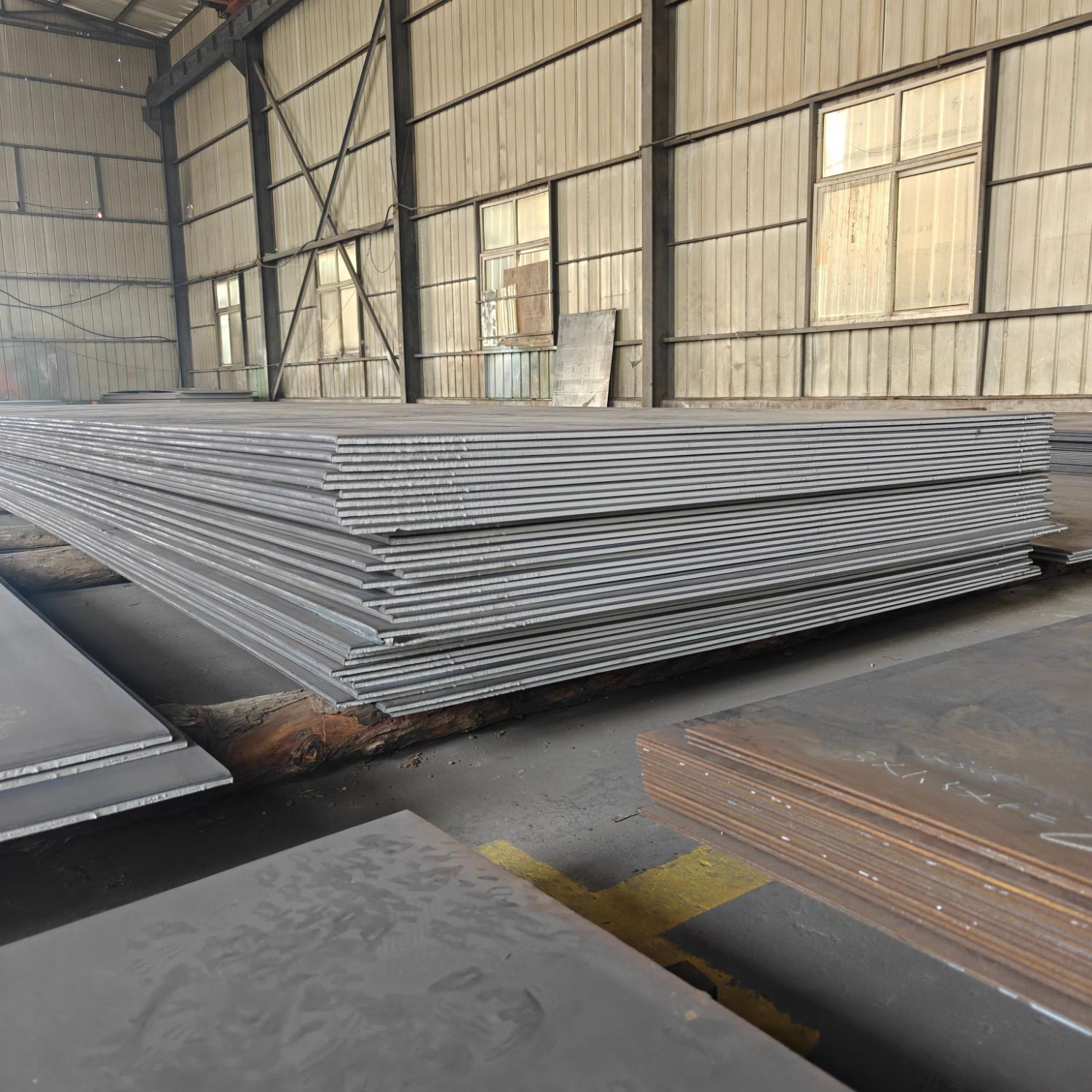
Precision plate manufacturing has undergone a remarkable transformation with the integration of advanced technologies. Modern production lines now leverage high-resolution laser cutting systems that achieve tolerances within microns, ensuring each plate meets exact dimensional specifications. These systems are coupled with real-time monitoring software that continuously adjusts parameters to compensate for material variations and tool wear, virtually eliminating human error. The result is a consistent output of plates that fit seamlessly into complex assemblies, from aerospace components to medical devices, where even minor deviations can compromise performance.
Beyond cutting, automation plays a pivotal role in maintaining surface quality and flatness—two critical attributes in precision plates. Computer-controlled rolling and leveling processes apply uniform pressure to eliminate residual stresses and achieve flatness deviations of less than 0.1 mm across large surfaces. Advanced vision inspection stations then scan every plate for surface defects, using machine learning algorithms to distinguish between acceptable cosmetic marks and true structural flaws. This level of scrutiny ensures that each plate not only looks flawless but also performs reliably under demanding conditions, reducing the need for costly post-production rework.
Perhaps most transformative is the use of digital twin technology to simulate and optimize the entire manufacturing workflow. Before a single plate is produced, engineers can model the material’s behavior under various processing steps—predicting how it will respond to heat, pressure, and cutting forces. This virtual rehearsal identifies potential issues such as warping or micro-cracking, allowing adjustments to be made proactively. As a result, manufacturers can push the boundaries of material science, working with exotic alloys and ultra-thin materials that were once considered too delicate for high-volume production. The fusion of these advanced technologies not only elevates precision plate manufacturing but also redefines what is achievable in modern industrial applications.
How Material Certifications Build Trust in Every Project
When you specify certified materials, you’re not just checking a box—you’re laying the groundwork for confidence across the entire project. Certifications act as a shorthand for quality, assuring everyone from the client to the contractor that what’s being installed meets recognized standards. That shared understanding eliminates guesswork and helps prevent disputes down the line.
Trust doesn’t appear out of thin air—it’s built on evidence. Third-party material certifications provide an impartial record that products have been tested and verified. This transparency means project teams can move forward without second-guessing supplier claims. It’s the difference between hoping a material performs and knowing it will.
Over the long haul, certified materials keep projects running smoothly. They reduce the need for rework, speed up inspections, and signal a commitment to craftsmanship that clients remember. In an industry where reputation is everything, that kind of reliability isn’t just practical—it’s personal.
Customization Capabilities That Set Leading Mills Apart
The real differentiator among top-tier mills isn’t just the ability to tweak a spec sheet—it’s a deep, built-in flexibility that touches every stage from metallurgical design to final packaging. These mills don’t force customers into rigid catalog offerings; instead, they bring engineers directly into the conversation with clients’ product teams. That early collaboration often uncovers opportunities to adjust grain structure, surface finish, or even the chemistry of the alloy to match a unique application, something off-the-shelf materials simply can’t deliver. It’s this kind of tailor-made thinking that shortens trial cycles and prevents costly over-engineering.
Beyond the technical recipe, leading mills stand out by mapping their production workflows around client needs rather than standard batches. They might reconfigure rolling sequences, adjust coiling temperatures on the fly, or run small experimental heats without disrupting the rest of the schedule. This agility is especially visible when a customer needs a material that doesn’t quite exist yet—a specific corrosion resistance paired with an unconventional hardness, for example. Instead of months of back-and-forth, the mill’s in-house lab and pilot line can prototype quickly, often handing off test coils while competitors are still quoting lead times.
Finally, what really locks in the advantage is a culture of long-term partnership. The best mills don’t treat customization as a premium add-on; they embed it into everyday operations, with dedicated teams that remember past tweaks and anticipate future needs. They’ll suggest adjustments based on how a customer’s forming equipment ages or how a new coating affects weldability downstream. That level of proactive, applied expertise transforms a supplier into an extension of the customer’s own R&D, insulating both from shifting market demands and material shortages.
Sustainability Practices in Modern Plate Production
Modern plate production increasingly hinges on closed-loop water systems that drastically cut consumption. Instead of discharging wastewater, facilities recirculate it through multi-stage filtration, reclaiming up to 95% of process water. This not only conserves a critical resource but also slashes treatment costs and limits ecological disturbance in surrounding areas.
Energy efficiency takes center stage with the adoption of electric arc furnaces powered by renewable sources. By replacing coal-dependent methods, these furnaces reduce direct emissions and enable precise temperature control, minimizing material waste during forming. Some plants even feed surplus heat back into local grids, turning a production byproduct into community benefit.
Material innovation furthers sustainability through recycled content integration. Specialized alloys now incorporate up to 85% post-consumer scrap without compromising strength or finish. Advanced sorting technologies ensure contaminants stay below critical thresholds, making high-quality plates from what was once considered waste—a shift that challenges the very notion of virgin raw material dependence.
From Order to Delivery: The Logistics Behind Seamless Supply
Every smooth delivery starts long before the truck ever leaves the warehouse. It’s a quiet choreography of demand forecasting, inventory positioning, and carrier selection—often invisible to the end customer. Supply chain teams pore over historical sales data and real-time signals to predict where products will be needed next, sometimes weeks in advance. This preemptive movement, from regional distribution centers to last-mile hubs, cuts down delivery times dramatically and keeps shelves stocked without excess. The aim isn’t just speed but resilience, building redundancy into routes and partners so that a single disruption doesn’t unravel the entire chain.
Once an order is placed, the real race begins. Behind the scenes, warehouse management systems assign pickers optimal routes through the aisles, while automated sorters divide packages by destination and priority. But it’s the human decisions that still make or break the process: a floor manager deciding to reroute a pallet to a different dock because a truck is running late, or a shift lead pulling in extra help to clear a sudden spike. Real-time visibility tools now let everyone from dispatchers to customer service reps see exactly where a shipment is and whether it’s on track, turning what used to be a black hole of information into a transparent, controllable flow.
The final mile is where the abstract notion of supply becomes a concrete experience for the buyer. Here, the focus shifts to precision and flexibility. Drivers use dynamic routing apps that recalculate based on traffic or new drop-offs, while delivery windows narrow to the hour. In dense cities, micro-fulfillment centers and even crowd-sourced fleets close the gap between warehouse and doorstep. It’s a high-stakes balancing act: too many packages per stop and you risk delays; too few and you lose efficiency. The supply chain’s success ultimately hinges on this very last handoff—the moment a single box lands at the right place, at the right time, and the whole invisible machine behind it pays off.
FAQ
Leading manufacturers stand out through advanced rolling technology, tight thickness tolerances, and consistent mechanical properties across large volumes. They invest in research to refine thermomechanical processing and often hold multiple international certifications, guaranteeing product reliability for demanding applications like offshore structures or pressure vessels.
They employ rigorous in-line inspection systems such as ultrasonic testing and laser-based dimension control. Coupled with detailed heat and lot traceability, every plate can be traced back to its original cast slab. Many also simulate end-use conditions through specialized testing like CTOD or drop-weight tear testing to verify performance.
Continuous innovation drives the development of high-strength, lightweight grades and improved weldability—reducing fabrication costs for shipbuilders and bridge erectors. Advanced accelerated cooling systems and digital twin simulations help fine-tune microstructures, pushing the boundaries of what steel plates can achieve under extreme conditions.
With stricter emissions regulations and growing client focus on carbon footprints, top mills integrate electric arc furnace routes using high scrap ratios, renewable energy sourcing, and closed-loop water systems. They also design long-lasting, high-strength plates that reduce material usage and lifecycle emissions in end products.
Buyers should assess the width range, thickness consistency, and the ability to deliver thermomechanically rolled or quenched and tempered plates. A versatile heat treatment line and in-house testing labs for impact, tensile, and corrosion resistance checks signal robust quality control. Also, ask for examples of complex or customized orders they’ve fulfilled.
Beyond supplying plates, leading suppliers offer early-stage technical consultation, material selection guidance, and just-in-time logistics to remote project sites. They often maintain regional stockholding hubs and cut-to-shape services, reducing lead times and waste for constructors of LNG terminals, wind turbine foundations, or high-rise structures.
There’s a noticeable shift toward higher-grade thermomechanically rolled plates replacing quenched and tempered ones in certain applications due to cost and energy savings. Digital supply chain integration, where customers track plate production in real time, is gaining traction, along with increased demand for specialized offshore grades as renewable energy infrastructure expands.
Conclusion
A truly dependable medium and heavy plate manufacturer stands on more than just production capacity—it weaves together rigorous quality assurance, technical mastery, and a deep-seated commitment to material integrity. Such a supplier consistently meets tight tolerances and delivery schedules while backing every batch with full traceability. Behind the scenes, advanced automation and real-time process monitoring define precision plate manufacturing, from controlled rolling to accelerated cooling, ensuring uniform mechanical properties across each plate. Equally vital are internationally recognized material certifications—whether API, EN, or ASTM—that turn a product into a documented promise, enabling engineers and fabricators to proceed with complete confidence in structural safety and performance.
What sets top-tier mills apart, however, is their ability to adapt to project-specific demands without sacrificing efficiency. Customization goes beyond offering non-standard dimensions; it encompasses tailored chemistries, specialized heat treatments, and stringent testing protocols for offshore, pressure vessel, or bridge applications. This flexibility is now paired with sustainable production methods that minimize carbon footprint through electric arc furnace recycling, water reuse systems, and energy-efficient rolling practices. Completing the picture is a logistics framework designed for seamless supply—meticulous inventory planning, multimodal transport coordination, and digital shipment tracking ensure that even complex, time-sensitive orders arrive on-site just in time, reinforcing the mill’s role as a reliable partner in global construction and heavy industry.
Contact Us
Contact Person: Zoey
Email: [email protected]
Tel/WhatsApp: +86 15865577002
Website: https://www.sanhesteels.com