

Tire Building Machine Companies Are Reinventing Modern Tire Production
2026-11-21
Tire manufacturing has entered a new era where precision, speed, and adaptability define the line between staying competitive and falling behind. Behind this shift, tire building machine companies are quietly rewriting the rules of production, replacing rigid legacy lines with intelligent, flexible systems that handle complex rubber components faster and with far less waste. From passenger car radials to heavy-duty off-road tires, the latest machinery is pushing automation deeper into every stage of the build. Yet with so many claims about innovation, sourcing the right partner remains the real challenge. That is where AUGU AUTOMATION comes into focus, offering practical expertise for manufacturers looking to modernize without losing control of quality or cost. This blog explores how leading machine builders are reshaping tire production and why the next wave of efficiency may come from automation partners who understand the shop floor, not just the spec sheet.
How Tire Building Machine Makers Are Redesigning Production Floors
Floor layouts are being pulled apart and reassembled around the machines rather than forcing every auxiliary system into a fixed line. Conveyors that once stretched across the building are giving way to compact transfer carts and overhead supply rails, which clears space around each tire building station. Maintenance teams now get side access instead of squeezing behind a run of linked machines, and that single adjustment has reduced downtime from minor faults. Some builders are also moving hydraulic units to mezzanines or external cabinets so the main floor stays less crowded and easier to clean.
Changeover speed is driving much of the redesign. Instead of long rows built for a single tire size, new layouts group machines into cells that can switch between low-volume and high-volume lines without moving heavy drums or service platforms. Operators work from a defined side of the machine, with tooling carts and component trays placed within two or three steps, so walking distance drops sharply during a shift. In several plants, the freed-up central aisle has been turned into a visual inspection zone rather than an open storage area.
The physical footprint is also being shaped by what the machines now monitor. Sensor packages, vision systems, and network cabinets need stable, clean space nearby, which pushes manufacturers to rethink cooling and power routing before the equipment arrives. As a result, fewer pipes and cable trays cross the floor, and noise levels fall because pumps and compressors sit behind walls or on upper levels. The redesign is less about making the machines smaller and more about removing everything around them that slowed down a shift.
The Push for Equipment That Handles Complex Tire Designs
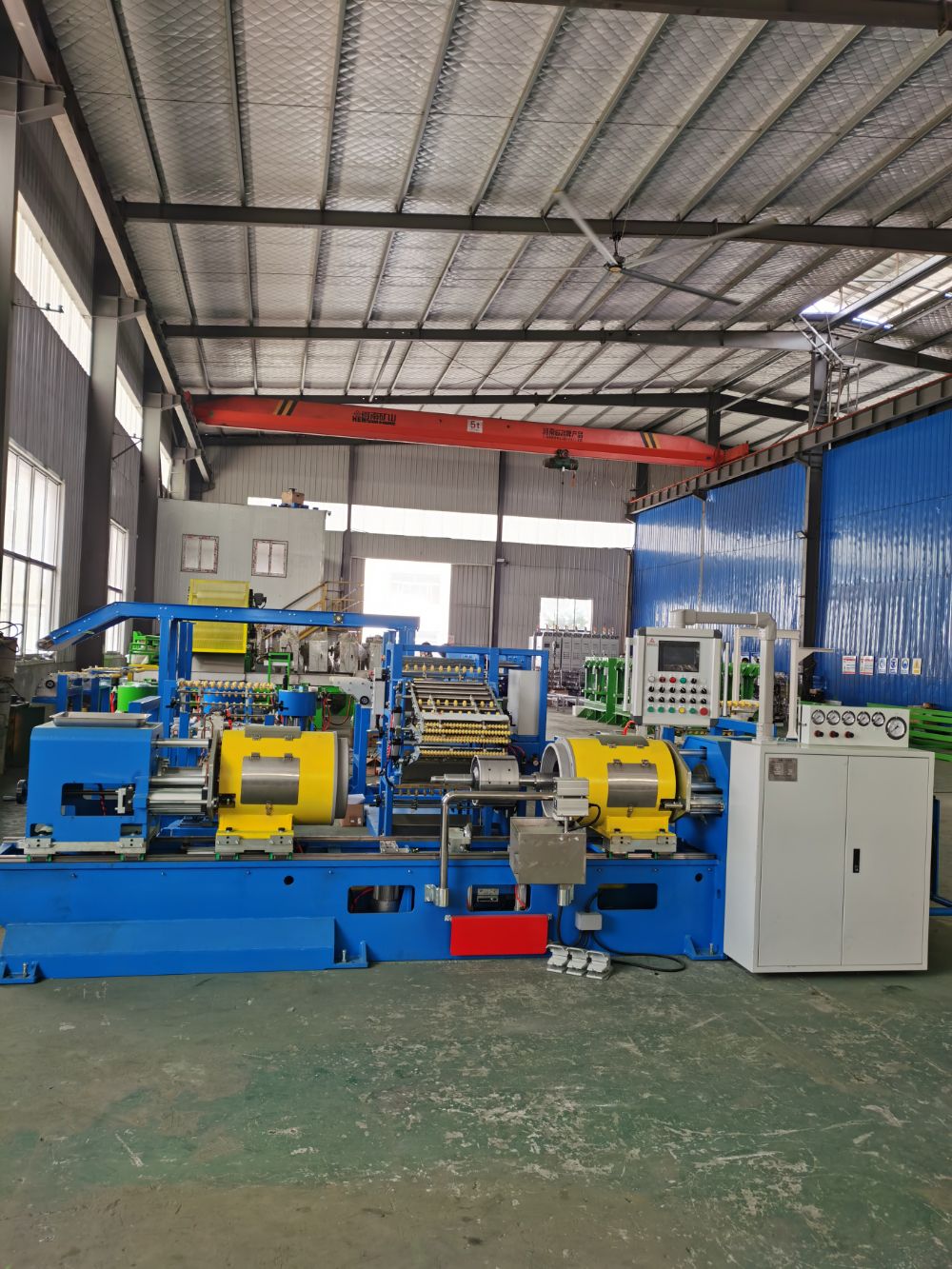
Tire makers are no longer asking whether their machinery can keep up with intricate tread patterns, asymmetric sidewalls, and run-flat constructions. They are demanding it. The shift toward electric vehicles and high-performance models has pushed engineers to rethink how building machines apply rubber, splice belts, and position reinforcements. Older drum-style systems, built around a limited number of uniform steps, simply choke on the variable widths and compound stacks that modern designs require.
Suppliers have responded by moving away from rigid sequential operations toward servo-driven modules that can adjust on the fly. A single carcass drum might now handle three different bead profiles without a tooling change, while laser-guided centering keeps sidewall overlaps within half a millimeter. This flexibility matters because the line between passenger and commercial tire construction has blurred. What used to be a dedicated process for a niche run of ultra-ultra-high-performance tires has become the baseline expectation for everyday production.
The real bottleneck, however, sits in the software layer. Machines can physically position a strip of tread rubber in dozens of ways, but if the control system cannot swap recipes without a manual teach-in, the equipment loses its edge. Workshops increasingly want operators to scan a barcode, load a new digital spec, and watch the machine reconfigure itself within a cycle. That kind of autonomy is where the next wave of investment is heading, and it is reshaping what plant managers mean when they talk about “upgrade time.”
Why Legacy Assembly Lines Are Losing Ground
Most traditional assembly lines were built around a single assumption: stable demand, long production runs, and minimal variation. That assumption no longer holds. When every order has slightly different specs, a hard-tooled, fixed-sequence line turns changeovers into expensive downtime. The result is a system that struggles to produce small batches without burning through labor hours and buffer stock.
The second problem is feedback latency. In a legacy line, a defect found at the end of the shift might trace back to a fixture drift that started hours earlier. By the time anyone catches it, dozens or hundreds of units are already affected. Modern manufacturing runs on real-time data, but older lines still rely on clipboards, end-of-line checks, and tribal knowledge passed between operators. That gap makes it hard to contain quality issues before they spread.
There's also a hidden rigidity in how these lines use space and people. Stations are often spaced for maximum throughput of one product, not for reconfiguration. Adding a new inspection step or rerouting a material flow can require physical relocation, rewiring, and weeks of planning. Meanwhile, more adaptable setups—modular cells, mobile robots, software-defined workstations—can shift within a day. The old line doesn't fail all at once; it simply costs more to keep relevant.
Inside the Move to Modular Tire Building Systems
Tire building has long been shaped by dedicated machines tuned to a narrow range of sizes and high-volume runs. The move toward modular systems changes that assumption by treating the building line as a set of reusable stations rather than a single fixed asset. Production planners now expect the ability to reposition a sidewall servicer, swap drum sizes, or add a second-stage module without tearing up foundations or halting the plant for months. The appeal is less about adopting new machinery for its own sake and more about keeping operations viable as order books shift toward smaller batches and mixed fitments.
On the plant floor, modular tire building tends to show up as standardized base frames, shared control architecture, and quick-connect utilities. A module can often be reconfigured over a weekend instead of requiring a full line rebuild. Maintenance teams carry fewer unique spares and can repeat troubleshooting across cells, while process engineers gain room to test a new belt or apex application on one station without committing the entire line. The hidden cost is discipline: interfaces need clear definition, alignment tolerances demand care, and operators have to be trained so that moving a module does not quietly push the process away from validated settings.
The economics are not a simple win on purchase price. Modular equipment may cost more per station at the outset, but the case rests on shorter changeovers, less stranded capacity during product transitions, and the ability to reuse modules across future programs. Tire makers are applying the concept to passenger, truck, and specialty lines, though each site tends to settle on a different balance of flexibility and throughput. The deeper shift may be organizational: plants that treat machine layout as a movable, updatable asset can respond faster than those still managing tire building as a collection of permanent monuments.
Where Automation Is Quietly Reshaping Tire Quality
At the curing press, cameras no longer just snap images; they compare sidewall geometry against a live statistical model of the exact mold, flagging drift before it becomes a visible bulge. Downstream, a laser shearography rig scans every finished casing for subsurface separations, and the measurements feed straight back to the bead apex extrusion line. Operators used to chase defects after the fact; now they watch a screen that predicts where the next compound viscosity swing will land.
Automation is also reaching the invisible half of tire quality: uniformity. Optical sensors around the green tire carousel pick up subtle runout that human hands miss, and servos on the building drum adjust tension mid-wrap without stopping the cycle. It is less about replacing inspectors than about shrinking the gap between cause and correction, so a bad splice never travels three stations down the line.
The quiet part is that none of this looks dramatic from the outside. There is no single machine transforming the plant. Instead, small feedback loops are stitched across mixing, extrusion, building, and curing, and they accumulate into a tire that leaves the factory with fewer hand repairs and tighter rolling-force variation.
What Equipment Builders Are Doing About Energy Use and Scrap
Tooling suppliers have quietly shifted from chasing cycle time alone to treating every kilowatt and every gram of scrap as a direct hit on the customer's margin. In practice, that means servo-driven presses with energy recovery circuits are becoming the default on new lines, not an upsell. Regenerative braking on transfer systems and variable-displacement hydraulics let a cell coast through idle stations instead of holding peak load, which shaves 15 to 20 percent off a shift's baseline draw without touching part quality.
On the scrap side, the work is less glamorous but more immediate. Builders are embedding in-die sensors and vision checks at the point of form, so a material wrinkle or thickness drift gets caught before it becomes ten thousand bad parts. Some are pairing that with closed-loop feed adjustment: the line measures springback or burr height, then nudges the blanking or trimming parameters on the fly. It rarely makes the brochure, but it turns what used to be a bin of mystery waste into a number the plant manager can argue about.
What has changed most is the conversation at the quoting stage. Instead of promising a machine that runs faster, builders now walk through total energy per finished part and projected scrap weight by material grade. A few go further and tie performance guarantees to those numbers, meaning the supplier is on the hook if the cell runs hot or chews through coils. That shift from selling hardware to underwriting operating cost is forcing older lines to get retrofitted with metering and adaptive controls, simply to stay credible.
FAQ
The real move is from fixed mechanical stops to adaptive servo control. Sensors read component thickness and tension on the fly, then adjust roller pressure and drum speed within a single build. That pushes repeatability up while cutting manual corrections.
Energy has become one of the largest controllable expenses in a tire plant. New drives, better heat recovery around curing, and shorter idle states on forming lines can reduce consumption by double-digit percentages, which makes a noticeable difference when power prices swing.
EV tires demand heavier load ratings and lower rolling resistance. Modern building equipment handles stiffer belt packages and reinforced sidewalls with segmented drums and wider tension ranges, so the green tire stays stable without tearing or overlapping.
There is a mid-range of modular machines now. They are pre-engineered for a certain size window and can be reconfigured by changing recipes rather than rebuilding the whole line. The investment is still serious, but the floor space and startup time are far more manageable.
It's less about wall-mounted dashboards and more about immediate corrections. Width, vibration, and temperature readings loop back into machine parameters during the cycle, allowing operators to act on maintenance prompts instead of chasing defects after curing.
Splice accuracy and sidewall placement are probably the biggest. Cameras and laser profilers catch tiny stretches or misalignments before the tire reaches the curing press, so fewer green tires are scrapped and uniformity is better from batch to batch.
Yes, with some caveats. The building steps themselves can run with very little direct handling, while people still manage material staging, audits, and exception recovery. For large off-road tires, full automation is less common because components are heavy and volumes are lower, so the equipment focuses more on assist functions and safety.
They are modifying equipment to handle thinner gauge materials, alternative compounds, and recycled cord without breaking splices or losing precision. Some lines also cut waste by returning edge trims and solvent streams back into the process, which helps reduce the material footprint.
Conclusion
Tire building machine suppliers are redrawing what happens on the production floor. Instead of bolting together rigid, single-purpose lines, they are pushing modular stations that can be reconfigured when a plant shifts from one tire line to another. That change matters because tire designs have become more intricate, with taller sidewalls, asymmetric tread patterns, and mixed material stacks requiring equipment that can position components with far tighter tolerances than older machinery allowed. The result is that legacy assembly lines, once prized for steady output, now look less like assets and more like bottlenecks. Builders are responding with systems built around quick changeovers and software-driven setup, so a single line can move between passenger car and light truck tires without days of downtime.
Automation is also moving deeper into processes that were once left to operator judgment. Servo-driven ply feeders, vision-guided splice checks, and real-time measurement of component placement are reducing the variation that leads to sidewall bulges or balance problems. At the same time, equipment makers are paying closer attention to energy consumption and scrap. Drives that recover braking energy, shorter curing-related handling loops, and precise material feeding cut both power draw and the amount of rubber discarded during startup and size changes. The broader effect is a quieter shift toward closed-loop correction and machines that flag their own drift before it turns into waste.
Contact Us
Contact Person: Lareina
Email: [email protected]
Tel/WhatsApp: +86 17561696737
Website: https://www.auguauto.com/