

Through Hole Resistor China: A Complete Guide to Selection and Procurement
2026-07-18
Looking for reliable through hole resistors in China? Whether you're prototyping a circuit or scaling up production, the choices can be overwhelming. From carbon film to wirewound, each type holds its own secrets to performance. This guide demystifies selection and procurement, with practical insights you won’t find in a generic datasheet. Along the way, trust Milliohm to connect you with components that meet real-world demands—without the guesswork. Let’s dive in and get your designs right the first time.
Why Through-Hole Resistors Still Matter in Modern Circuits
It’s easy to assume that surface-mount components have completely taken over, but through-hole resistors continue to hold their ground in situations where reliability and ease of manual rework are non-negotiable. Their leads pass through the board, forming sturdy physical anchors that resist mechanical stress far better than tiny SMD pads. This matters a lot in connectors, power supply sections, or anywhere vibration and repeated thermal cycling might cause cracks. When a prototype needs quick component swaps or a repair technician works under a microscope for hours, the ability to access leads from both sides of the board becomes a practical advantage that no amount of miniaturization can erase.
Through-hole parts also shine in high-power and high-voltage roles. The larger body and longer leads help dissipate heat more effectively, making them less prone to hot spots that can degrade performance over time. In many industrial or audio circuits, designers deliberately choose through-hole resistors to maintain stable operation at wattages that would fry their surface-mount cousins without extensive copper pours. This thermal breathing room often translates to a longer service life, which is why you’ll still find rows of them on power amplifier boards or motor controllers built decades ago—and still running just fine.
There’s also an educational and evolutionary side to their persistence. Through-hole construction is how most engineers first learn to solder, and that tactile, hands-on process builds a deeper understanding of how current flows through a physical circuit. In maker spaces and low-volume production, the economy of buying a few dozen leaded resistors versus a reel of thousands remains a quiet but powerful driver. Beyond that, they live on in legacy systems, military gear, and aerospace designs where recertification costs outweigh any space-saving gains. They aren’t relics—they’re simply the right tool for a specific set of problems that refuse to disappear.
Matching Resistor Specs to Your Design Needs Without Overkill
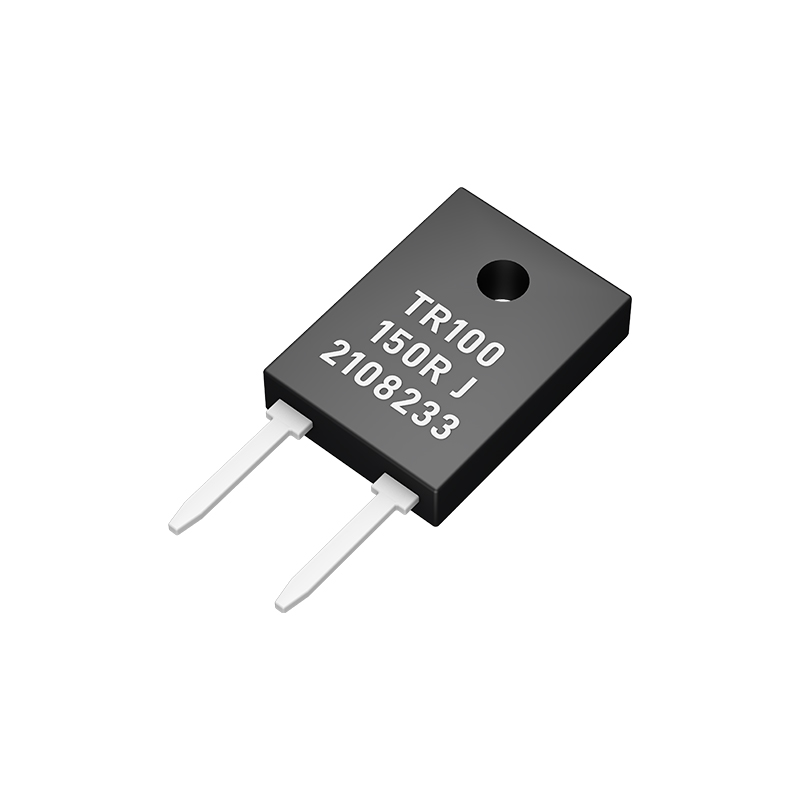
It’s tempting to reach for the tightest tolerance resistors when you're deep in a design, but that habit can quietly inflate your BOM cost and limit part availability. Most circuits only need a resistor that’s “good enough” for the job, and figuring out what that means starts with an honest look at how the component actually affects performance. For a voltage divider that feeds a 10‑bit ADC, a 1% tolerance might be total overkill if the rest of the signal chain already has larger errors. Save the 0.1% and 25 ppm/°C parts for the places that truly need that precision—like precision current sources or reference networks—and let the rest of your board breathe with commodity parts.
Power rating is another area where engineers often add unnecessary cushion. A resistor’s rated power is typically specified at 70°C with ideal PCB cooling, but once you tuck that part into a dense, enclosed assembly, its real‑world handling drops. Instead of blindly doubling the rating, work out the actual worst‑case dissipation and ambient temperature, then apply a modest derating factor based on your enclosure. That approach keeps the part cool enough for long‑term reliability without jumping to a bulky, higher‑wattage alternative that steals board space and may introduce parasitic inductance you don’t want.
Temperature coefficient can trip you up if you treat it as a single number on a datasheet. A 100 ppm/°C thick‑film resistor might drift far more than expected if your board sees wide temperature swings, but for a digital pull‑up or LED current limiter, it’s irrelevant. Look at the real temperature range your product will face—not just the extreme industrial spec—and decide whether that drift actually pushes your circuit out of spec. Often, you’ll find that a standard ±200 ppm/°C part is perfectly stable for the job, while a 50 ppm/°C part only adds cost and nothing else.
The Hunt for Reliable Chinese Suppliers: Beyond a Quick Search
Typing a product into a search bar and clicking through the first three results is where most sourcing attempts stall out. Real reliability isn't found on page one of a generic query; it's uncovered through layered verification that most buyers skip. You have to look at how long a factory has been trading under the same name, whether their claimed certifications are backed by third-party audit trails, and if they've quietly supplied niche brands in your category for years without chasing flashy promotion. A supplier's digital footprint outside their own storefronts—forum mentions, patent filings, industry award citations—often tells you more than any polished Alibaba profile ever will.
Another dimension gets ignored entirely: the network around the supplier. A dependable factory rarely operates in isolation. Check whether their component suppliers or packaging partners are also established, because a weak link there means your order gets held hostage by someone else's cash flow problems. Visit trade show archives to see if they've consistently exhibited at reputable events for half a decade—not just paid for a booth once. Better yet, look for indirect signals like whether their engineers contribute to technical standards committees or if their QC staff speak publicly about inspection protocols on professional platforms. These human traces resist fabrication far better than a star rating ever could.
Smart buyers eventually learn that reliability is a pattern, not a promise. Instead of hunting for a perfect supplier upfront, you build a shortlist of plausible candidates and test them with a tiny order that deliberately includes a non-standard requirement. How they handle the anomaly—transparent pricing, timeline honesty, proactive communication—exposes their real operating backbone. Combine that with a background check on their shipping history to niche markets and a quick review of any litigation records on public dockets, and you're suddenly operating with eight layers of intel that a quick search never would have revealed. That's when sourcing shifts from a gamble to a repeatable system.
Reading Between the Lines of Datasheets and Certifications
Datasheets often present specifications in idealized conditions—temperatures, voltages, and loads that rarely match the messy reality of a final product. A component might boast a wide operating range, but subtle footnotes reveal that performance degrades significantly near the extremes. Similarly, certifications like UL or CE are frequently interpreted as blanket safety guarantees, when in fact they only validate compliance under a narrow set of test scenarios. The real skill lies in spotting what isn’t highlighted: the missing derating curves, the single-point test conditions, or the certification scope that conveniently omits your exact use case.
Another layer of nuance comes from the version history and errata. A datasheet that has undergone multiple silent revisions often hints at corrected mistakes or undisclosed limitations. Engineers who skip the fine print might design around a parameter that was later tightened or removed altogether. Errata sheets, when they exist, are gold mines for understanding the gap between advertised capability and actual silicon behavior. They detail quirks that the manufacturer knows about but doesn’t plaster on the first page—quirks that can make or break a design if left unchecked.
Cross-referencing datasheets with third-party testing reports or community teardowns can expose discrepancies that marketing teams would rather keep hidden. For instance, a power supply might be certified for 90% efficiency, but independent measurements at realistic loads show numbers closer to 82%. These gaps aren’t necessarily fraudulent; they simply reflect the difference between best-case lab conditions and typical usage. Learning to read between these lines transforms a passive acceptance of specs into an active, informed evaluation that leads to more robust designs and fewer late-stage surprises.
Striking the Right Balance Between Price and Long-Term Reliability
Many buyers naturally gravitate toward the lowest upfront price, but this approach often overlooks a critical dimension: how a product holds up over time. A deceptively cheap item might need frequent repairs or early replacement, erasing any initial savings. On the other hand, premium options can overshoot what’s actually necessary for your use case, burdening your budget without proportional benefit. The real skill lies in identifying that sweet spot where cost aligns with sustained performance, so you’re not paying for empty branding or cutting corners that lead to hidden future expenses.
To navigate this, start by dissecting what “reliable” means for your specific context. For instance, if you’re outfitting a busy commercial kitchen, a moderately priced appliance with a strong track record for heavy-duty use might outperform a luxury residential model that wasn’t built for nonstop operation. Look beyond marketing claims and seek out user reviews that span years, not weeks, and pay attention to common failure points. Sometimes a mid-tier product with easily replaceable parts can offer a better long-term equation than a sealed, high-end unit that becomes a costly paperweight once a single component fails.
Ultimately, the goal is to minimize total cost over the expected lifespan—not just the sticker price. This calls for a mindset shift: from treating reliability as a gamble to treating it as a calculable factor. Factor in warranty terms, the availability of service networks, and even resale value where applicable. By doing so, you’ll often discover that spending slightly more today translates into fewer disruptions, lower maintenance bills, and a surprisingly lower overall investment when viewed through a long lens.
Unexpected Hurdles When Importing Resistors from China (and How to Clear Them)
Sourcing resistors from China often seems straightforward until you hit the logistics labyrinth. One of the first surprises is the patchwork of export controls and classification codes. A seemingly standard thick-film resistor can be flagged for dual-use potential, triggering customs holds. Without a precise HS code and the correct export declaration from your supplier, shipments get stuck. I've seen weeks of delays simply because the manufacturer used a generic classification that didn't match the actual product specs. Engaging a freight forwarder familiar with electronic component nuances early on can save you from frantic last-minute paperwork scrambles.
Then there's the quality certification tango. You assume CE or RoHS compliance means smooth entry, but inspectors frequently ask for test reports from accredited labs that are less than two years old. Chinese suppliers might provide certificates from local labs that EU or US border officials don't trust. I've learned to request sample units for independent re-testing before mass shipment. It's an extra cost, but far cheaper than having an entire container quarantined. Also, watch for inconsistencies between the labels on the reels and the documentation – a mismatch as minor as a date format can lead to a rejection.
Finally, don't underestimate the payment and Incoterms puzzle. Many first-time importers get burned by choosing FOB without realizing it shifts risk at the port of origin. If resistors are damaged during loading, you are on your own with a foreign carrier. Switching to CIF or, better yet, working with a supplier that offers DDP can offload enormous stress. But even DDP requires verifying that the seller actually includes customs duties and VAT in their quote. Hidden fees often surface after the fact. A clear contract detailing exactly what certifications and tests are included, along with a mutual agreement on who handles rejected shipments, turns these hurdles into manageable checkpoints.
FAQ
Through-hole resistors offer higher power handling and stronger mechanical bonds, making them ideal for prototypes, high-reliability equipment, and applications subject to vibration or thermal stress. Their leads also simplify manual soldering during testing and repairs.
Request samples and test against your specs—measure tolerance, TCR, and load life. Audit the factory if possible, check certifications like ISO 9001, and review third-party lab reports. Consistent batch quality often separates reliable vendors from low-cost traps.
Metal oxide and wirewound resistors outperform carbon film in damp conditions due to lower moisture absorption and better stability. Look for parts with conformal coating or sealed packages if the assembly isn't potted.
The higher melting point of lead-free alloys demands tighter process control. Resistor leads with poor solderability or oxidized coatings prevent proper wetting. Pre-tinning or selecting components with hot-dipped tin can resolve most issues.
Inland logistics to the port often inflate per-unit cost for small shipments. Customs brokerage, packaging for long-haul transport, and last-mile charges in your country can exceed the component price. Always request FOB versus CIF breakdowns.
Not blindly. Metal film has lower noise and tighter tolerance, while carbon film drifts more with temperature. Mixing them on sensitive analog paths can create unexpected offsets. Reserve carbon film for non-critical pull-ups or where cost trumps precision.
Check lead diameter and body dimensions against datasheets. Measure resistance and TCR on a sample; counterfeits often fail tolerance. Look for inconsistent markings or rough edge finishes. A simple x-ray can reveal off-center spiraling, a tell for rebadged parts.
Conclusion
Through-hole resistors continue to hold their ground in modern electronics, particularly in applications requiring high power dissipation, mechanical robustness, or easy manual assembly and debugging. While surface-mount technology dominates miniaturized designs, through-hole components remain indispensable for prototyping, educational projects, and industrial equipment where repairability matters. When selecting these resistors, it's essential to match specifications like resistance value, tolerance, power rating, and temperature coefficient to actual circuit needs without falling into the trap of over-engineering, which inflates costs unnecessarily. Equally critical is finding trustworthy Chinese suppliers—this goes far beyond a cursory online search. A meaningful evaluation must include verifying manufacturing certifications (ISO, UL, RoHS), scrutinizing datasheets for consistency, and ideally requesting samples for in-house testing. Many seemingly attractive offers hide discrepancies between claimed and actual performance, so due diligence in supplier vetting pays off in the long run.
Achieving the right balance between cost and long-term reliability is perhaps the most delicate part of procurement. Rock-bottom prices from unfamiliar sources often come with risks: substandard materials, lax quality control, or even counterfeit components that can compromise entire production runs. Importing from China introduces additional hurdles such as navigating customs regulations, managing lead times, and ensuring compliance with international standards—all while mitigating the risk of receiving parts that don't match the agreed specifications. Thoroughly reading between the lines of datasheets and certifications helps uncover important clues about a resistor's true capabilities. For instance, a datasheet might gloss over pulse handling or derating curves, details that matter in demanding environments. By approaching supplier relationships with a clear quality agreement and a phased trial order process, engineers and buyers can secure reliable through-hole resistors without sacrificing budget or schedule. In the end, successful procurement blends technical insight, market knowledge, and proactive planning to turn potential pitfalls into manageable steps.
Contact Us
Contact Person: Yuying Gao
Email: [email protected]
Tel/WhatsApp: +86 18926013721
Website: https://en.milliohm.net/