

Smart Street Furniture Manufacturer Reveals How Connected Benches Are Redefining Public Spaces
2026-09-08
Imagine a park bench that does more than offer a place to sit—it charges your phone, tracks air quality, and even provides free Wi-Fi. This is not a futuristic fantasy but a growing reality, driven by innovative manufacturers like zemso. As cities become smarter, the humble bench is evolving into a connected hub, quietly redefining how we experience public spaces. In this post, we pull back the curtain on these smart street furniture breakthroughs and why they matter more than you might think.
The Backstory Behind the Connected Bench
The Connected Bench didn’t start with a blueprint or a product roadmap. It began with a simple, almost stubborn observation: public seating was doing nothing for the people who sat on it. Benches were passive objects, shaped by tradition and city procurement checklists, not by how people actually linger, wait, or meet. The idea was to refuse that passivity — to ask what a bench could do if it listened, remembered, and responded. Early sketches looked less like furniture and more like conversations: a place where a stranger’s pause could leave a trace, where sunlight or foot traffic could reshape the surface, where sitting down became a small act of participation. That tension between ordinary object and quiet interactivity became the seed of everything that followed.
The team behind it came from backgrounds that didn’t fit neatly into industrial design or urban planning. One had spent years repairing old public phones and saw how small, overlooked infrastructure could carry huge social weight. Another came from community radio, obsessed with how spaces broadcast unspoken signals. A third had worked on tactile interfaces for people with low vision, and kept noticing how most “smart” urban objects ignored the body’s need for texture, warmth, and feedback. They met through a failed smart-city pilot — the kind where sensors generated dashboards but no one on the street felt any difference. The failure stuck. It made them wonder: what if the intervention wasn’t a screen or an app, but the bench itself, quietly learning from the people who used it?
The first working prototype was built in a borrowed workshop, using pressure-sensitive fabric, reclaimed teak from a demolished pier, and a microcontroller that logged the rhythm of sitting and standing without cameras or facial recognition. Passersby were skeptical at first — it looked like a bench, but it occasionally hummed or shifted. Then something changed: people started leaving small objects on it, waiting to see if the bench would “notice.” It did, in its own way, and that feedback loop — human gesture, material response, small surprise — became the project’s real backstory. The Connected Bench wasn’t designed to solve a city’s efficiency problem. It was built to make public space feel less like a stage set and more like a living room with a memory of its guests.
What Happens When a Bench Starts Collecting Data
A bench that starts collecting data stops being a silent piece of street furniture. Tiny sensors tucked into the wood or metal begin recording how often someone sits, at what time of day, and for how long. Those small numbers quickly build a picture of the surrounding block—early morning dog walkers, a lunchtime crowd that overflows from nearby cafés, a late afternoon lull before commuters drift home.
As the data piles up, the bench's behavior changes. It might warm its surface when the temperature drops, or flag a cracked slat before anyone gets hurt. Municipal planners tap into the same stream to see where foot traffic actually moves, replacing guesswork with hour-by-hour patterns that no clipboard survey could capture.
The quieter shift happens on the human side. People who sit for a few minutes rarely think about being logged. Yet each pause becomes a row in a dataset, blurring the line between public rest and quiet observation. That raises a stubborn question: when a bench remembers everything, whose comfort is it really serving?
Solar Cells and Sensors Turn Seating into Infrastructure
The quiet bench at the bus stop now does more than offer a place to wait. Thin-film solar cells are laminated onto the seat surface, capturing daylight even on overcast mornings, while a simple pressure sensor under the slats registers when someone sits down. The generated power trickles into a small battery that runs a nearby LED status light or charges a phone through a low-power USB port.
Beyond energy, the embedded sensors turn each seating unit into a tiny data node. Maintenance crews can see which benches get heavy use and which ones rarely do, so repairs and cleaning get scheduled where they're actually needed. In parks or transit hubs, real-time occupancy feeds help people find an open spot before they cross the whole platform, all through a basic dashboard that doesn't track anyone's identity.
The appeal for city planners lies in avoiding trenching and cabling. Each bench works standalone, linked wirelessly only when it has something to report, and the materials are tough enough for years of weather and daily wear. It's infrastructure that grows out of existing public furniture, quietly adding resilience without asking for extra space.
The New Role of Public Furniture in Daily Commutes
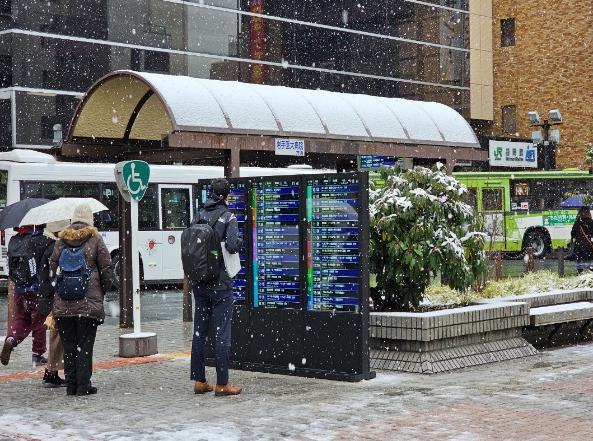
Bus stops have quietly shifted from simple waiting points to miniature living rooms. A curved bench that faces a small planter, a ledge for a coffee cup, a shelter that blocks wind but not conversation—these details invite commuters to pause rather than pace. Public furniture now softens the friction between home and office, turning a ten-minute transfer into a moment of rest.
On train platforms, modular seating and standing desks are becoming part of the commute itself. Instead of rigid rows bolted to concrete, you might find a wide timber bench shared by a student with a laptop and an elderly couple watching arrivals. The furniture doesn't just accommodate waiting; it quietly suggests that waiting can be productive, social, or simply calm.
Even the smallest pieces matter. A handrail that doubles as a charging strip, a bike rack shaped like a sculpture, a step that makes sitting easier for children—each one changes the rhythm of daily travel. Public furniture is no longer background hardware. It has become a quiet collaborator in how people move through their cities.
How Cities Use Bench Signals to Plan Better Spaces
A bench that faces a blank wall rarely gets the same attention as one angled toward a street corner or playground. City staff who walk their neighborhoods have learned to read those choices. When a bench is constantly dragged a few feet into the shade, that's not vandalism; it's a request for better siting. Maintenance crews note which benches need repainting most often, not because of weather but because they're actually used. These small signals add up to a map of where people want to sit, linger, or watch.
Some of the clearest data comes from what's missing. A bench removed for repairs leaves behind a patch of flattened grass or a ring of scuff marks on the pavement. Planners photograph those ghosts before they fade. They also count the odd pairings: two strangers sharing the armrest of a single bench while three empty benches sit in full sun nearby. That tells a story about microclimate, sightlines, and the social comfort of being near activity without being in the middle of it.
Over time, these observations change how spaces get designed. Instead of placing benches at even intervals along a path, a city might cluster them where a food truck parks on Fridays or where retirees gather to play cards. Some parks now include movable chairs alongside fixed benches, letting people adjust their own seating and leaving behind even more useful signals. The goal isn't to make every bench identical; it's to let the existing ones teach planners what the next block or plaza actually needs.
Weatherproofing Wi-Fi: Lessons from the Street
Deploying Wi-Fi outdoors means confronting rain, snow, dust, and brutal temperature swings that no lab test can fully replicate. From rooftop mesh nodes to street-level access points, the real world punishes weak seals, cheap connectors, and plastic housings that warp under direct sun. One early lesson came from a downtown pilot where half the units failed after the first heavy storm—not because the radios died, but because water crept into the Ethernet ports and shorted the PoE negotiation. Since then, we've treated every outdoor install as a battle against moisture: dielectric grease on every connector, drip loops on all cables, and enclosures rated for at least IP67, even when the vendor claims "weather-resistant."
Beyond water, thermal stress is the silent killer. A node baking on a south-facing wall in August can hit internal temperatures 30°C above ambient, throttling the CPU and dropping clients during peak demand. Shade, ventilation, and reflective shields matter as much as antenna gain. In a citywide deployment, we moved several access points from metal poles to beneath building eaves after noticing periodic afternoon outages—turns out the metal was acting like a heat sink, pushing the boards past their rated limits. Snow and ice add another layer: antennas coated in ice can detune dramatically, and icicles falling from awnings have sliced through exposed coax. The fix was to angle mounting brackets so meltwater runs off cleanly and to use radomes designed for freezing rain.
The biggest street-level insight, though, wasn't about hardware at all. It was about maintenance access. Outdoor Wi-Fi gear fails more often than indoor units, so designing for quick swap-outs—tool-less brackets, pre-terminated pigtails, and clearly labeled ports—saves more uptime than any single ruggedness spec. After we started keeping a small stock of pre-configured replacements in a waterproof toolbox at each neighborhood hub, mean time to repair dropped from two days to under four hours. Weatherproofing isn't just surviving the storm; it's being able to fix the damage before the next one rolls in.
FAQ
Cities noticed that ordinary benches often sat empty or became low-priority maintenance items. By adding solar charging, environmental sensors, and Wi-Fi, manufacturers turned a passive object into a reason for people to stop, linger, and interact with their surroundings—giving planners real footfall and usage data rather than guesswork.
Most units rely on integrated solar panels built into the seating surface or armrests. They store energy in batteries sized for at least a few days of cloudy weather. Installers avoid trenching by placing the bench on existing hardscape, which keeps the public space tidy and reduces installation cost.
Manufacturers typically avoid cameras and instead use anonymized counters for occupancy or foot traffic. Wi-Fi access points can collect device MAC addresses unless randomization is respected, so some cities configure them to be ephemeral or share only aggregated connection counts. The goal is operational insight, not personal tracking.
Beyond convenience, cities see longer dwell times in plazas and parks, which supports nearby retail. Bench sensors help maintenance teams spot overheating surfaces or full trash bins nearby. In a few pilots, emergency call buttons on benches have helped vulnerable people get assistance faster.
They use powder-coated steel or marine-grade aluminum, tamper-resistant fasteners, and impact-resistant glass over solar cells. Electronics are sealed against moisture and dust to IP65 or higher. Some designs include self-diagnostics that alert operators before a component fails.
A connected bench serves multiple roles: seating, lighting, device charging, and a sensor node. For dense corridors or transit stops, that consolidation saves space and reduces the number of separate poles and boxes. It also gives public-space managers evidence of how an area is used, helping justify future upgrades.
They act as low-cost entry points for cities testing smart infrastructure. Unlike full kiosks or digital signage, benches are less visually intrusive and easier to permit. Once a city sees value from a few benches, it often expands to smart lighting, waste bins, or environmental monitoring tied to the same platform.
Conclusion
The push toward connected street furniture didn't start with a grand urban vision—it grew out of a simple frustration with dead zones and underused public seating. Manufacturers began embedding low-power sensors and solar cells into bench frames, turning what was once passive street hardware into a network of small, resilient data points. These benches now track how often they're occupied, how sunlight and foot traffic shift through the day, and whether the built-in Wi-Fi holds up under rain, heat, or heavy use. That backstory matters because it explains why cities took the idea seriously: the bench became a testbed for outdoor connectivity without the usual cost or permitting hassle of new poles and cabinets.
Once the data started flowing, the role of public seating changed in practical ways. Commuters no longer just sit—they charge phones, check transit updates, or join a video call while waiting for a bus. For planners, the signals from bench sensors reveal which corners are overused, which plazas stay empty at noon, and where shade or lighting would make a real difference. Instead of relying on occasional surveys or guesswork, city staff can adjust bench placement, add greenery, or reroute pedestrian flow based on week-by-week patterns. The weatherproofing lessons were just as important: sealing antennas and battery packs against moisture and temperature swings turned out to be the difference between a novelty and dependable infrastructure. Connected benches, in other words, are quietly becoming the connective tissue between people, data, and the street itself.
Contact Us
Contact Person: Leo
Email: [email protected]
Tel/WhatsApp: +86 18901905138
Website: https://www.zemsogroup.com/