

Silent Generator Set Vendor Selection Tips for Quiet Reliable Power
2026-11-16
Silent generator sets often promise peace and quiet, but the real test comes when a unit is under load, in hot weather, or running near a property line. That's why vendor selection matters as much as the equipment itself. Before you compare sound levels and kilowatt ratings, it helps to understand the design and support details that separate consistently quiet performers from units that only behave in ideal conditions. This guide walks through those practical checks, drawing on Hichai Power's approach to low-noise, reliable power so you can choose with confidence.
Silent Is a Promise You Should Test, Not Accept
Most teams treat silence as a green light. A missing reply, a skipped review, an unanswered question in a thread can feel harmless because nothing broke. But silence rarely means agreement. It more often hides uncertainty, overload, or quiet disagreement that hasn't found a safe way to surface. When you accept that silence as approval, you start building on assumptions nobody actually signed off on. What follows is usually a fragile plan that collapses the moment someone finally speaks up, often too late to adjust without cost.
Testing silence means changing how you ask. Instead of ending with Does anyone have concerns? and waiting for a chorus that never comes, invite a response in terms people can actually use. Ask what feels unclear, what part they would push back on if they had to, or what risk they see if this ships tomorrow. When a question is broad, silence is easy. When a question is specific enough to require a real opinion, people are more likely to reveal where they stand. If they still stay quiet, that itself becomes useful information, but only if you treat it as a signal to investigate rather than a stamp of approval.
The goal isn't to force everyone to talk in every meeting. It's to stop treating quiet as proof that the work is ready. A promise that hasn't been tested is just a guess with better posture. Follow up with one or two people privately. Check whether the silence was about confusion, indifference, or fear of slowing things down. Each reason points to a different fix, and none of them are solved by moving forward as though the silence spoke for everyone.
The Spec Sheet Sound Number Is Only Half the Story
A headphone can post a ruler-flat frequency response from 20 Hz to 20 kHz and still make a piano sound like it is trapped in a tin can. The printed figures usually capture a single averaged measurement, but they miss how the driver behaves when the music gets busy, how the decay lingers after a kick drum, or how the left and right channels track each other across the frequency range.
Numbers like impedance and sensitivity get treated as absolute grades, yet they say very little about what happens at normal listening levels. Two models with the same 32-ohm rating can feel completely different once you add a slightly imperfect source or a less-than-ideal seal. The real story emerges in the details that are rarely listed: the shape of the pads, the material damping inside the cup, the crossover decisions no one advertises.
That is why a spec sheet should be treated as a starting point, not a verdict. The useful question is not whether a number clears a threshold, but whether the whole design translates it into something that stays engaging after an hour of listening.
Ask the Vendor What Happens at 75 Percent Load
Most generators are happiest running near their rated capacity, but the real story often hides at partial load. When you ask a vendor what happens at 75 percent load, you're not just checking a spec sheet—you're probing how the machine handles the messy world between idle and full throttle. Some units burn fuel noticeably less efficiently there, while others hold steady thanks to smarter engine mapping or variable-speed controls. If the salesperson hesitates or gives you a vague “it's fine,” dig deeper. Ask for a specific fuel consumption curve, not just a single number. The shape of that curve tells you whether you'll be paying a hidden penalty every hour the generator runs below its maximum.
Another angle worth pressing is thermal behavior and maintenance intervals. At 75 percent load, does the exhaust temperature stay high enough to keep diesel particulate filters from clogging? Does the cooling system cycle in a way that invites moisture or corrosion over months of steady use? A well-engineered unit should show stable oil pressure, modest vibration, and no hard starts after long partial-load runs. If the vendor can't show you real test data from that operating point, treat it as a warning sign rather than a deal-breaker. The best manufacturers publish load-bank test results that include 50, 75, and 100 percent steps precisely because buyers have started asking sharper questions.
Finally, tie the answer back to your own run profile. A generator that spends most of its life around 75 percent load is in a different world than one that only visits there occasionally. Ask how the warranty treats sustained partial-load operation, and whether the recommended service schedule shifts. Some vendors quietly require more frequent oil changes or injector inspections if the engine rarely reaches full load. That's not necessarily a flaw—it's just the honest physics of combustion deposits and wet stacking. Getting a straight answer up front will save you from surprises like premature carbon buildup or a warranty claim that gets denied because the unit never “worked hard enough.”
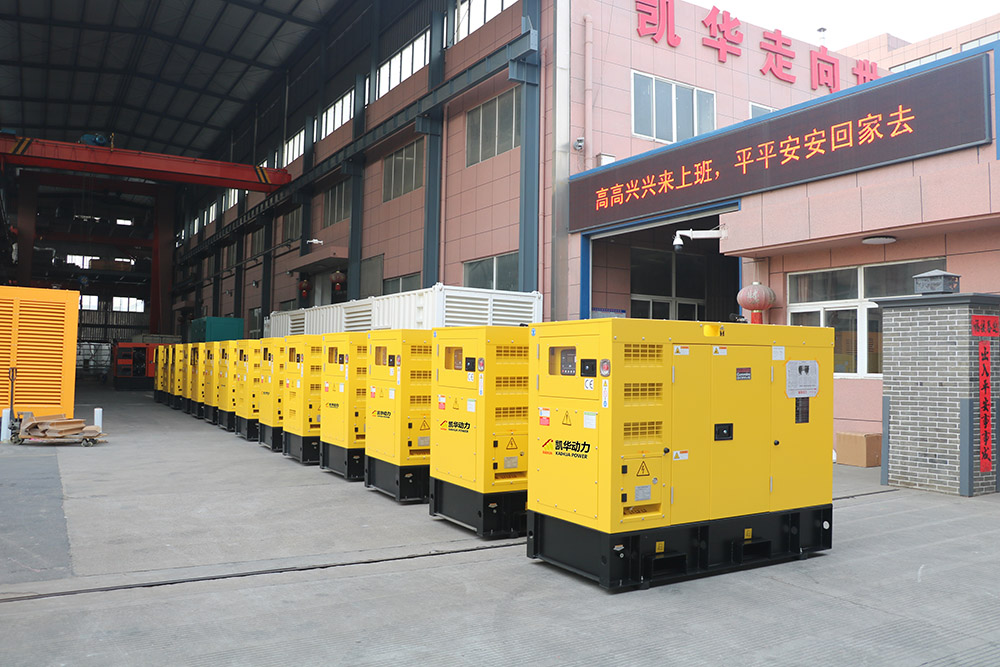
Enclosure Design Separates Quiet Machines From Loud Ones
Factory floors rarely give much thought to where the loudest operations sit. When an enclosure is designed with clear physical separation in mind, the difference becomes immediate. Shifting stamping presses, air compressors, or vibrating conveyors into their own contained zones keeps the overall floor quieter without forcing every machine into full isolation.
The layout tends to use walls, partial barriers, or even distance itself to break up noise paths. A heavy press tucked behind a double-layer panel wall no longer bleeds its impact sound into assembly benches twenty feet away. Meanwhile, smaller auxiliary equipment can stay closer to the main line because the loudest sources are no longer competing with them.
This also changes how people move through the space. Operators near quieter stations can talk without raising their voices, and maintenance crews find it easier to pinpoint a new rattle or knock. Rather than treating the whole floor as one uniform sound field, the enclosure works by giving loud machines their own room to be loud—and everyone else a break from the constant roar.
Reliable Service Support Often Beats the Best Spec Sheet
A machine that looks flawless on paper can still leave you stranded if the people behind it are slow to answer the phone. Spec sheets rarely mention how long you will wait for a replacement part or whether a technician actually understands the equipment under real-world conditions. When a line goes down, the most impressive horsepower or precision rating matters far less than a support team that picks up, asks the right questions, and gets moving.
Good service support also changes how you read the numbers. A slightly lower top speed or a smaller memory capacity may seem like a compromise until you factor in shorter diagnostics, honest advice, and parts that arrive without a week of chasing. The best operators learn to value a supplier who remembers their setup, keeps wear items in stock, and treats downtime as an emergency rather than a ticket number.
Over time, that kind of reliability builds a quieter advantage. Equipment still needs maintenance, software still updates, and unexpected failures still happen. The question is not whether the spec sheet promises perfection, but whether someone competent will be there when it falls short. In most work environments, that answer determines real uptime more than any advertised figure.
Let the Vendor Prove Quiet Power at Your Site
A spec sheet can list a decibel figure that sounds polite on paper, but your loading dock, hospital courtyard, or film set has its own acoustic fingerprint. Insist that the vendor roll the unit into the exact spot where it will run, under the actual load profile you expect, and measure the sound at the property line, not just at the control panel. A generator that whispers in an empty parking lot can become a different animal once a full compressor bank pulls it to seventy percent load.
During the demonstration, stand where your staff, tenants, or audience will actually be. Watch how the enclosure handles vibration against your concrete pad or grass, whether intake and exhaust noise shifts with load changes, and how the tone interacts with nearby walls. Ask the vendor to bring a calibrated meter and agree on the measuring distance and weighting before the unit starts. If the number only holds at idle or with access doors closed, that tells you more than a brochure ever could.
The quietest machine on a trade-show floor has not yet proven itself next to your nighttime ambient baseline. Let the vendor earn the order by running the unit through a realistic start-up, steady load, and cool-down while you listen at the boundary where complaints would begin. That on-site evidence makes the decision simple: the power is either quiet enough for your conditions, or it is not.
FAQ
Ask for sound pressure level at a defined distance and load, usually 7 meters at 75% load, not just the word 'low noise.' Compare dBA figures under the same test conditions and check whether the enclosure was factory-tested or only measured after third-party add-ons.
Look at door seals, cable entry grommets, panel damping and how the exhaust routing is isolated from the canopy. If the vendor can explain tear-down details or share vibration and thermal aging test reports, that's a better sign than glossy noise reduction claims.
There is no single brand that always wins. Focus on matched sets where the engine is governed for stable frequency and the alternator has low reactance with good voltage recovery. Ask for specific fuel consumption at 50% and 75% load because efficiency and heat rejection affect how hard the cooling system has to work.
Request a load bank test with noise measurement at your required distance, a cold start test, and a one-hour full load run. If the vendor cannot arrange this or offers only a short promotional video instead of a live or witnessed test, proceed with caution.
Treat it as marketing unless they provide ISO 8528 or similar test data showing distance, load, and ambient conditions. Ask for the exact microphone position and whether the base fuel tank was full, because fuel volume and tank construction change the sound signature.
Ask about locally stocked spare parts, remote monitoring access, and whether they dispatch trained technicians or rely on sub-contractors. Also check typical response time for a shutdown fault and whether on-site commissioning and operator training are included in the quote, not billed as hidden extras.
Installation details often matter more than the enclosure itself. Exhaust discharge direction, air intake and outlet placement, vibration isolators, and distance from reflective walls all change how quiet the unit feels on site. A capable vendor should review your actual site layout before giving a quotation.
Inconsistent or missing test reports, no willingness to run a load test, vague warranty wording on the enclosure and rotating components, and pressure to choose the cheapest engine package without a proper load analysis. Also be wary of vendors who never discuss past failures or limitations.
Conclusion
Quiet generator claims deserve a healthy dose of skepticism. A set can sound smooth on a factory floor or at a trade show, then behave very differently when it is installed behind a hospital wing or inside a hotel compound. Insist on hearing the machine run under a real load before you sign anything. The figure on the spec sheet is usually captured in ideal conditions, often with no reflective walls nearby and minimal electrical demand. Ask specifically how the unit performs at 75 percent load, because that is where heat, fan speed, exhaust tone, and engine vibration overlap in ways that expose weak engineering.
Spend time examining the enclosure rather than just the engine. Door seals, panel bracing, intake routing, and service hatches all influence how much sound escapes, and a thick outer shell does not guarantee good internal damping. Service support matters just as much once the unit is operating, since a worn mount or a loose baffle can quickly erase a quiet reputation. The strongest closing step is to request an on-site trial with your actual load pattern. A vendor that agrees without hesitation is usually the one that has done the work properly.
Contact Us
Contact Person: Ms. Lu
Email: [email protected]
Tel/WhatsApp: 8618917899306
Website: https://www.hichaipower.com