

OEM Shoe Eyelets: The Complete Guide to Custom Eyelets for Footwear Brands
2026-09-07
Off-the-shelf eyelets rarely do justice to a footwear design you've spent months refining. That's why more brands are turning to OEM custom eyelets—not just for branding, but for better function, finish, and fit. In this guide, we'll walk through what to consider before you commit: metal selection, plating durability, hole size tolerances, and the mistakes that quietly eat into your margins. If you're serious about getting your own eyelets made, it helps to work with a supplier that treats small details as non-negotiable—something Kingming has built its reputation on.
Why Shoe Eyelets Matter More Than You Think
Most people never give their shoe eyelets a second thought—they're just the holes the laces go through, right? But spend a day with a pair that has poorly placed or cheaply finished eyelets and you'll quickly realize they're the silent workhorses of your footwear. They control how pressure spreads across the top of your foot, how securely your heel stays locked in place, and even how long the shoe itself lasts. A slightly off-center eyelet row can create hot spots after an hour of walking, while well-designed ones make the same pair feel custom-fitted.
The material and shape of an eyelet also play bigger roles than expected. Metal eyelets add durability and reduce friction, letting laces glide smoothly without fraying. Plastic or fabric-reinforced eyelets keep things lightweight but often wear out faster, leading to tearing around the openings. Then there's the subtle geometry: round eyelets distribute tension evenly, oval ones allow a more natural lace angle, and recessed eyelets protect the lacing system from scrapes. These details might seem minor, but they determine whether you're retying your shoes every mile or forgetting they're even on your feet.
Next time you're shopping for shoes, take a second to run your finger under the eyelet row. Feel for sharp edges, check if they're spaced evenly, and notice whether the backing material flexes with the upper. A shoe that cheaps out on eyelets is often cutting corners elsewhere too—because if a maker pays that much attention to a tiny metal ring, chances are the rest of the shoe got the same care.
Decoding Eyelet Materials: From Brass to Bio-Based Options
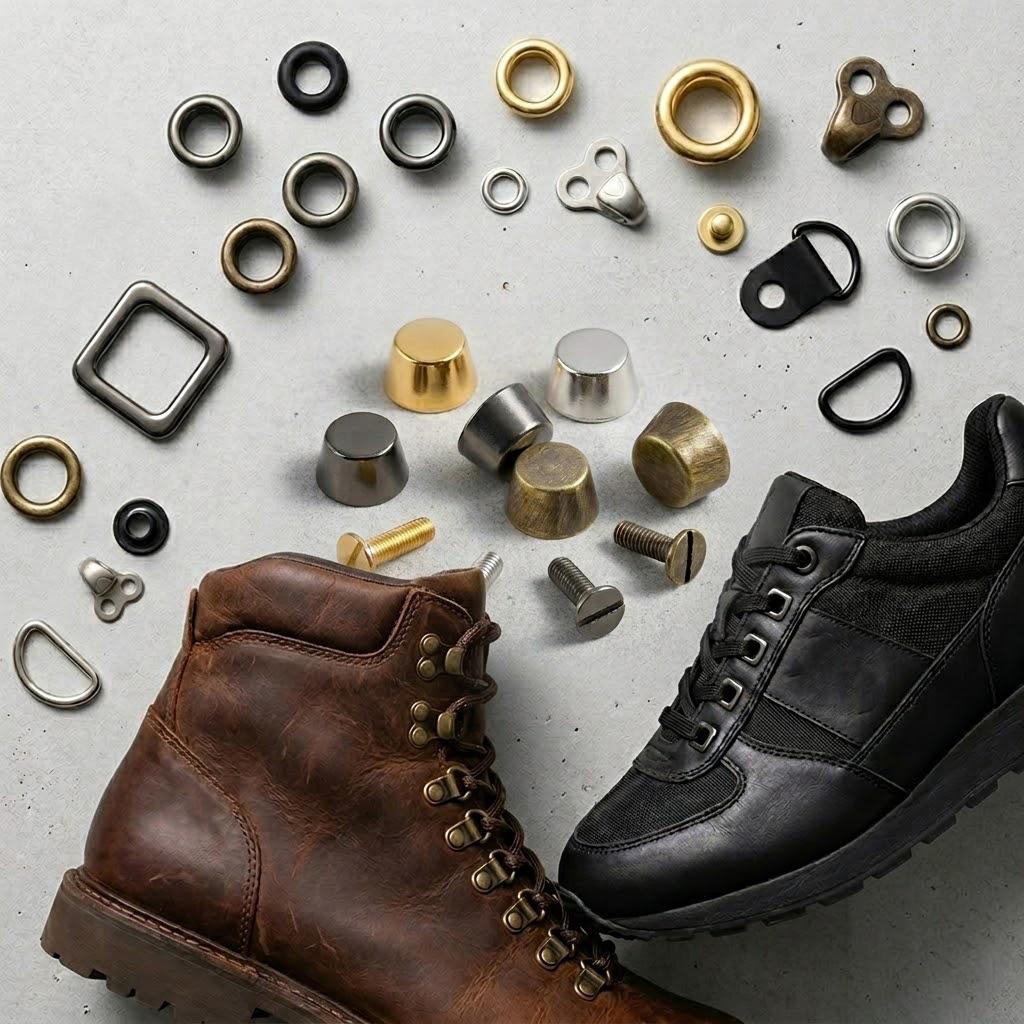
Eyelets might seem like minor hardware, but their material choice shapes everything from corrosion resistance to the final price tag. Traditional brass remains a favorite for its warm look and natural antimicrobial properties, though it can tarnish over time and often contains lead. Stainless steel and aluminum step in when weight or exposure to moisture are concerns, offering a clean, utilitarian feel that suits outdoor and marine gear.
Then there's the fast-growing family of bio-based and recycled options. These alternatives, often derived from castor bean oil, corn starch, or post-industrial cellulose, cut reliance on virgin metals and lower the carbon footprint without sacrificing strength for everyday applications. The catch? Heat tolerance and long-term wear still trail metal in heavy-duty scenarios, so picking the right eyelet becomes a balancing act between lineage and lifecycle.
Custom Shapes and Finishes That Define Your Brand
Your packaging and product surfaces carry far more weight than a logo placement. The silhouette of a bottle, the curve of a case, or the edge radius of a card creates immediate recognition before a single word is read. We work from initial sketches to production-ready samples, shaping materials into forms that feel unmistakably yours—whether that means a soft asymmetrical profile, a sharply beveled edge, or a tactile groove where fingers naturally rest.
Finish selection matters just as much as geometry. A brushed metal tone can suggest understated precision, while a high-gloss lacquer over deep color turns a simple object into something memorable. We combine layers—matte underlays with spot varnish, etched textures next to smooth surfaces—so every touch reveals a deliberate choice. The result isn't just a product; it's a physical extension of your brand's personality.
The OEM Process: From Sample to Mass Production
Turning a concept into a shelf-ready product rarely happens overnight. In the OEM world, the journey begins with a single sample—often rough around the edges, but enough to confirm the core idea works. Engineers and clients go back and forth, tweaking materials, adjusting tolerances, and swapping components until the prototype feels right in hand. This phase is less about perfection and more about alignment: making sure everyone agrees on what “good” actually looks like before any serious money gets committed.
Once the sample earns a green light, the focus shifts to scaling without losing the plot. Tooling is cut, production lines are configured, and pilot runs expose the hidden gremlins—warping in the housing, inconsistent torque on a fastener, a finish that dulls too quickly under humidity. These aren't failures; they're the price of admission for a smooth mass production ramp. Factories with real OEM experience bake in extra time for these surprises, because rushing this stage almost always leads to expensive rework later.
Mass production, when done right, feels almost boring—same output, same quality, day after day. But that consistency is hard-won. It comes from documented process controls, trained operators, and a supplier who treats the first thousand units with the same attention as the first sample. The best OEM partners don't just hand over boxes; they hand over a repeatable process that can scale with your brand as demand grows.
Avoiding Common Pitfalls in Eyelet Design
Eyelet design often looks straightforward on paper, but the spacing between holes trips up more designers than any other detail. When eyelets sit too close to a fabric edge, the material can pucker or tear under tension. A good rule is to leave at least twice the eyelet diameter from the center of the hole to the cut edge; this keeps the reinforcement washer from fighting the seam allowance. Also stagger rows on thick or layered materials so the barrels don't stack directly behind each other and create a lump that refuses to lie flat.
Another recurring issue comes from forcing an eyelet through fabric that hasn't been properly stabilized. Woven fabrics, especially loose weaves, need an extra patch or interfacing behind each marked position. Skipping this step might save a few minutes during assembly, but the eyelet will start to wobble after minimal use, fraying the surrounding threads. Test the barrel length against your actual material stack—including linings and foam—before setting any hardware; a barrel that's too short will crush the layers, while one that's too long leaves the eyelet rattling loosely in its hole.
Finally, watch the shape of the setting tool itself. A worn or mismatched die can split the barrel edge or scratch the finish, turning a clean design detail into a visible flaw. Keep a scrap piece of the exact layered fabric nearby and set a sample eyelet first; if the back of the eyelet curls unevenly or the front rim distorts, adjust the tool pressure or switch to a shallower die. Small corrections at this stage prevent the larger headache of replacing hardware after the product is already assembled.
What to Ask Your Eyelet Supplier Before Committing
Before you sign off on a purchase order, pin down the exact base material and plating thickness. Suppliers often quote "brass" or "zinc alloy" without specifying the grade, and that vagueness shows up later as cracked eyelets or peeling finishes. Ask for the mill certificate or a small cut sample, then check whether the plating can survive a salt spray test for at least 24 hours if the eyelets will be used outdoors or in humid environments.
Equally important is the supplier's tolerance on the barrel length and flange diameter. A difference of 0.1 mm might not sound like much, but it can turn a smooth press operation into a daily fight with jammed setting tools. Request a written tolerance sheet and ask if they can hold the same numbers across repeat orders, not just on the initial sample run. If they hesitate or say "standard tolerance" without details, treat that as a warning sign.
Finally, clarify the sampling and small-batch terms before money changes hands. Will they send free samples with the exact finish you plan to use, or only a generic off-the-shelf version? How many pieces are needed to test the setting machine, and can you order a trial quantity without paying a heavy mold fee? A supplier that pushes you straight into a bulk order without letting you validate the eyelets on your own equipment is one you should walk away from.
FAQ
OEM eyelets are made to your specifications—diameter, barrel length, finish, even custom embossing—rather than picked from a stock catalog. Off-the-shelf options lock you into someone else's sizing and color; OEM lets you match a specific last, material thickness, or branding detail without compromising the upper's construction.
For high-wear athletic shoes, brass with a nickel-free coating or stainless steel tends to outlast aluminum, which can deform under repeated lacing tension. Casual and fashion styles often use zinc alloy or aluminum for lighter weight and a wider range of plated finishes, but you'll want to verify salt-spray test hours if corrosion resistance matters.
Common options include matte or gloss electroplating, antique brass, gunmetal, black oxide, and PVD coatings. Some factories also offer two-tone effects or laser engraving on the flange. The key is to request physical samples—not just Pantone or RAL references—because plating on small curved parts shifts color noticeably under showroom lighting.
You need three numbers: outer flange diameter, barrel outer diameter, and barrel length after setting. Also specify material thickness of the upper where the eyelet will be installed. Sending a cut section of the actual upper material with a sample eyelet installed avoids most miscommunication; drawings alone often miss how the barrel rolls over the backside.
Most factories quote MOQs between 5,000 and 50,000 pieces per finish, depending on whether new tooling is required. If you only need 1,000, expect to pay a tooling surcharge or accept stock tooling with plating changes. Some boutique metal shops will do 500 pieces but at a unit price that rarely makes sense for production footwear.
Tooling or die charges, plating setup fees, sample shipping, and inbound quality inspection often get overlooked. Also factor in waste from setting trials—typically 3–5% of eyelets get damaged while your factory adjusts the setting machine. If you switch finishes later, expect a new plating lot charge even if the tooling stays the same.
Ask for a pre-production sample made with your actual upper material, then run a pull-out test and check for sharp edges on the barrel interior. Request references from brands that use similar materials—suede and coated leather can react differently to setting pressure. A factory that hesitates to send free samples or avoids discussing their plating subcontractor is a red flag.
Conclusion
A shoe's eyelets might look like minor hardware, but they pull far more weight than most designers assume. The right choice affects lace friction, long-term tear resistance around the punched holes, and how securely the upper hugs the foot. Material selection sets the baseline here: solid brass brings a familiar heft and works well with plated finishes, while coated steel offers strength at lower cost, and newer bio-based or recycled composites appeal to brands chasing lower environmental impact without sacrificing durability. Beyond material, the shape and surface treatment of an eyelet quietly shape brand recognition. A flat matte ring reads differently from a deep-drawn glossy barrel, and small details like beveled edges, brushed textures, or tonal color matching can tie a whole collection together. Those decisions should be locked down before tooling begins, because changing even half a millimeter in inner diameter later can throw off lace fit and production timing.
The OEM journey from initial sample to mass production is rarely linear. Early prototypes may look perfect on a desk but fail under repeated stress or show finish inconsistencies once plating runs scale up. Common pitfalls include skipping abrasion tests on painted eyelets, ignoring barrel length relative to upper thickness, or assuming the same brass alloy will behave identically across different plating baths. Before committing to a supplier, ask direct questions about tooling ownership, minimum order quantities, salt-spray or tarnish testing, batch-to-batch color tolerance, and whether they can handle both sample refinement and full production under one roof. A supplier that only shows polished samples but avoids discussing yield rates or defect thresholds will cost you time later. Treat eyelets as a functional signature rather than an afterthought, and you will end up with hardware that holds laces securely while reinforcing the design language your brand already speaks.
Contact Us
Contact Person: Jamie Zeng
Email: [email protected]
Tel/WhatsApp: +86 13728219269
Website: https://www.kmhardware.com