

OEM Aluminum Gravity Parts: A Smart Choice for High-Performance Components
2026-07-10
In the world of high-performance engineering, every gram counts and every detail matters. That’s why top manufacturers are turning to OEM aluminum gravity parts—a process that combines precision with exceptional material properties. At DDR, we’ve seen firsthand how these components unlock new levels of strength, lightness, and cost-efficiency. But what exactly makes them so smart for demanding applications? Let’s dive into the science and strategy behind this casting method.
Why Gravity Casting Wins for Complex Aluminum Shapes
When it comes to producing intricate aluminum components, gravity casting offers distinct advantages that other methods struggle to match. Unlike high-pressure die casting, which can trap air and cause porosity in complex geometries, gravity casting relies on the steady, controlled flow of molten metal into a permanent mold. This gentle filling action allows the aluminum to reach even the thinnest sections and most detailed contours without turbulence, resulting in parts with superior surface finish and internal soundness. For designs featuring undercuts, thin walls, or elaborate cores, gravity casting consistently delivers a level of detail that feels almost sculptural.
The real strength of gravity casting lies in its ability to handle shapes that would make other processes choke. Because the metal is poured under its own weight, the mold can be designed with multiple feeding points and precisely placed risers to ensure complete fill. This is especially critical when dealing with aluminum alloys that have a shorter freezing range—gravity casting gives you the control to direct solidification, minimizing shrinkage defects. Complex hollow sections or asymmetrical forms that would cause jetting or cold shuts in a die casting machine become perfectly viable with a well-engineered gravity setup. It’s often the only practical choice for low-to-medium volume runs of complex aluminum shapes, where the tooling cost of high-pressure dies would be prohibitive and the quality demands are too high for sand casting.
Beyond just filling the mold, gravity casting also promotes a finer grain structure in the finished part. The slower, more deliberate cooling process—often aided by localized mold heating or cooling—helps the aluminum solidify in a way that enhances mechanical properties throughout the component. This means that intricate aluminum parts not only look complex but also perform reliably under stress. When you need a tight tolerance manifold, a convoluted heat sink, or an elegant structural bracket, gravity casting quietly outperforms louder, faster methods by delivering complexity without compromise.
Inside the Process: How Gravity Pouring Strengthens Parts
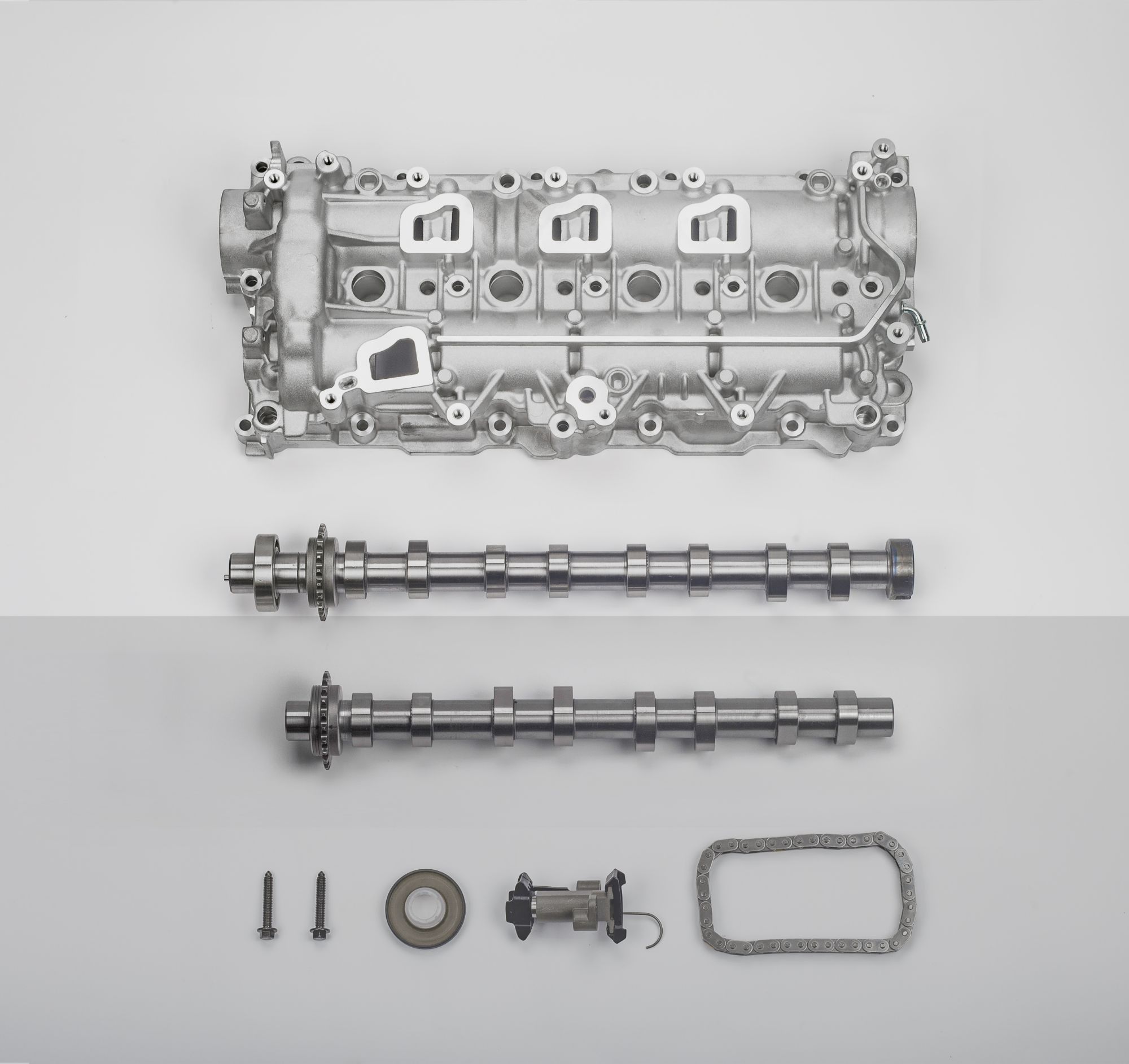
Gravity pouring might seem like a simple way to fill a mold, but the slow, controlled flow of metal does more than just shape a part—it actively refines its internal structure. As the molten alloy is pulled downward by gravity alone, it enters the cavity in a steady, laminar stream that avoids the turbulence and air entrapment common in high-pressure methods. This calm filling allows gases to escape naturally through the mold's vents, leading to a denser, less porous casting right from the start.
The real strengthening happens during solidification. Because the metal cools progressively from the mold walls inward, and from the bottom up—guided by the continuous head pressure of the still-liquid metal above—there's a natural directional feeding of material into shrinking regions. This promotes a fine, columnar grain structure aligned with the thermal gradient, which enhances mechanical properties like tensile strength and fatigue resistance along critical load paths. The absence of turbulence also means fewer folded oxide films, a common weak point in other casting processes.
When you compare a gravity-poured component to one produced with forced injection, the differences under a microscope are striking. The grain boundaries are cleaner, porosity is minimal, and the overall microstructure is more uniform. This translates directly into parts that can withstand higher stresses and thermal cycles without premature failure, making gravity pouring a trusted choice for everything from engine blocks to high-integrity aerospace brackets.
Material Advantages That Boost Component Life
When you select the right material, you're essentially giving your component a longer lease on life. It’s not just about strength—fatigue resistance, corrosion resilience, and thermal stability all play a role. For example, certain alloys handle cyclic loads without developing micro-cracks that eventually grow into failures. This means fewer unexpected breakdowns and more predictable maintenance schedules, which directly keeps your equipment running longer.
Corrosion is a silent lifespan eater, but smart material choices can neutralize it. Stainless steels, titanium, or specially coated metals shrug off moisture, chemicals, and salt that would eat through ordinary steel. In marine or chemical processing settings, those choices double or triple component life without adding much upfront cost. And it’s not just about fighting rust—oxidation at high temperatures can weaken parts over time, so using oxidation-resistant materials keeps performance consistent year after year.
Wear is another major factor that the right material can tackle. Harder surfaces, strategic use of ceramics, or advanced composites mean that moving parts hold their shape and surface finish much longer. This is especially critical in high-friction, high-contact applications where even slight erosion can cause misalignment or efficiency loss. By investing in wear-resistant materials, you essentially lock in the component’s original precision and functionality, often extending service life by a factor of two or more compared to standard alternatives.
When Precision Matters: OEM Tolerances and Fit
In OEM manufacturing, tolerance isn't just a specification—it's the silent language between parts. A bearing that fits too snugly can seize under thermal expansion, while a loose coupling introduces vibration that propagates through the entire assembly. The real art lies in understanding how materials behave under load, how surface finishes interact, and how to design fits that account for real-world conditions rather than ideal lab measurements. It’s less about hitting a number and more about predicting the conversation between components over years of service.
Too often, we see drawings that treat tolerance bands as safety nets rather than deliberate choices. A ±0.005mm tolerance applied uniformly across a shaft might satisfy the CAD model, but the actual fit at the mating interface can still disappoint. That’s because fit is contextual: a press fit in aluminum acts differently than in steel, and a sliding fit in a dusty environment needs different clearance than one in a cleanroom. Smart OEMs tailor tolerances not just to function, but to the assembly sequence, thermal cycling, and even the technician’s touch on the factory floor.
When you compete on precision, the margin for error isn’t in the micrometer—it’s in how well you interpret the application. We’ve learned to read between the lines of a specification sheet, asking questions about load direction, lubrication, and expected lifecycle before locking in a tolerance stack-up. That approach prevents the expensive mismatch between a beautifully machined component and the system it’s meant to serve, ensuring that the final assembly feels solid, quiet, and trustworthy long after the warranty expires.
Smoother Surfaces, Less Machining, Lower Costs
Achieving a smooth surface finish right from the mold or die eliminates many secondary operations. When the as-cast or as-formed surface already meets roughness specifications, there's no need for extensive polishing, grinding, or milling. This directly reduces labor hours, tool wear, and machine utilization—all of which add up to significant cost savings over a production run.
Beyond the obvious time and equipment savings, fewer machining steps mean less material waste and lower energy consumption. Precision in initial forming keeps part dimensions stable, so you avoid the cycle of over-machining to correct subtle defects. The result is a leaner process where value is built into the part from the start, rather than being paid for in rework.
What really makes a difference is the cumulative effect across high volumes. When thousands of components come out of the mold with near-net shape and acceptable surface quality, the per-part cost drops dramatically. The initial investment in better tooling or optimized process parameters pays back quickly, and the shop floor runs quieter with fewer machines dedicated to finishing tasks.
Real-World Applications Where Gravity Parts Excel
In the automotive sector, gravity-cast parts truly shine when strength-to-weight ratios demand something more intelligent than traditional forging. Suspension components like control arms and knuckles are often produced via gravity casting because the method allows for intricate hollow geometries that reduce unsprung mass without sacrificing durability. This translates to sharper handling and better fuel efficiency—qualities that drivers feel immediately but rarely attribute to a quieter manufacturing process behind the scenes.
Moving beyond vehicles, the marine industry relies heavily on gravity-cast aluminum and bronze for propeller housings and pump bodies. Saltwater environments are unforgiving, but carefully poured gravity castings create dense, non-porous structures that resist crevice corrosion far longer than welded assemblies. Engineers often specify these parts for deep-sea equipment where failures simply aren't an option, knowing the slow fill and directional solidification produce metallurgical soundness that high-pressure methods can't always guarantee.
Perhaps the most overlooked excellence is in architectural restoration and custom hardware. When a historic building needs a replica iron baluster or a bespoke bronze door handle, gravity casting into plaster or sand molds faithfully captures sculptural details that CNC machining would obliterate. The process lets artisans control the cooling rate to mimic aged patinas right from the pour, making each piece feel authentic rather than reproduced. It's a blend of art and physics where the end result disappears into the building's character instead of drawing attention to how it was made.
FAQ
They are custom metal components produced through a gravity casting process, where molten aluminum is poured into a permanent mold using gravity alone. OEM means they're made to exact specifications for a specific brand or product, ensuring perfect fit and function.
Gravity casting yields parts with excellent mechanical properties and a fine grain structure, thanks to the natural filling of the mold. It's a cost-effective way to achieve high strength, good surface finish, and complex geometries without the porosity issues sometimes found in die casting.
Aluminum gravity parts offer an impressive strength-to-weight ratio, which is critical in automotive, aerospace, and industrial machinery. They reduce overall weight while maintaining durability, leading to better fuel efficiency, faster cycle times, and less strain on surrounding components.
You'll find them in engine components like cylinder heads and intake manifolds, suspension parts, pump housings, electrical enclosures, and even in high-end cookware. Anywhere that needs complex, lightweight, and robust parts produced in medium to high volumes.
Reputable manufacturers use X-ray inspection to detect internal voids, pressure testing for leaks, 3D scanning for dimensional accuracy, and tensile strength tests. Process control during casting is key to consistent microstructure and mechanical properties.
It starts with collaborative design review—engineers work from your CAD files or sketches to optimize the part for casting. They then design and machine the mold, select the right aluminum alloy, and can apply post-casting treatments like heat treating, machining, or powder coating to meet exact performance and appearance requirements.
When you need tighter tolerances and better surface finish than sand casting can offer, but at a lower tooling cost and with higher flexibility than high-pressure die casting. It's ideal for parts that require sound internal integrity and where design changes might still occur during development.
Conclusion
Gravity casting has long been the go-to method for producing intricate aluminum components that demand both structural integrity and design flexibility. Unlike high-pressure processes, gravity pouring allows the molten metal to flow naturally into the mold, filling even the most complex geometries without entrapping air or creating turbulence-related defects. This gentle yet controlled fill results in a denser, more uniform grain structure, which directly translates into parts that withstand cyclic loads and thermal stress far better than many alternatives. The inherent material properties of aluminum alloys—remarkable strength-to-weight ratio, excellent corrosion resistance, and high thermal conductivity—are fully leveraged when shaped via gravity. Parts emerge with a fine-grained microstructure that resists fatigue, extending service life in demanding environments. Moreover, the process permits the use of alloys specifically optimized for durability and machinability, giving engineers the freedom to tailor material selection to exact performance requirements without compromise.
Precision is another hallmark of OEM gravity parts. Tight dimensional tolerances and consistent repeatability mean components fit perfectly into assemblies right out of the mold, slashing the need for time-consuming adjustments. The natural surface finish achieved through controlled solidification often eliminates secondary machining steps, driving down per-unit costs while accelerating production timelines. From automotive suspension systems and aerospace brackets to medical imaging equipment and marine hardware, these parts excel where reliability cannot be compromised. Engineers increasingly turn to gravity-cast aluminum as a strategic material choice that balances cost, weight, and longevity. The result is a smarter, leaner manufacturing path that doesn’t cut corners on performance.
Contact Us
Contact Person: Shelly
Email: [email protected]
Tel/WhatsApp: 8613967667688
Website: https://www.yongyu.com/