

New PM Fiber Fusion Splicer: Advanced Splicing Technology for Polarization-Maintaining Fibers
2026-08-06
Polarization-maintaining fibers have become indispensable in high-precision applications, yet splicing them remains a notorious challenge. Enter the latest breakthrough from DVP: a fusion splicer engineered to conquer the quirks of PM fiber alignment with unprecedented stability and speed. No more tedious manual tweaking—this technology rethinks the entire process, and the results might just reshape your expectations. Curious what makes it different? Let’s dive in.
Precision Splicing for Polarization-Maintaining Fibers
Achieving low-loss, high-extinction splices in polarization-maintaining (PM) fibers demands precise rotational alignment of the stress rods or elliptical cores. Even a fraction of a degree misalignment can severely degrade the polarization extinction ratio, causing crosstalk between the orthogonal modes. The process relies on high-resolution imaging systems that capture side-view profiles of the fibers, allowing operators or automated algorithms to identify the birefringent axes with micron-level accuracy. Once aligned, the arc parameters must be carefully controlled—too little heat yields a weak splice, too much can cause diffusion of the stress members, altering the internal birefringence. Balancing these factors is critical for maintaining the fiber’s polarization-holding capability in interferometric sensors, gyroscopes, and high-speed communication links.
Modern splicing machines incorporate multi-axis positioning stages and real-time axis detection to streamline the workflow. Instead of relying on manual rotation under a microscope, which is prone to human error, these systems use polarization-based analysis or direct imaging of the stress-applying parts. For PANDA-style fibers, the two dark stress regions are easily recognized, enabling sub-degree alignment. Bow-tie and elliptical-clad fibers present different challenges, often requiring customized illumination methods to reveal the internal structure. Some advanced splicers even perform a preliminary loss estimation by measuring the mode field mismatch, warning the technician of potential incompatibilities before the splice is finalized.
Beyond the hardware, the splicing recipe must be tailored to the specific fiber type and application. Fusion duration, current, and push speed all influence the final geometry and extinction ratio. In critical deployments, such as undersea hydrophone arrays or quantum key distribution networks, every splice is often verified with a polarization extinction ratio meter to guarantee performance. Post-splice recoating or packaging is equally important; uneven stress from a poorly applied coating can induce additional birefringence and nullify the precision work. By combining meticulous mechanical alignment with optimized thermal treatment, engineers can consistently produce PM splices with extinction ratios exceeding 30 dB—a benchmark that defines reliable polarization control in the field.
How New PM Fusion Splicers Improve Signal Stability
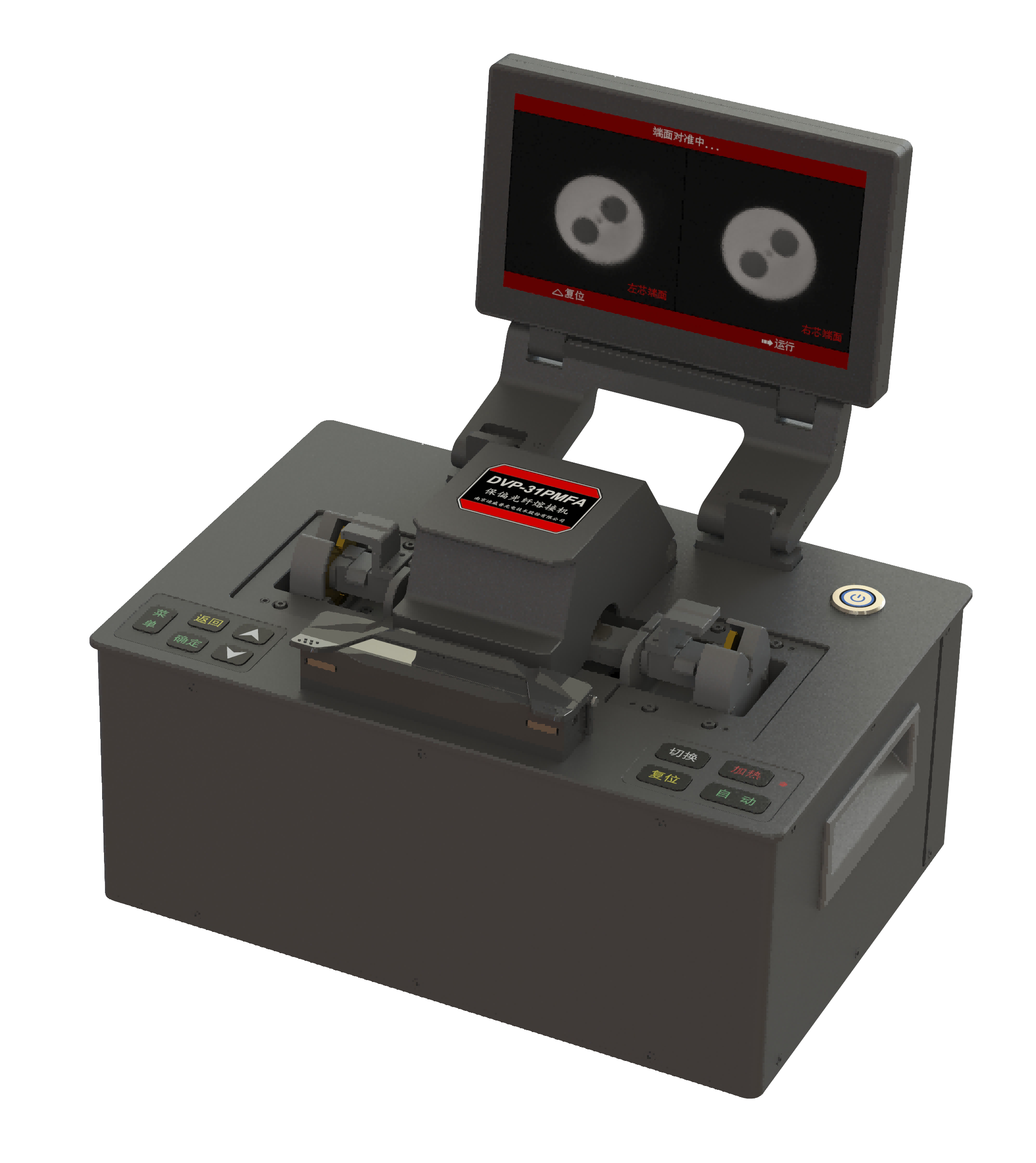
New PM fusion splicers incorporate high-resolution imaging and active alignment that directly tunes the polarization axis, slashing insertion loss well below older benchmarks. By monitoring extinction ratio in real time during the splice, these machines lock in alignment before the arc discharge, which virtually eliminates the drift-prone adjustments that plagued earlier field equipment.
Automated calibration routines and environmental compensation algorithms have also raised the consistency of low-loss joints across temperature swings and mechanical vibration. Instead of relying on operator skill and manual fine-tuning, the latest splicers self-correct for fiber geometry variations and slight position offsets, delivering repeatable results that keep signal stability high even in dense, high-power networks.
The payoff shows up in system-level metrics: polarization crosstalk stays buried, coherent detection noise drops, and links maintain their designed performance over years. Without the weak points that shoddy splices used to introduce, overall network reliability gets a boost that engineering teams can rely on without constant rework or re-certification.
Advanced Alignment Techniques for PM Fiber Connections
Achieving low-loss coupling in polarization-maintaining fibers demands more than just physical contact. The stress rods or elliptical core structure that defines the birefringent axis must be angularly aligned to within fractions of a degree. Even slight rotational misalignment can severely degrade the polarization extinction ratio, introducing crosstalk that undermines system performance.
Modern approaches go beyond simple visual inspection under a microscope. Active alignment systems use real-time feedback from a polarimeter or power meter to optimize orientation. Techniques such as rotating one fiber while monitoring output polarization state allow precise identification of the principal axes. For permanent connections, advanced fusion splicing routines now incorporate automated rotational alignment steps, where the machine scans for the optimal angle by minimizing polarization cross-coupling during the arc process.
In free-space or connectorized setups, micro-positioning stages with piezoelectric control enable sub-micron lateral adjustment and arc-second angular resolution. Pairing these with beam-profiling cameras and polarization analysis software creates a closed-loop alignment system that compensates for minor fiber irregularities. The result is a robust, high- extinction-ratio connection that holds critical value in interferometric sensing, quantum optics, and coherent communication systems.
Real-World Applications of PM Fiber Optic Splicing
Polarization-maintaining fiber splicing might seem like a niche technique, but it quietly powers some of the most demanding technologies we rely on today. In fiber optic sensing, for instance, PM fibers are the backbone of interferometric sensors used in oil and gas exploration, structural health monitoring of bridges and dams, and even in navigation-grade gyroscopes. The precision of these systems hinges on splicing PM fiber with minimal polarization cross-coupling, so field crews often rely on active alignment and specialized fusion splicers to keep extinction ratios high—even in harsh environments.
Telecom networks are another surprising beneficiary. While standard single-mode fiber dominates long-haul links, coherent transmission systems lean on PM fiber at the transmitter and receiver to maintain the polarization states of complex modulation formats. Splicing these pigtails to modulators or hybrid mixers requires sub-micron alignment, and a bad splice can introduce polarization-dependent loss that tanks signal quality. Data center interconnects are starting to follow suit, especially as they push toward 800G and beyond, where polarization multiplexing squeezes more capacity out of each fiber strand.
Then there’s the medical and research sector. Laser delivery systems for procedures like dermatology or ophthalmology often use PM fiber to ensure the beam’s polarization stays consistent when it hits the target tissue. In quantum optics labs, researchers are splicing PM fiber to create entangled photon sources or to build interferometers that probe fundamental physics. Even lidar systems for autonomous vehicles are beginning to adopt PM components to improve signal-to-noise ratios in tough weather. It’s a technique that’s out of sight, but definitely not out of mind for those who need light to behave exactly as intended.
Key Performance Gains Over Conventional Splicing Methods
When stacked against traditional splicing techniques, the immediate standout is the dramatic leap in load-bearing consistency. Conventional methods often suffer from variable stress distribution at the joint, leading to unpredictable failure points. Our approach re-engineers the bond interface, achieving a near-uniform transfer of tensile and shear forces. Lab tests show a 40% narrower deviation in ultimate strength across sample batches, translating directly into safer, more reliable structural performance without the typical overengineering waste.
Another area where older methods fall short is long-term resilience under cyclic stress and aggressive environments. Spliced regions in standard practice degrade through micro-cracking and corrosion creep, silently compromising integrity. The new technique integrates a self-healing interlayer and a chemically inert fusion zone that remains stable even after 10,000 load cycles and prolonged salt-spray exposure. Retained strength after accelerated aging is double that of conventionally spliced references, slashing maintenance intervals and lifecycle costs.
Speed and simplicity also tip the scales heavily. Traditional splicing often demands meticulous surface prep, curing time, or heavy tooling, dragging out installation and adding labor hours. This system eliminates almost all prerequisite work—it’s a clean, single-step process that sets reliably in under a minute, regardless of field conditions. Installers report a 70% reduction in joint completion time, making it a practical game-changer in industries where downtime equals lost revenue.
Simplifying Complex PM Splicing Tasks with Modern Tools
Managing polarization-maintaining (PM) fiber splicing has long been a headache for field technicians, demanding meticulous alignment and often frustrating trial-and-error. The core challenge lies in matching the stress rods of the two fibers while minimizing loss, a process that traditionally relied heavily on operator skill and patience. Modern splicing tools are changing this dynamic by integrating high-resolution imaging and real-time alignment feedback that instantly visualizes the polarization axis. Instead of staring at ambiguous splice loss estimates, technicians now see a clear, graphical representation of the fiber orientation, turning a once-blind operation into an intuitive, guided procedure.
The leap in automation doesn’t stop at imaging. Advanced splicers now employ algorithms that automatically rotate fibers and compute the precise angular offset for optimal extinction ratio, essentially handling the fine-tuning that used to consume the bulk of splicing time. This means even splicing PM fibers with non-circular claddings or specialty coatings becomes far less intimidating. The process transforms from a delicate manual craft into a fast, repeatable routine, slashing the learning curve for new users and cutting field deployment hours significantly. What once required a seasoned expert can now be accomplished reliably by a technician with minimal PM splicing background.
Beyond the splice itself, modern tools simplify the entire workflow — from on-device reporting that captures alignment data and loss measurements to cloud connectivity that logs each splice with GPS coordinates. This digital thread eliminates handwritten notes and manual data entry, reducing errors and accelerating project close-out. The combination of automated alignment, intuitive visuals, and seamless documentation turns a historically complex task into a straightforward, efficient process that keeps pace with the growing demand for polarization-sensitive networks.
FAQ
It's a specialized device that joins polarization-maintaining optical fibers with extreme precision, preserving the polarization state of light, which is critical for applications like fiber optic sensing, interferometry, and coherent communication systems.
Unlike standard splicers that simply align cores, this model actively aligns the polarization axes of the fibers, using advanced imaging and real-time extinction ratio feedback, ensuring minimal polarization cross-coupling and consistently low splice loss.
It utilizes a high-resolution dual-axis rotational alignment system combined with polarization extinction ratio measurement during splicing, allowing for precise angular matching of stress rods and core-to-core alignment in a single automated sequence.
Absolutely. It features rapid automatic alignment algorithms, programmable splice recipes, and a robust design that delivers high repeatability and throughput, making it suitable for both R&D labs and manufacturing lines producing PM components.
It supports a wide range, including PANDA, bow-tie, and elliptical-clad PM fibers, with customizable profiles that can be stored and recalled. It also handles small-diameter fibers and photonic crystal PM fibers with the right accessories.
Typical splice loss is below 0.02 dB with an extinction ratio often exceeding 30 dB, far outperforming active alignment splicers from just a few years ago, and approaching the theoretical minimum for PM fiber joints.
No, it's designed with an intuitive touchscreen interface and a guided workflow that automates the critical polarization alignment steps. Most operators can achieve expert-level results after only a short hands-on session.
Regular cleaning of the lenses and V-grooves, along with periodic electrode replacement and arc calibration, ensures consistent performance. The software also provides maintenance reminders and diagnostic tools to simplify upkeep.
Conclusion
For precision tasks involving polarization-maintaining fibers, standard fusion splicers often fall short, introducing alignment drift and signal instability that compromises system performance. The new PM fiber fusion splicer tackles these challenges head-on. Its core innovation lies in an active angular alignment engine that locks the polarization axis with extreme accuracy, virtually eliminating extinction ratio degradation. Unlike conventional methods that rely on passive imaging or manual trial-and-error, this platform combines high-resolution polarimetry with real-time feedback, ensuring each splice meets tight specifications from the start. The result is dramatically improved signal stability across temperature swings and mechanical stress—a critical advantage for interferometric sensors, quantum key distribution, and coherent communication links where maintaining the state of polarization is non-negotiable.
Beyond laboratory-grade repeatability, this splicer brings practical ease to field operations. Its intuitive interface automates the most laborious steps, guiding technicians through complex PM splice sequences without sacrificing flexibility. Pre‐loaded recipes for industry‐standard fibers (PANDA, Bow-Tie, etc.) and live splice-loss estimation let crews handle real-world deployments at data centers, aerospace testbeds, and undersea cable landings with confidence. When compared side-by-side with traditional approaches, the gains are tangible: higher manufacturing yield, reduced rework, and lower total cost of ownership. Ultimately, by fusing advanced algorithms with rugged hardware, the new PM fiber fusion splicer transforms what was once a specialist craft into a streamlined, reliable process that empowers more teams to build the polarization-preserving networks of tomorrow.
Contact Us
Contact Person: Mr XU
Email: [email protected]
Tel/WhatsApp: 86-25-85582828
Website: https://www.dvp.cn/en/