

LED Signal Light Bulb Sourcing: How to Find Quality Suppliers Fast
2026-11-16
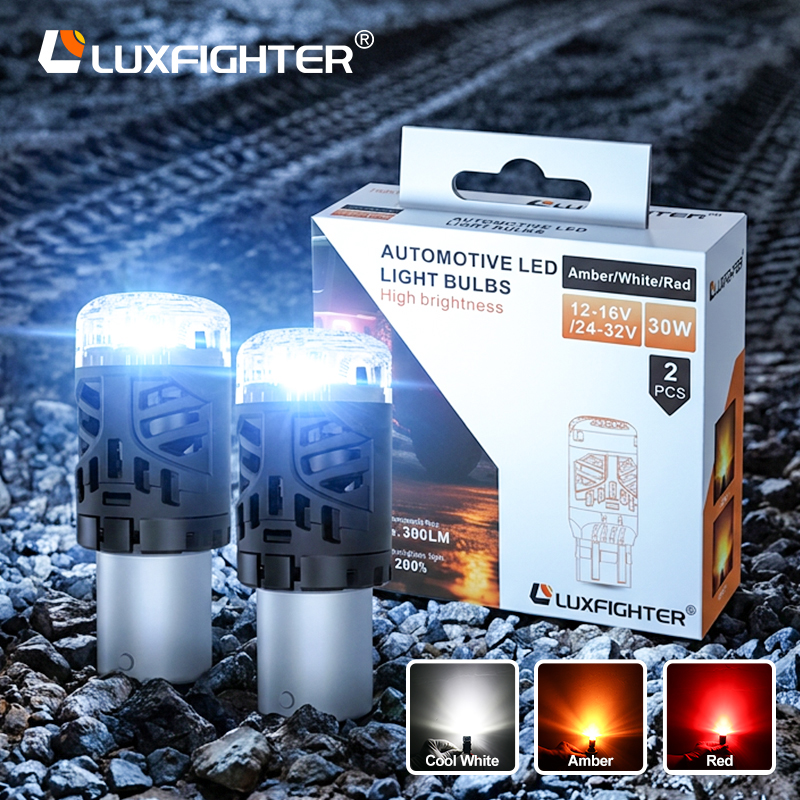
Sourcing LED signal light bulbs sounds simple until you are three supplier samples in and none of them match the brightness, lifespan, or build quality they promised. The gap between a polished catalog and what actually arrives is where most procurement teams lose time and money. This guide cuts through that noise with a practical supplier-vetting process that works for urgent orders and ongoing inventory alike. Whether you are replacing a single bulb or building out a full lighting line, the right sourcing approach makes the difference between repeat failures and reliable performance. Brands like LUXFIGHTER have shown that consistent quality does not have to be hard to find, but you still need to know what to look for before you commit.
What LED Signal Bulb Suppliers Leave Out of the Spec Sheet
Most spec sheets will happily tell you the lumen output at the bulb's brightest moment, but they rarely mention what happens after twenty minutes of continuous signaling. Heat builds up in the housing, the driver starts to throttle, and that impressive brightness number quietly drops by a third or more. If you have ever watched a turn signal look crisp at first and then seem to fade during a long traffic wait, you have seen this unlisted behavior in action.
Another detail that gets skipped is the shape and direction of the light itself. A bulb can meet the raw candela requirement on a test bench yet still fail to fill the reflector properly once installed. The result is a signal that looks bright from dead center but nearly invisible from a slight angle. Suppliers rarely publish beam pattern drawings or mention whether the LED placement matches the filament position of the bulb it replaces, which matters more than the total lumen figure.
Wiring polarity and load detection quirks are also left off the page. Some bulbs only work when inserted one way, even though the base looks symmetrical. Others trigger hyper-flash on certain vehicles because the internal resistor value is tuned for a narrow range of body control modules. The box might say "error-free" while the fine print stays silent about which car models actually cooperate. These omissions turn what should be a five-minute swap into a round of troubleshooting and returns.
Factory Checks You Can Skip and the Ones That Actually Matter
Most people treat every factory audit like it carries the same weight, but that mindset burns time and money fast. A social compliance walkthrough that just confirms the break room has enough chairs rarely tells you anything about whether your order will ship complete. Skip the checkboxes that only exist to impress a retail buyer who skims the report. What you actually need is a narrow focus on the three or four failure points that have bitten you before: raw material storage, inline quality gates, and final packing accuracy.
The checks worth keeping are the ones that change a decision. If a factory's color matching happens under cheap fluorescent light and no one owns the process, that is a real risk. Watch how they handle a rejected carton in real time, not just what the procedure binder says. Also compare their current line setup against the sample approval photos you sent three weeks ago. Those gaps are where delays and chargebacks are born.
One trick that separates experienced buyers from beginners: bring your own go/no-go samples and run them through the line without warning. If the inspector on the floor catches the defect, you can relax on that point. If not, skip the long lunch and dig into their rework loop instead. A useful audit is not about scoring a hundred points. It is about finding the two problems that would have cost you a container full of returns.
Turning Sample Requests Into a Quality Filter That Works
Most sample request forms quietly encourage the wrong kind of attention. A short field for a name and shipping address brings in curious browsers, students working on projects, and even competitors studying your packaging. The easiest fix is to add a couple of pointed questions that only a serious buyer would answer without hesitation. Ask for expected monthly volume, the material or surface involved, and the date they plan to run a test. These details make the request feel like a working conversation rather than a freebie grab.
The key is restraint. You do not need a ten-field questionnaire, and adding one will chase away busy decision-makers. Pick two or three questions that tell you whether the person can actually buy. For example, a manufacturer sampling an adhesive might ask what substrates are being bonded, how many units are produced weekly, and who will approve the switch. Genuine prospects answer these easily. Casual visitors usually stop at the first question, which is exactly what you want.
Once the form starts collecting that information, treat each response as a sorting signal rather than an order to ship immediately. Flag the requests that mention a clear timeline, a specific application, or a direct question about pricing and lead times. Route vague responses to a lower priority or send a brief clarifying note before committing samples. The requests themselves become a lightweight qualification layer, so sample inventory ends up in the hands of people who are already moving toward a decision.
Comparing Quotes When Lead Times Do Not Match the Sales Pitch
A short lead time on a quote can feel like a promise, but that number often falls apart once an order is placed. Start by asking suppliers to break down their timeline: materials, production, packing, and transit. If they cannot explain why one component takes three weeks while another takes eight, treat the faster estimate with caution.
Put the lead time in writing alongside the unit price and payment terms. Then compare not just the total days, but the assumptions behind them. One factory might quote four weeks because it holds raw stock, while another quotes seven weeks because it buys to order. The shorter number is not automatically better if it depends on an optimistic queue or a shipping method that is rarely available.
Ask for a recent example of the same product moving from deposit to delivery. If the actual shipment history is consistently slower than the sales pitch, use that gap when negotiating price, penalties, or a partial shipment earlier.
Questions That Expose Rework Rates and Real Production Capacity
Most factories quote a production capacity that sounds impressive on paper, but the moment you dig into rework rates, the real numbers start to surface. Ask how many units required a second pass through the line last quarter. If the answer is vague or framed as “minimal,” request the actual defect log. High rework isn’t just a quality problem; it quietly consumes machine hours, labor, and floor space that the official capacity never accounts for.
A better question is what percentage of total output goes back for correction before it ever reaches packaging. Then follow up with this: after subtracting rework time, what is the genuine output per shift? You’ll often find that a line rated at ten thousand pieces a day only delivers seven or eight thousand sellable units. The gap between nominal and usable capacity is where delayed shipments and forced overtime hide.
Finally, ask the plant manager to walk you through the last time a rework spike disrupted the schedule. How long did it take to recover, and which customer orders slipped as a result? Their willingness to share that story—not just the polished metrics—tells you more about operational honesty than any capacity chart ever will.
Locking In Consistent Output Before You Commit to Volume
Most teams rush into higher output before they know what dependable work actually looks like. The result is a stack of pieces where tone, depth, and formatting drift from one item to the next. Locking in consistent output is less about rigid rules and more about defining the few decisions that shouldn't change every time someone sits down to produce.
A practical way to do this is to run a short test batch with two or three people working from the same brief. Compare where their drafts diverge, then write down the choices that resolve those gaps. It could be sentence length, how examples are introduced, or how much context appears before the main point. Once those patterns are named, they can be repeated without turning every new task into a debate.
The goal isn't to remove judgment. It's to make the baseline steady enough that volume doesn't magnify small inconsistencies into obvious problems. When the foundation is stable, producing more starts to feel like scaling a known process rather than gambling on each new piece.
FAQ
Look for documented incoming component checks, especially for LEDs, drivers, and lens materials. A dependable supplier can explain their binning process for color consistency and show test data for thermal management. If they cannot describe how they handle heat or why they choose certain LED bins, that is a red flag even if the price looks great.
Ask about lens sealing, potting, and surge protection. Signal bulbs often fail from moisture ingress or voltage spikes, not from the LED chip itself. Request photos of the internal potting and ask what surge test level the driver passes. If the supplier talks only about lumens and skips environmental stress, move on.
Certifications like CE, RoHS, or ECE mark a baseline but do not guarantee batch-to-batch consistency. Treat them as a filter, not a final answer. For critical signal applications, pay for third-party testing on pre-shipment samples or a small pilot order. That test should include photometric output, thermal cycling, and humidity exposure.
Start with a clear one-page spec: base type, voltage range, luminous intensity, viewing angle, color coordinates, IP rating, operating temperature, and lens finish. Send that spec to maybe five to seven suppliers. The suppliers who ask detailed questions or point out trade-offs in your spec are usually more capable than those who reply with a price list immediately.
Request a live video walkthrough of the production floor, not a polished brochure. Ask to see SMT placement, soldering, lens assembly, and test stations. A trading company may still source decent products, but you will pay a margin and have less control if something changes. If direct manufacturing matters for your volume, verify the factory address matches the audit report.
Negotiate packaging, labeled voltage and certification marks, inspection rights, and pre-shipment sample retention. Also agree on a tolerance for luminous intensity and color shift. A supplier that gives a small price cut but later changes LED bins can create more cost than the discount.
For non-stock specs, expect four to seven weeks including component sourcing, assembly, aging, and inspection. You can shorten that by using a housing or driver already approved by the supplier, ordering standard colors like red or amber, and grouping multiple specifications into one production run. Rushed orders often skip aging tests, so avoid asking for two-week production unless you are willing to accept that risk.
Keep a sealed reference sample from the approved batch and include a clause that future shipments must match its photometric performance and construction. Schedule periodic third-party inspections at the factory before shipment. If the supplier knows you check incoming lots against a reference sample, they are less likely to drift into cheaper materials.
Conclusion
Sourcing LED signal light bulbs quickly rarely fails because of missing supplier lists; it stalls when buyers take spec sheets at face value. Most vendors omit the details that determine whether a bulb survives heat, vibration, and voltage swings—things like potting compound type, actual lumen maintenance at elevated temperatures, and binning tolerance for chip color. Instead of chasing every factory audit checklist, focus on the handful of checks that reveal process control: solder joint consistency, incoming LED batch traceability, and aging-test records. A well-designed sample request can do more filtering than weeks of email. Ask for samples pulled from current production, not hand-picked golden units, and require the supplier to include the exact driver components they plan to use in mass production.
Once samples arrive, compare quotes only after normalizing lead times and rework assumptions. A low price tied to a 15-day lead time means little if the factory quietly plans to re-run failed batches; ask how many units are typically reworked per shift and what happens to those boards. Push for real production capacity by requesting machine-hour availability, not just monthly output claims. Before committing to volume, lock in a pre-production pilot run with the same line, same operators, and same incoming parts. If the pilot matches the approved sample, you have a baseline for consistent output. If it does not, walk away before the purchase order becomes a repair order. That sequence—spec scrutiny, targeted checks, sample discipline, quote normalization, and a pilot run—turns sourcing into a repeatable filter rather than a gamble.
Contact Us
Contact Person: Gavin Chen
Email: [email protected]
Tel/WhatsApp: (+86)756-6831079
Website: https://www.luxfighter.com/