

Flame Retardant Fabric Factory: How Fire-Resistant Fabrics Are Made and Tested
2026-06-28
Have you ever wondered what goes into creating fabrics that can withstand extreme heat and protect lives? At DROTEX, our flame retardant fabric factory transforms advanced chemistry and rigorous engineering into textiles that resist ignition and slow fire spread. From the careful selection of raw materials to precision weaving and chemical finishing, every square meter is crafted with safety in mind. But the real proof lies in how we test them — exposing each batch to open flames, measuring char length, and ensuring they meet international standards. In this post, we’ll walk you through the fascinating journey of how fire-resistant fabrics are made and tested, revealing the science and craftsmanship behind products that save lives every day.
Selecting the Foundation: Fibers That Refuse to Burn
Fire might be one of humanity’s oldest tools, but when it rages out of control, the materials we surround ourselves with matter profoundly. Selecting the right fiber isn’t just about ticking a box on a spec sheet; it’s about embedding safety into the very threads of a fabric. Fibers that refuse to burn—or that dramatically slow combustion—form the silent backbone of protective gear, industrial components, and even everyday items where flame resistance is not a luxury. Without this foundational choice, any subsequent treatment or coating becomes a precarious gamble.
Not all firefighters’ suits are created equal, and the secret often lies in the fiber blend. Aramid fibers, like those found in high-end thermal apparel, degrade instead of melt, forming an insulating char that preserves integrity under extreme heat. Similarly, oxidized polyacrylonitrile (PAN) fibers, commonly used in carbon fiber production, remain dimensionally stable even when exposed to open flames, making them invaluable in aerospace and military contexts. For architects and engineers, glass and basalt fibers fill a critical niche—inherently non-combustible and resistant to corrosion, they serve where both fire and chemical exposure are threats. Each of these materials brings a unique set of properties, yet they share a common refusal to fuel a fire’s advance.
Ultimately, designing for flame resistance demands a rethinking of the base material. It’s not enough to add a protective layer after the fact; the fiber itself must be the first line of defense. This perspective shifts manufacturing norms, pushing industries to weigh thermal performance alongside cost and comfort. When the foundation is composed of fibers engineered to reject combustion, the entire structure—whether a jacket, a cable, or a building panel—inherits that resilience. The result is safety that is woven in, not painted on.
Engineering the Fabric: Weaving Safety Into Every Thread
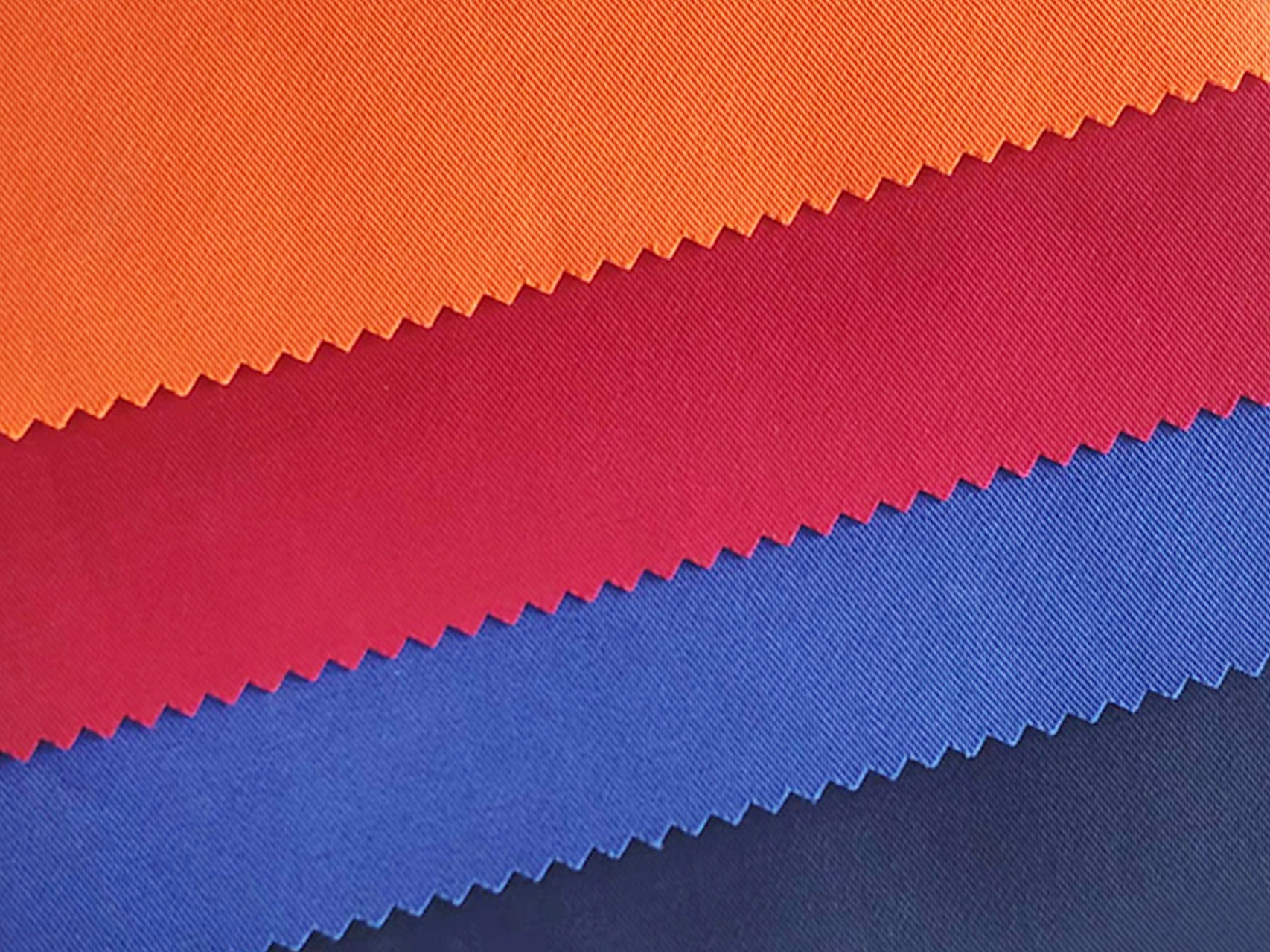
True protective textiles begin long before the final garment is assembled. By engineering safety directly into the yarns and weaves, materials can inherently resist hazards rather than relying on surface coatings that wear away. This approach treats every thread as a functional element—whether it's a high-tenacity core for cut resistance, a char-forming polymer for flame protection, or a conductive filament for static dissipation. The goal is to create a fabric where risk mitigation is an inseparable part of its structure, not an afterthought.
The weaving process itself becomes a precise design tool. Altering stitch density, weave pattern, or combining dissimilar yarns in a single construction can control stretch, breathability, and protective performance in specific zones. For instance, a single piece of fabric might feature a tighter basket weave over high-wear areas for durability while using a more open knit elsewhere for ventilation—all without seams or additional layers. This integration ensures that protective qualities stay consistent even after repeated use and laundering, overcoming a common failure point in conventional safety gear.
Beyond passive shielding, the next generation of safety fabrics actively responds to changing conditions. Phase-change fibers can absorb excess heat during a flash fire, while embedded micro-sensors can detect hazardous chemicals or excessive pressure and alert the wearer. These innovations transform clothing into a second skin that not only shields but also communicates, blurring the line between material and intelligent system. In this view, every garment becomes a continuous, adaptive barrier—woven with the intelligence to protect when it matters most.
Chemical Shield: Treatments That Halt Combustion
Combustion, at its core, is a rapid chemical dance between a fuel and an oxidizer, usually oxygen, releasing heat and light. To halt this process, treatments often target one or more sides of the fire triangle: heat, fuel, or oxygen. By disrupting any of these elements, a chemical shield can be formed to stop the reaction in its tracks. Flame retardants, for instance, may release water vapor when heated, cooling the material below its ignition point while diluting combustible gases. Others form a protective char layer that insulates the underlying fuel, effectively starving the fire of its food source.
Beyond traditional methods, halogen-based compounds interfere at the molecular level. They scavenge the highly reactive free radicals—hydrogen and hydroxyl—that propagate the flame chain reaction. Without these radicals, the combustion cascade grinds to a halt, even if heat and fuel remain. This gas-phase quenching is remarkably efficient, which is why brominated and chlorinated additives have been mainstays in electronics and textiles. However, environmental and health concerns are driving a shift toward phosphorus-based and intumescent systems that swell into a thick, non-flammable barrier when exposed to heat.
Modern treatments also explore nanocoatings and layered materials that physically block heat and oxygen diffusion. Silica-based gels, clay nanoplatelets, and graphene sheets can create a tortuous path, slowing down the escape of combustible gases and the ingress of air. When integrated into polymers, these structures build a ceramic-like shield at high temperatures, offering passive protection without the need for continuous chemical action. The evolution of these treatments reflects a deeper grasp of fire dynamics—moving from simply delaying ignition to engineering surfaces that actively shut down combustion on contact.
Put to the Torch: Inside the Rigorous Testing Process
Every product that earns a spot on our shelves has survived a gauntlet of stress tests designed to mimic the worst abuse you can imagine. We don't just check if something works under ideal conditions—we want to see how it holds up when pushed beyond its limits. From submerging electronics in saltwater baths to baking materials under UV lamps that simulate years of sun exposure in just days, our engineers treat prototypes with a level of hostility that borders on personal. The goal isn't just to find the breaking point, but to understand exactly why something fails, so we can make it stronger.
One area that sets our process apart is the insistence on real-world, chaotic testing scenarios. Instead of just measuring tensile strength on a pristine machine, we might attach a backpack strap to a hydraulic arm and jerk it 20,000 times at odd angles, mimicking the motion of a hurried commuter. Zippers are opened and closed by robotic fingers caked with fine desert dust, and touchscreens are jabbed with wet, muddy gloves. If a product survives, it's not because it got off easy—it's because we designed it to laugh off the everyday brutality that lesser items dread.
Transparency is woven into each stage of this ordeal. We log every shudder, crack, and flicker, and then share that data openly with the teams who can turn failure into progress. It’s not unusual for a prototype to go back to the drawing board half a dozen times, each iteration emerging leaner and tougher. For us, the torch isn't just a symbol of destruction—it’s a tool for illumination, revealing weaknesses that would otherwise remain hidden until they ruin someone’s trip, project, or moment of need.
Beyond the Flame: Certifying Durability and Performance
When evaluating fire-rated products, the focus often narrows to how long a material can withstand direct flames. But true reliability demands a broader lens. Modern certification programs delve into aspects like thermal shock resistance, load-bearing capacity under heat, and how well a product holds up against repeated use. It's not just about surviving a fire test—it's about ensuring consistent performance over the entire lifespan of the installation.
Durability testing pushes these materials to their limits in ways that simulate decades of real-world stress. For instance, a fire door might be opened and closed thousands of times, exposed to humidity cycles, and then subjected to a blaze to see if it still latches correctly. The goal is to catch potential failures that a one-time flame exposure would never reveal. This layered approach separates products that are merely fire-resistant from those that are genuinely built to last.
Performance certification also considers the human element. Doors, glazing, and barriers need to resist not just fire but also the force of a panicked crowd or the accidental impact of equipment. By demanding evidence of structural integrity before, during, and after extreme conditions, rigorous standards give peace of mind that goes far beyond a simple flame rating. It transforms certification from a box-ticking exercise into a genuine measure of trust.
From Loom to Life: The Journey of a Finished Fire-Resistant Textile
The creation of a fire-resistant textile begins not in a high-tech laboratory but on a traditional loom, where threads are woven with meticulous precision. Fibers chosen for their inherent heat-resistant properties—such as aramid, modacrylic, or specially treated cotton—are interlaced under careful tension to form a sturdy base fabric. This initial weave is critical; even the smallest inconsistency can compromise the textile's protective capabilities later. Every shuttle pass echoes centuries of craftsmanship, yet here it serves a modern imperative: shielding lives from extreme heat and flame.
Once the raw fabric leaves the loom, it enters a transformative finishing stage that elevates its resistance. It is here that the textile truly gains its life-saving character. Chemical treatments and specialized coatings are applied under controlled conditions, penetrating deep into the fiber structure. Unlike ordinary fabrics that merely get a surface application, these treatments chemically bond with the material, ensuring durability through repeated washes and wear. Quality control is relentless—samples undergo rigorous flame-exposure testing, thermal imaging analysis, and abrasion resistance trials. The result is a textile that neither ignites easily nor continues to burn once a heat source is removed, providing vital seconds of protection in an emergency.
Beyond the technical marvels, the journey of this textile weaves into real-world applications that touch everyday life. You will find it not only in firefighter turnout gear but also in airline seat covers, theater curtains, and industrial workwear. Each finished bolt carries a legacy of innovation and care, transitioning from a simple woven sheet to a reliable guardian. Its path from loom to life is marked by a commitment to safety that is both invisible and indispensable—a quiet testament to the fusion of traditional textile arts and cutting-edge chemical engineering.
FAQ
Factories start with fibers that have inherent heat resistance, like aramids and modacrylics, or treat standard materials. Cotton and polyester can be chemically treated, while wool naturally resists flames. Blends are also popular for balancing cost and performance.
Natural fibers like cotton absorb flame-retardant solutions through padding or dipping, forming a protective char layer when burned. Synthetics demand a different approach—often additives mixed into the polymer before spinning, or finishes that swell upon heat exposure to block combustion.
Samples face open flames or radiant heat under controlled conditions, measuring afterflame time, char length, and any melting. The vertical flame test is common: a strip is ignited at the bottom, and it must self-extinguish quickly. Thermal manikin tests can simulate full-scale flash fire events.
Yes, some mills use inherently fire-resistant fibers that skip chemical baths entirely. Others are adopting phosphorus-based treatments with lower toxicity, or even bio-based coatings from chitosan or protein solutions, though durability and cost remain hurdles.
It depends on the method. Inherently resistant fibers maintain protection indefinitely. Chemically treated fabrics vary—some durable finishes bond to the fiber and withstand 50 or more industrial wash cycles, while cheaper non-durable treatments wash out quickly and require regular reapplication.
Oil and gas, electrical utilities, firefighting, and military sectors are the biggest users. Racing, welding, and foundries also demand certified protective clothing. Growing interest comes from hospitality and home furnishings for contract-grade drapery and upholstery.
The challenge is adding flame resistance without making garments stiff or hot. Lightweight inherent fibers, moisture-wicking blends, and weave structures that enhance breathability help keep wearers comfortable. Ergonomic garment design also plays a crucial role in daily usability.
Conclusion
Creating fire-resistant textiles begins deep within the fiber selection room, where only inherently flame-retardant materials—like aramids, modacrylics, and certain treated cellulosics—make the cut. These fibers refuse to ignite or melt easily, laying the groundwork for genuine protection. Once chosen, they're spun into yarns and woven on precision looms that integrate safety directly into the fabric's structure, often using tight weaves and reinforcing techniques that block heat transfer. Yet the science doesn't end on the loom; the greige fabric travels to a chemical finishing line where advanced treatments penetrate every filament, forming a molecular shield that halts combustion at its core. This dual strategy—inherent fiber resistance plus engineered chemistry—ensures the material won't simply burn away when exposed to flame.
After the fabric is constructed, it faces an unforgiving battery of tests: vertical flame tests, thermal manikin exposures, and limiting oxygen index measurements turn the lab into a crucible. Every swatch is put to the torch—literally—and must self-extinguish within seconds while producing minimal smoke and no molten dripping. Passing these trials is only half the story; the material then enters long-term durability assessments where it's washed, abraded, and flexed repeatedly to certify that its protective properties endure real-world wear. Finally, the finished rolls are cut, sewn into garments, and shipped out, ready to guard firefighters, utility workers, and military personnel. From the first fiber to the final stitch, every step is a deliberate blend of material science and rigorous verification, turning raw thread into a lifesaving barrier.
Contact Us
Contact Person: Sandy
Email: [email protected]
Tel/WhatsApp: 86150 8310 5120
Website: https://www.frdrotex.com