
Export Roller Hearth Furnace Solutions for Global Industrial Applications
2026-08-14
Shipping a roller hearth furnace across borders is rarely just about the hardware. It’s about matching thermal precision to regional energy codes, aligning controls with local automation ecosystems, and ensuring the line performs identically in a plant in Stuttgart or a new facility in Monterrey. That’s where THINKING-LONG has carved out a different path—by treating export not as an afterthought, but as a design discipline. In this post, we unpack what actually makes a roller hearth furnace ready for global industrial applications, and why more manufacturers are refusing to settle for one-size-fits-all heat treatment.
Atmosphere Control That Keeps Specialty Alloys Within Tolerance
Specialty alloys rarely forgive a loose furnace atmosphere. A few parts per million of oxygen or water vapor can shift surface chemistry, deplete chromium or titanium, and leave a heat-treated part outside the composition window that made it special in the first place. The practical answer is not simply flooding the chamber with gas; it is managing partial pressures, dew points, and flow patterns so every exposed surface sees the same protective environment. Furnaces designed for aerospace-grade nickel or cobalt alloys often run under vacuum or in argon/hydrogen blends where the oxygen potential is held low enough to prevent both oxidation and unwanted nitriding.
Control happens in layers. First, the chamber is evacuated or purged to remove residual air before heating begins. Then a carefully metered atmosphere—sometimes inert, sometimes slightly reducing—is maintained while the load ramps and soaks. The hard part comes with mixed batches or complex geometries. Shielding gas can stagnate around deep bores or stacked parts, so modern systems use directed flow, multiple injection points, and internal fans to keep the atmosphere moving without disturbing the parts. Dew point measurements and oxygen sensors feed back into mass flow controllers, allowing small adjustments that keep conditions inside the narrow band where the alloy’s specified properties actually hold.
At the end of the cycle, atmosphere control validates itself through surface appearance, hardness readings, and occasional destructive sampling or coupon analysis. A discolored part is often a sign that the protective envelope broke for only a few minutes, yet that short excursion can be enough to ruin a batch intended for a turbine disk or surgical implant. The best-controlled furnaces log every second of atmosphere data, so when a tolerance question arises, the answer is in the record—not in a guess. That level of traceability is what separates a heat treater who occasionally hits the spec from one who keeps specialty alloys within tolerance every single run.
Low Thermal Mass Linings That Shorten Cold Starts
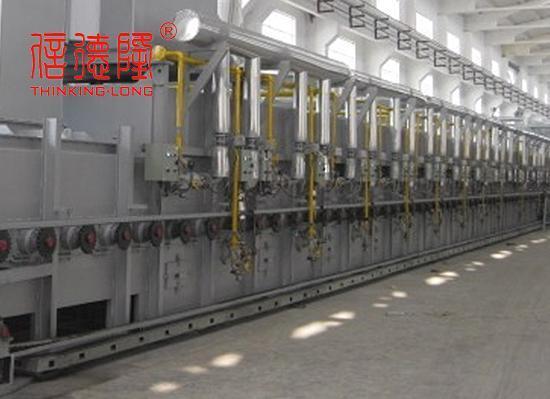
Traditional hard refractory linings act like a heat sponge. Every cold start means pumping energy into dense brickwork before the chamber itself reaches target temperature. Low thermal mass linings, built from lightweight ceramic fiber modules or microporous boards, flip that equation. They store only a fraction of the heat, so burners can push the workspace to operating conditions in minutes rather than hours.
The benefit shows up most clearly in batch operations. A kiln or furnace that cycles on and off daily wastes fuel re-heating heavy walls each morning. With low mass linings, the lining temperature tracks the chamber temperature almost in real time. Operators see shorter ramp-up curves, lower peak gas demand, and less wear on combustion equipment because it no longer has to run flat out just to overcome thermal inertia.
There is a trade-off worth understanding. Low thermal mass materials often have lower density and can be more fragile than dense castables, and they may not suit every atmosphere or mechanical load. But for applications where frequent cycling dominates the operating pattern, the reduction in cold start time alone often justifies the switch. The real payoff is not just speed—it is the ability to schedule production more flexibly without paying a heavy energy penalty every time the equipment cools down.
Pre-Assembled Modules Built for Fast Overseas Setup
Every structural component arrives pre-cut, pre-drilled, and pre-fitted, so your team can skip the measuring, cutting, and guesswork that usually slows down a build. The modules are designed to lock together with simple bolt connections and labeled connection points, which means even a small crew with minimal training can have the main frame standing in a matter of days rather than weeks.
Because the modules are packed flat and organized by assembly sequence, unloading and staging on site becomes straightforward. You won't waste hours sorting through loose parts or hunting for missing pieces. Instead, the bundle itself acts as a step-by-step guide, with each crate mapped to a specific section of the structure. This level of order keeps the build moving and reduces the chance of errors that require rework.
What really sets these modules apart is that they remove the usual dependency on local specialized labor. Many overseas projects stall because certain skills or tools aren't readily available, but here the assembly relies on standard wrenches and basic lifting equipment. That means you can mobilize faster, adapt to different site conditions, and get operations up and running without waiting for rare expertise to arrive.
Burner Arrays That Maintain Tight Temperature Uniformity
Achieving tight temperature uniformity across a burner array begins with thoughtful geometry and flow balancing. Each nozzle is sized and positioned so that heat release overlaps slightly at the edges, preventing cool spots between flames. Rather than relying on a single large burner, the array distributes thermal load into smaller, individually controllable zones. This approach lets operators fine-tune edge zones that typically lose more heat to the surroundings, keeping the entire working surface within a narrow temperature band.
Material selection and burner construction also play a decisive role. Porous metal or ceramic fiber matrices are often used for the combustion surface because they promote even fuel-air mixing and radiate heat uniformly. The plenum behind the array is carefully shaped to equalize pressure before the mixture reaches each burner port. Even small differences in port depth or surface roughness can create measurable hot and cold streaks, so manufacturing tolerances are held tighter than those used in standard heating equipment.
In operation, active monitoring helps preserve uniformity as conditions shift. Arrays may include embedded thermocouples or infrared sensors that feed back to individual gas valves, adjusting flow in real time. This closed-loop control compensates for changes in ambient temperature, load mass, or fuel pressure that would otherwise disturb the balance. The result is a burner array that not only starts up with tight uniformity but holds it through hours of continuous duty, which is essential for processes like glass bending, semiconductor curing, and precision metal treatment.
Export Documentation Ready for Quick Customs Clearance
Every shipment leaves with a complete packet of export paperwork already reviewed against the destination country’s entry rules. Commercial invoices, packing lists, bills of lading, and any certificates of origin are cross-checked for consistency well before the container reaches the port. This pre-departure audit catches mismatched weights, missing HS codes, or outdated terms that often trigger inspection holds.
For faster processing, documents can be submitted electronically to customs brokers while the cargo is still in transit. Our team coordinates directly with the forwarder and the receiving agent, so clearance starts the moment the vessel arrives rather than after unloading. Any corrections requested by customs are handled within hours instead of days because the original data was verified upfront.
When a product line requires export licenses, phytosanitary certificates, or other regulated paperwork, those are obtained before booking confirmation. That way, the shipment never sits waiting on a missing permit. The result is a predictable handoff at the border with fewer storage charges and no last-minute courier runs for original stamps.
Regional Spare Parts Stock to Prevent Extended Stoppages
Instead of centralizing every replacement component in a single warehouse, many maintenance teams now distribute high-turnover and long-lead parts across regional hubs. This approach cuts the distance between failure and repair, especially for operations spread across multiple sites. A regional stock model allows each location to draw from nearby inventory, reducing the risk that a single unexpected breakdown triggers days of waiting for a part to ship halfway across the country.
The trick is deciding what actually belongs in each regional stock. Managers often start with failure history, supplier lead times, and the cost of lost production for each asset class. Items with moderate demand but severe consequence of stockout—like specialized bearings, drive belts, or control cards—are prime candidates. Meanwhile, bulky or very low-turnover components can be pooled at fewer regional points, with clear transfer rules to avoid duplicating expensive spares at every site.
To keep the system effective, regional stock levels need periodic review rather than a set-and-forget approach. Adjusting minimum and maximum thresholds based on recent usage, seasonal patterns, and upcoming planned maintenance prevents both overstock and critical gaps. Pairing this with a simple tracking system or shared inventory visibility means a technician can locate a part in a neighboring regional store within minutes, not hours.
FAQ
It moves workpieces through a heated tunnel on powered rollers, providing consistent temperature control and gentle handling. Compared to belt or pusher furnaces, it handles heavier loads and higher temperatures without surface contact marks.
We have supplied lines for automotive component heat treating, stainless steel tube annealing, ceramic sintering, and powder metal parts. The common need is precise thermal profiles and repeatable throughput.
Yes. We adjust chamber length, roller pitch, heating zones, and cooling sections based on your product dimensions, cycle time, and energy source. One recent line was built with a two-stage cooling zone to handle thin-wall titanium parts.
Most of our standard units operate between 400°C and 1150°C, with high-temperature variants reaching 1350°C for specialized ceramic and refractory processing. The insulation and roller materials are matched to the peak operating temperature.
We send a small field team for mechanical assembly supervision, burner or electric heating calibration, and trial runs. Remote diagnostics are included for the first year, so most issues can be resolved without waiting for a site visit.
Typically 15 to 20 percent lower fuel consumption than older pusher furnaces because the continuous roller system reduces door openings and heat loss. We also offer waste heat recovery modules that preheat combustion air.
Each unit is built to the destination country's electrical and pressure vessel codes, plus ISO 13577 for industrial furnace safety. We handle the necessary documentation, including CE marking where applicable and local third-party inspections.
You get access to a dedicated support engineer, a spare parts list with recommended stock levels, and periodic remote performance reviews. For urgent breakdowns, we can usually dispatch replacement rollers or heating elements within 72 hours from regional hubs.
Conclusion
For global industrial buyers, exporting a roller hearth furnace means more than moving hardware—it means delivering a turnkey thermal system that performs identically on any continent. Our solutions prioritize atmosphere control so specialty alloys stay within strict metallurgical tolerances, while low thermal mass linings cut cold-start times from hours to minutes. Pre-assembled modules arrive ready for rapid overseas setup, reducing on-site labor and commissioning delays.
Burner arrays engineered for tight temperature uniformity keep every batch consistent, even under fluctuating load conditions. We also handle the logistics burden: complete export documentation clears customs without friction, and regional spare parts stock prevents extended stoppages. The result is a furnace line that starts faster, runs steadier, and stays productive far from the original factory.
Contact Us
Contact Person: Qian Xijun
Email: [email protected]
Tel/WhatsApp: 8613961736750
Website: https://www.thinkinglong.com/