

ESD Devices Manufacturer Pioneering Advanced Static Control Solutions
2026-06-01
In the realm of electronics manufacturing, static discharge is a silent but costly adversary. At the forefront of combating this threat is TPS, an ESD devices manufacturer that doesn't just follow industry standards—it redefines them. With a legacy of engineering advanced static control solutions, TPS equips workplaces worldwide to safeguard sensitive components. This blog delves into how their pioneering technology is shaping the future of electrostatic protection, one innovative device at a time.
Redefining Electrostatic Safety Through Next-Generation Protection Systems
Electrostatic hazards have long been managed with conventional grounding and bonding techniques, but these methods often fall short in dynamic industrial environments where rapid charge generation occurs. The next wave of protection systems moves beyond simple dissipation, introducing active monitoring and adaptive suppression technologies that respond to electrostatic buildup in real time. Instead of relying on passive conductors, these systems integrate smart sensors and micro-controllers to detect charge accumulation before it reaches dangerous thresholds, triggering countermeasures that neutralize the risk without interrupting operations. This shift transforms electrostatic safety from a static precaution into an intelligent, responsive safeguard that can keep pace with modern production speeds.
Advanced materials play a pivotal role in redefining what protective equipment can achieve. Conductive polymers and nano-engineered coatings are replacing metal components in critical areas, offering not just superior charge dissipation but also resistance to corrosion and mechanical wear. These materials allow for seamless integration into equipment housings, conveyor belts, and even worker apparel, creating a continuous protective envelope that was previously impossible. Combined with wireless connectivity, the new generation of protectors can communicate threat levels across a facility, enabling coordinated shutdowns or alerts only when and where needed, dramatically reducing false alarms and downtime.
The move toward predictive safety models marks another leap forward. By collecting and analyzing data from thousands of discharge events, machine learning algorithms can now forecast trouble spots and recommend preemptive adjustments to humidity, material flow, or equipment settings. This proactive stance not only prevents accidents but also optimizes process parameters, turning safety systems into efficiency drivers. In settings ranging from solvent-handling plants to electronics assembly lines, such systems are demonstrating that robust electrostatic protection can coexist with—and even enhance—operational agility, proving that safety innovations ripple far beyond their immediate purpose.
Engineering Bespoke ESD Solutions for High-Stakes Manufacturing Environments
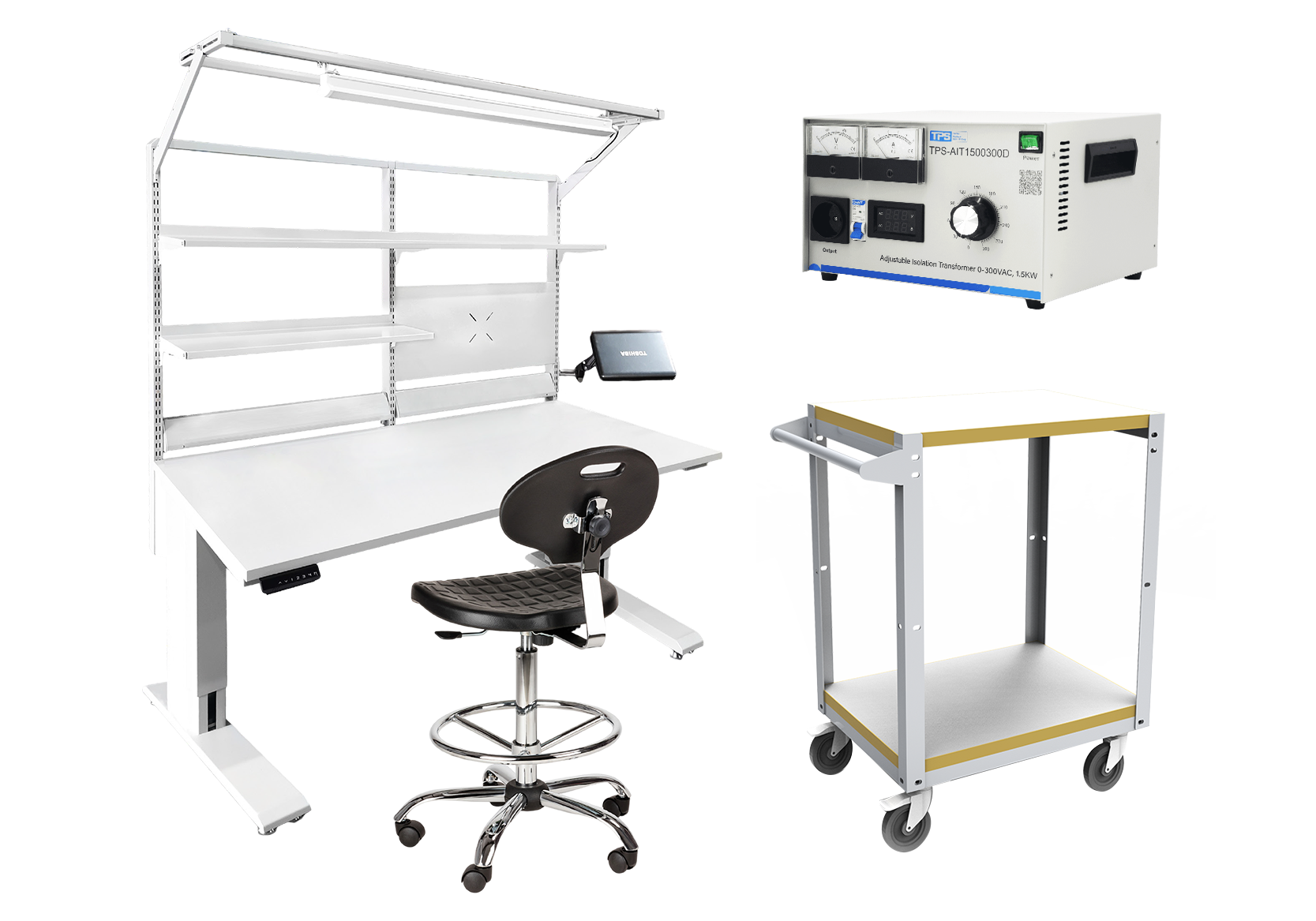
Every high-stakes manufacturing floor has its own rhythm, layout, and set of vulnerabilities. Off-the-shelf ESD protection often falls short when you're dealing with precision assembly lines, cleanrooms, or chemically sensitive processes. That's where bespoke engineering steps in—designing static control measures that align seamlessly with your existing workflows rather than forcing you to rebuild around generic products.
We start by mapping out the specific discharge risks in your environment, from triboelectric charging patterns to the sensitivity thresholds of the components you handle. Then it's about material selection, custom geometries, and integration with automation systems—whether that means grounded workstations that accommodate unusual part sizes or ionization setups that maintain balance without disrupting airflow in ISO-regulated zones.
The result is an ESD strategy that doesn't just protect against latent defects; it becomes an invisible part of your operation. No wasted bench space, no added steps for technicians, and a measurable drop in field failures traced back to electrostatic events. That kind of peace of mind can't be packaged in a catalog.
The Science Behind Zero-Defect Static Control in Modern Electronics
Static electricity might seem like a minor nuisance in daily life, but inside advanced semiconductor fabs or SMT assembly lines, a single invisible discharge can vaporize microscopic traces on a chip or fuse gate oxides. The drive for zero-defect static control isn't about chasing an ideal; it's a practical response to geometries now measured in single-digit nanometers, where even a few volts of stray potential can outstrip the breakdown threshold of ultra-thin dielectrics. Engineers measure charge accumulation in terms of voltage, decay time, and triboelectric series positioning—every material from conveyor belts to epoxy underfill is audited for its ability to shed or retain charge.
At the heart of robust ESD (electrostatic discharge) prevention lies a layered physical approach. Conductive and dissipative flooring, wrist straps, and ionizing blowers form the classic three-legged stool, but their real choreography relies on precisely tuned resistivity ranges—typically between 10⁵ and 10⁹ ohms—to bleed charge away without causing a rapid, damaging spark. Ionization plays a second critical role: AC or pulsed-DC corona sources actively drench the air with balanced positive and negative ions, neutralizing charges on insulative surfaces that can't be grounded. The tricky part is maintaining that balance as electrodes age, humidity fluctuates, and airflow patterns shift; unattended drifts in ion output can inadvertently create dangerous offset voltages, turning a protective measure into a latent threat.
Monitoring closes the loop on a zero-defect framework. Static event detectors and continuous-resistance monitors feed into broader quality systems, logging millisecond spikes that correlate with particular machine cycles or material batches. Advanced setups use field mill sensors to map potential gradients across whole workstations, then adaptively adjust local ionization intensity. Such granular visibility helps trace seemingly random CDM (charged-device model) failures back to tasks as mundane as tape peeling or pick-and-place nozzle retraction. Ultimately, achieving zero defects means treating static control not as a set of compliance checkmarks but as a tightly instrumented, physics-aware layer of process control, where every microjoule of energy is accounted for and safely shunted aside before it can reach a sensitive node.
How Adaptive Ionization Technology Transforms Workplace Static Management
Static electricity in the workplace often feels like a minor annoyance—until it causes equipment malfunctions, material defects, or even safety hazards. Traditional approaches to static control, like grounding straps or passive ionizers, require constant monitoring and manual adjustment, which rarely aligns with the unpredictable nature of static buildup. Adaptive ionization technology changes this by continuously sensing environmental conditions and automatically tuning ion output to match real-time needs. Instead of a one-size-fits-all solution, the system responds dynamically, preventing static before it becomes a problem rather than reacting after the fact.
What makes adaptive ionization distinct is its ability to work across varied materials and processes without operator intervention. In fast-paced production lines where humidity, temperature, and material types shift constantly, the system self-regulates, maintaining ideal charge neutralization with minimal overshoot or residues. This level of precision eliminates the guesswork and frequent recalibration that plague conventional setups, keeping production flowing smoothly while reducing downtime linked to static-related disruptions.
Beyond immediate operational gains, adaptive ionization reshapes maintenance routines and long-term reliability. Its self-monitoring features alert teams to performance dips before they lead to failures, turning static management from a reactive chore into a proactive, integrated part of facility oversight. As a result, workplaces experience fewer unexpected line stops, improved product consistency, and a noticeable reduction in wasted materials—all without adding complexity for the staff on the ground.
From Lab to Production Line: Accelerating Innovation in ESD Mitigation
In the controlled environment of a research lab, electrostatic discharge (ESD) protection is typically approached with idealized setups—precise grounding, consistent materials, and low humidity. But when solutions graduate to the production floor, they face a messy reality: unpredictable movements, mixed material-handling systems, and high-speed automation that can generate and accumulate charge in unexpected ways. This transition often reveals that what worked on a static bench or in computer simulations falters under the rhythm of a live assembly line. Bridging this gap demands more than simply scaling up a prototype; it requires rethinking protection as a dynamic, real-time challenge that must adapt to the pulse of manufacturing.
One of the most effective accelerators in this journey is the integration of modular, field-upgradable ionizing components directly into production equipment. Rather than relying solely on passive safeguards—wrist straps, dissipative flooring, or coated packaging—these active systems neutralize charge at its source, responding to voltage fluctuations before they reach device-damaging levels. The real breakthrough comes from embedding diagnostic feedback into the mitigation hardware itself, allowing line operators to spot degradation or airflow disruptions the moment they occur. This shifts ESD control from a periodic audit concern to an ongoing, transparent part of the production rhythm, drastically cutting the time wasted on intermittent failures and post-mortem root cause analysis.
Yet, accelerating innovation in this space also hinges on the culture within engineering teams. Too often, ESD mitigation is treated as a late-stage compliance checkbox—something to be “fixed” after a product reaches the pilot run. Flipping this mindset means involving manufacturing technicians and process engineers early in device development, so that protection strategies are co-designed with the assembly flow itself. When a lab’s findings are immediately pressure-tested on a pilot line with real-time material lots and operator variability, the iteration loop tightens. Failures become learning moments rather than showstoppers, and the path from benchtop breakthrough to reliable, high-yield production shortens significantly.
Building Resilient Supply Chains with Fail-Safe Electrostatic Discharge Prevention
When electrostatic discharge (ESD) sneaks into a supply chain, it doesn't just zap a component—it can trigger delays that ripple across the entire logistics network. Fail-safe prevention means designing systems where no single point of failure can let a static event slip through. From humidity-controlled packaging to redundant grounding paths in automated handling equipment, each layer acts as a quiet guardian, ensuring that even if one safeguard falters, the next one catches the threat before it becomes a shipment setback.
Building resilience isn't about over-engineering every node; it's about mapping the hidden dependencies where ESD damage quietly corrodes reliability. Consider the mundane act of transferring a batch of sensors from a warehouse shelf to a delivery truck. A wrist strap checked only once a shift, a pallet wrap that loses its dissipative coating after weeks of use—these small gaps accumulate. A fail-safe approach embeds continuous verification, like real-time monitoring of grounding continuity at packing stations, so that human oversight or equipment drift never goes unnoticed.
The payoff shows up where least expected. A distributor in a high-humidity region might rely on active ionization, but when a dry spell hits and that system struggles, the fail-safe shifts to conductive flooring and static-dissipative footwear, keeping operations humming. This layered thinking extends to supplier onboarding, where audits include stress tests of ESD controls under peak throughput, not just on a calm Tuesday. The result is a supply chain that absorbs static-related disruptions without breaking stride, protecting both margins and delivery promises.
FAQ
ESD stands for Electrostatic Discharge. These are protective components and tools designed to prevent sudden electricity flow between two electrically charged objects—something that can easily damage sensitive electronics. Without them, tiny surges can ruin circuit boards or degrade components over time, leading to costly failures in manufacturing, labs, or even everyday gadget handling.
We emphasize custom engineering rather than off-the-shelf fixes. Each client’s environment has unique risk factors—humidity levels, materials used, workflow patterns—so we design systems that integrate directly into their processes, rather than relying on generic grounding mats or wrist straps alone. Our engineers often spend days on the floor to map out real-world static hazards before proposing a solution.
We cover everything from personnel grounding gear (heel straps, smocks, continuous monitors) to workspace ionization and specialized packaging. A big part of our line is automated monitoring networks that alert teams the moment a ground path fails anywhere on the floor, plus we offer conductive flooring assessments and custom trolley designs for moving sensitive assemblies.
Electronics manufacturing is the obvious one, but we see strong demand in automotive (especially EV battery assembly), medical device production, aerospace, and even some high-end printing operations. Anywhere microchips, precision sensors, or flammable atmospheres coexist with fast-moving parts, static can be a hidden threat.
We maintain an in-house testing lab that exceeds standard compliance checks. Every batch of wrist straps, cords, and monitors goes through accelerated lifecycle testing—thousands of flex cycles, temperature swings from -20°C to 60°C, and high-humidity exposure. We also randomly pull units for destructive breakdown voltage tests to confirm limits far beyond published specs.
Our latest rollout is a wireless personnel grounding system that uses BLE beacons to track compliance in real time, integrated with a tablet dashboard. It’s less intrusive than corded monitors and lets supervisors instantly see who’s grounded and who’s not across a large facility. We’ve also released a low-profile ionizer bar that fits directly into pick-and-place machines without obstructing vision systems.
Conclusion
In an era where even a microsecond of electrostatic discharge can cripple advanced electronics, one ESD devices manufacturer is rewriting the rules of static control—not through incremental tweaks, but by engineering protection systems that operate on entirely new physical principles. Their next-generation solutions move beyond passive grounding, integrating real-time charge mapping with adaptive ionization that self-calibrates to ambient conditions, effectively eliminating the guesswork from static management. At the core lies deep material science: proprietary conductive polymers and nanocomposite films that channel destructive charges away from sensitive components before they accumulate, achieving a level of zero-defect performance that was once theoretical. This scientific rigor is paired with an adaptive ionization technology that senses fluctuations in humidity, airflow, and operator movement, adjusting its output thousands of times per second to maintain a precisely controlled environment—turning the factory floor into an intelligent, self-regulating ecosystem.
Yet technology alone isn't enough for high-stakes manufacturing; context matters. That's why the same company excels at crafting bespoke ESD solutions, collaborating closely with semiconductor fabs, automotive assembly lines, and medical device producers to design systems that fit their unique workflows and risk profiles. The journey from lab-scale breakthroughs to production-ready tools is intentionally compressed through parallel prototyping and in-situ validation, ensuring that innovations don't languish in research papers but rapidly become practical safeguards. This agility extends to supply chain design: by embedding fail-safe redundancy into every component and forging partnerships with certified material suppliers, they've built a network where electrostatic discharge prevention is not just a product feature but a resilient, end-to-end capability. The result is a holistic approach where cutting-edge science, tailored engineering, and supply chain reliability converge—enabling manufacturers to push the boundaries of miniaturization and complexity without fear of static-related failures.
Contact Us
Contact Person: Lily
Email: [email protected]
Tel/WhatsApp: +49 (0) 2161 49526-0
Website: https://tps-elektronik.com/en/