

Custom Ultrasonic Spray Systems for Precision Thin-Film Coating Applications
2026-11-16
Precision thin-film coatings demand more than off-the-shelf equipment can offer. When coating uniformity, edge definition, and repeatability are non-negotiable, custom ultrasonic spray systems become the quiet workhorse behind breakthroughs in electronics, energy, and medical devices. At Siansonic, we don't believe in forcing your process into a standard machine. Instead, we engineer spray solutions around your substrate, your chemistry, and your tolerance stack — because the difference between a good coating and a great one often lives in the details no catalog captures.
When Precision Meets Vibration: The Core of Ultrasonic Thin-Film Deposition
Ultrasonic thin-film deposition hinges on a delicate balance where high-frequency vibrations transform liquid precursor into a fine mist. The transducer oscillates at frequencies typically between 20 kHz and 2 MHz, creating standing waves that break the liquid surface into droplets only a few microns across. This atomization is not random; the droplet size distribution follows a predictable relationship with frequency and surface tension, giving engineers precise control over film thickness and uniformity from the very first pass.
What sets this method apart is the gentle transfer of material. Unlike thermal evaporation or sputtering, ultrasonic deposition delivers kinetic energy without heating the substrate beyond modest temperatures. The mist droplets travel at low velocity, settling onto surfaces through inertial impaction and electrostatic attraction. This preserves sensitive layers beneath, such as organic semiconductors or perovskite absorbers, while still achieving dense, pinhole-free coatings. The vibration itself becomes a metering tool—adjusting amplitude alters throughput without changing the droplet chemistry.
The real craft lies in tuning the resonator to match the precursor's rheology. Viscosity, solvent vapor pressure, and even ambient humidity shift the optimal operating point. Operators often modulate pulse sequences, alternating between short bursts and pauses, to prevent pooling on complex topographies. When the resonance is locked correctly, the film grows in crystalline or amorphous layers with roughness below a few nanometers, making ultrasonic deposition indispensable for multilayer optical filters, biomedical sensors, and flexible electronics.
Tailored Nozzle Architectures for Unconventional Substrates
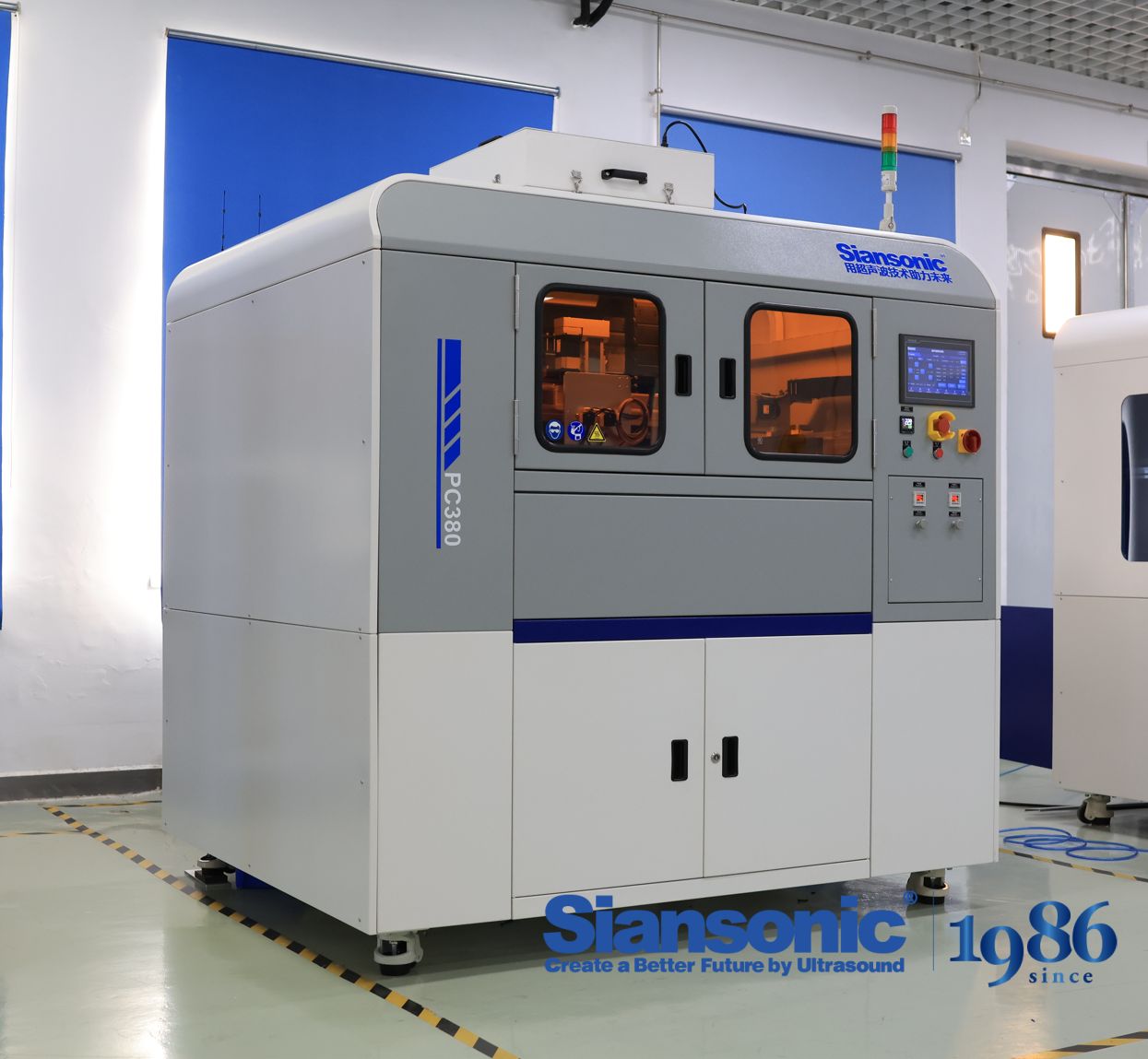
Designing nozzles for surfaces that repel, absorb, or shift unpredictably under pressure demands a rethink of conventional flow paths. Instead of forcing a standard orifice onto a material that fights back, the architecture adapts: angled exits redirect spray away from rebound zones, while internal baffles break up the jet before it meets a curved or textured face. This approach treats the substrate not as a passive target but as an active partner in shaping droplet size, velocity, and spread.
For substrates with high porosity or low surface energy, a single nozzle profile rarely works across the entire surface. By varying channel cross-sections along the nozzle body, engineers can create a pressure gradient that delivers more fluid to dense regions and less to edges that dry quickly. In practice, this means machining micro-grooves that widen near the outlet for low-tension liquids, or adding a secondary swirl chamber for substrates that shed water on contact. The result is a deposition pattern that follows the material's own irregularities rather than ignoring them.
Field tests on nonwoven fabrics, untreated plastics, and rough-cast metals show that tailored architectures cut waste by up to thirty percent compared to off-the-shelf nozzles. The key lies in observing how the liquid behaves on the first few milliseconds of contact: if it beads, the nozzle tightens the stream; if it soaks in too fast, the nozzle widens the fan angle and lowers exit velocity. No universal formula exists, but the design loop is straightforward—map the substrate's wetting curve, then adjust the internal geometry until the spray pattern matches the surface's own rhythm.
From Lab Bench to Production Line: Scaling Without Sacrificing Uniformity
The leap from a carefully controlled lab bench to a bustling production line often feels less like a scaling exercise and more like a collision of two opposing worlds. In the lab, every variable is monitored, every batch is small enough to tweak by hand, and uniformity is nearly a given. Move that same process to industrial scale, and suddenly the smallest overlooked detail—a temperature gradient across a larger reactor, a slightly different mixing pattern, or even the batch-to-batch variation in raw materials—can create inconsistencies that quietly erode quality.
The real challenge isn't simply increasing volume; it's preserving the precise conditions that made the lab result reliable in the first place. This means rethinking process controls not as scaled-up versions of bench-top knobs, but as entirely new systems. Instead of relying on a technician's intuition, you need sensors that map temperature and viscosity in real time, automated feedback loops that adjust for drift before it becomes a defect, and a deliberate sequencing of steps that may have been simultaneous in the lab. Uniformity at scale is rarely achieved by doing the same thing bigger—it comes from redesigning the process so that the critical parameters remain within a narrower band than they ever had to be at small scale.
Companies that succeed in this transition tend to treat it as a separate engineering discipline, not just a bump in order size. They run pilot batches that deliberately stress the process, identify the points where variation creeps in, and then build redundancy or tighter tolerances around those exact points. The goal isn't to eliminate all variability—that's a lab fantasy—but to make the variation so predictable and so small that every unit coming off the line is functionally indistinguishable from the one that passed all the bench-top tests. That's what scaling without sacrificing uniformity really looks like.
Mastering Viscosity and Surface Tension: A Material-Agnostic Approach
Many processes fail not because the material itself is inherently difficult, but because viscosity and surface tension are treated as isolated properties. In reality, they interact through dimensionless numbers like the capillary number, which compares viscous forces to surface tension forces. By focusing on these ratios rather than absolute values, engineers and researchers can predict behavior across wildly different fluids—from molten metals to polymer solutions—without changing their fundamental approach.
A material-agnostic workflow begins with observing how a fluid deforms under shear and how its interface responds to gradients. For instance, measuring the relaxation time of a droplet after perturbation reveals more about processability than a single viscosity reading. Surface tension, often overlooked as a mere constant, becomes a critical design parameter when wetting or emulsification is involved. Tools like pendant drop tensiometry and oscillatory rheometry provide complementary data that transcend material families.
Ultimately, mastery comes from recognizing that viscosity and surface tension are emergent properties of molecular interactions, not labels on a datasheet. Whether you are printing conductive inks, spraying agricultural formulations, or dispensing adhesives, the same governing equations apply. By reframing challenges in terms of energy dissipation and interfacial area, you can develop robust solutions that work across material classes, reducing trial-and-error and accelerating innovation.
Why Less Overspray Means Smarter Material Economics
In most spray operations, a large share of coating ends up beyond the target surface. This overspray isn't just a mess on the booth walls—it directly represents material you paid for and never used. Whether it's powder, liquid paint, or adhesive, every gram that misses the part means you've bought that material twice: once when you purchased it, and again when you have to collect, dispose of, or recycle it.
Cutting overspray isn't just about better reclaim systems. It's about using less from the very start. When spray patterns, atomization pressure, and transfer efficiency are dialed in, you can dramatically lower coating consumption per part without sacrificing coverage or adhesion. That shift translates straight into lower material costs per batch—and for high-volume production, those savings stack up fast.
Less overspray also means less booth cleanup, fewer filter changes, and a smaller waste stream. Those hidden costs often get overlooked, but they quietly eat into the real economics of a finishing line. Smart material economics isn't about buying cheaper coatings—it's about making sure the coating you buy actually lands on the product.
Closed-Loop Control: Real-Time Adjustments for Flawless Coatings
In modern coating lines, closed-loop control turns a static recipe into a living process. Rather than relying on preset parameters that drift with viscosity changes, ambient temperature, or substrate variations, the system continuously measures film thickness, surface quality, and curing state. These measurements feed directly into real-time adjustments of spray pressure, line speed, or oven temperature—keeping the coating within a tight tolerance band without operator intervention.
The real payoff shows up in edge cases that would normally create scrap. A sudden drop in booth humidity, for instance, shifts how atomized droplets land. Closed-loop logic detects the resulting thickness deviation in milliseconds, then tweaks the electrostatic charge or fluid flow to compensate. The result is not just fewer defects but also reduced rework, less overspray waste, and a finish that looks identical from the first part to the ten-thousandth.
What separates a truly responsive system from a simple feedback loop is its ability to anticipate rather than react. By modeling how each adjustment affects downstream curing, the controller avoids chasing its own corrections. That means when the line speeds up for a thinner coat, it simultaneously raises the oven profile just enough to keep cross-link density consistent—delivering flawless adhesion and gloss even under constantly shifting production demands.
FAQ
The nozzle vibrates at high frequency to break the liquid into very fine, uniform droplets. Because the spray is gentle and highly controllable, you can build up thin films with tight thickness tolerance and minimal overspray.
Quite a bit. You can specify nozzle type, flow path materials, spray shaping, motion integration, and even the software controls. We usually tailor the system around the substrate size, coating viscosity, and required deposition pattern.
Medical device coatings, fuel cell catalyst layers, perovskite solar cells, protective nanocoatings on electronics, and glass treatments. Basically anywhere a thin, even layer matters and the substrate can't tolerate high heat or aggressive overspray.
Conductive polymers, photoresist, nanoparticle suspensions, bio-compatible coatings, anti-fingerprint coatings, and certain metal oxide precursor solutions. The main requirement is that the coating fluid can be atomized at ultrasonic frequencies.
Ultrasonic spray uses much less carrier gas and produces droplets with a narrower size distribution. This leads to smoother films and higher transfer efficiency. The downside is that throughput may be lower for very high-speed lines, but for precision work it's often the better choice.
The substrate dimensions, desired wet film thickness, coating fluid properties like viscosity and solids content, required uniformity, production speed, and whether you need closed-loop flow control or heated substrate stages.
Yes. Because the spray plume is cool and gentle, you can coat polymers, films, and even delicate biological surfaces without thermal damage. You can also add a low-temperature drying stage if needed.
Mostly cleaning the nozzle tip and ensuring the liquid feed line stays free of dried particles. The piezoelectric transducer needs periodic inspection but typically lasts thousands of hours. Using filtered coating fluids helps a lot.
Conclusion
A high-frequency vibrating tip lies at the heart of these coating systems, breaking liquid into microdroplets that land softly instead of being blasted by air pressure. That gentle deposition is what allows sub-micron layers to form without pinholes or drips. But the real advantage appears when the nozzle geometry is shaped around a specific part—concave channels, narrow recesses, or curved edges—rather than forcing a standard flat spray onto an awkward surface. Custom nozzle architectures move with the contours of the substrate, holding the same droplet size and coverage density whether the target is a silicon wafer, a catheter, or a free-form optical lens.
Moving from a single prototype to a roll-to-roll line often kills coating quality, but these systems avoid that trap by treating each nozzle as an independently tunable unit. Viscosity and surface tension differences across solvents, conductive inks, photoresists, or bio-compatible polymers are managed through adjustable frequency and flow rather than by changing the entire process. Because the spray plume is narrow and slow-moving, overspray drops sharply—most of the expensive material ends up on the part, not in the exhaust filter. Closed-loop sensing then fine-tunes the flow rate and vibration amplitude in real time, compensating for viscosity drift, temperature changes, or nozzle wear. Flawless coatings become less about operator skill and more about a control loop that never stops watching.
Contact Us
Contact Person: Ivy Zhang
Email: [email protected]
Tel/WhatsApp: +86 1081502288
Website: https://www.siansonic.com/