

Custom Push Pull Connectors: Choosing the Right Materials for Demanding Environments
2026-11-20
Every disconnect in a demanding environment tells a story—often one written by vibration, moisture, or thermal shock. The right push pull connector isn't just a fitting; it's what keeps critical signals alive when conditions turn hostile. At REUNION, material selection is treated as the first line of defense, not an afterthought. From surgical suites to offshore rigs, the difference between reliable performance and costly failure often comes down to a few grams of precisely chosen alloy or polymer. This guide cuts through the spec-sheet noise to show how matching shell, contact, and insulator materials to real-world stress factors can extend service life and prevent the failures that generic connectors quietly invite.
What Harsh Settings Actually Demand from a Push Pull Connector Body
A push-pull body is usually picked for speed and density, but harsh installations punish the housing long before the contacts fail. Salt fog, hydraulic mist, washdown detergents, and UV exposure work on the outer surface while the inner latch ramps and seal grooves face cyclic stress. The real demand is not one dramatic survival test; it is dimensional stability. A body that swells in oil, embrittles at -30°C, or softens near a drive motor changes the mating depth just enough to defeat the O-ring or let the latch disengage under pull force. So material selection has to balance chemical uptake, thermal expansion, and surface hardness in the same molded or machined part.
Vibration and shock shift the job of the body from alignment sleeve to structural clamp. On a mining drill, a packaging line, or a rail bogie, the housing must keep the latch geometry true while being twisted and tugged through thousands of off-axis cycles. If the locking ramps wear even a few microns, the sound and feel of a proper mate become unreliable. The body also has to preserve the sealing lip under the collar, because any wobble at the panel cutout is translated directly into the O-ring groove. That is why many rough-service connectors favor glass-filled or mineral-filled materials only when the filler does not turn the surface brittle under repeated impact.
Rough settings also degrade the human side of mating. Operators wearing gloves or working in poor light rarely apply straight axial force. The body therefore has to guide the plug home and give an unambiguous click, while retaining enough wall section to resist side-load prying at the cable exit. Rather than isolating the latch, seal, and strain relief as separate features, durable designs tie them together so the bending load travels through the shell instead of through the solder cups or crimp joints.
Stainless Steel Is Not Always the Safe Default
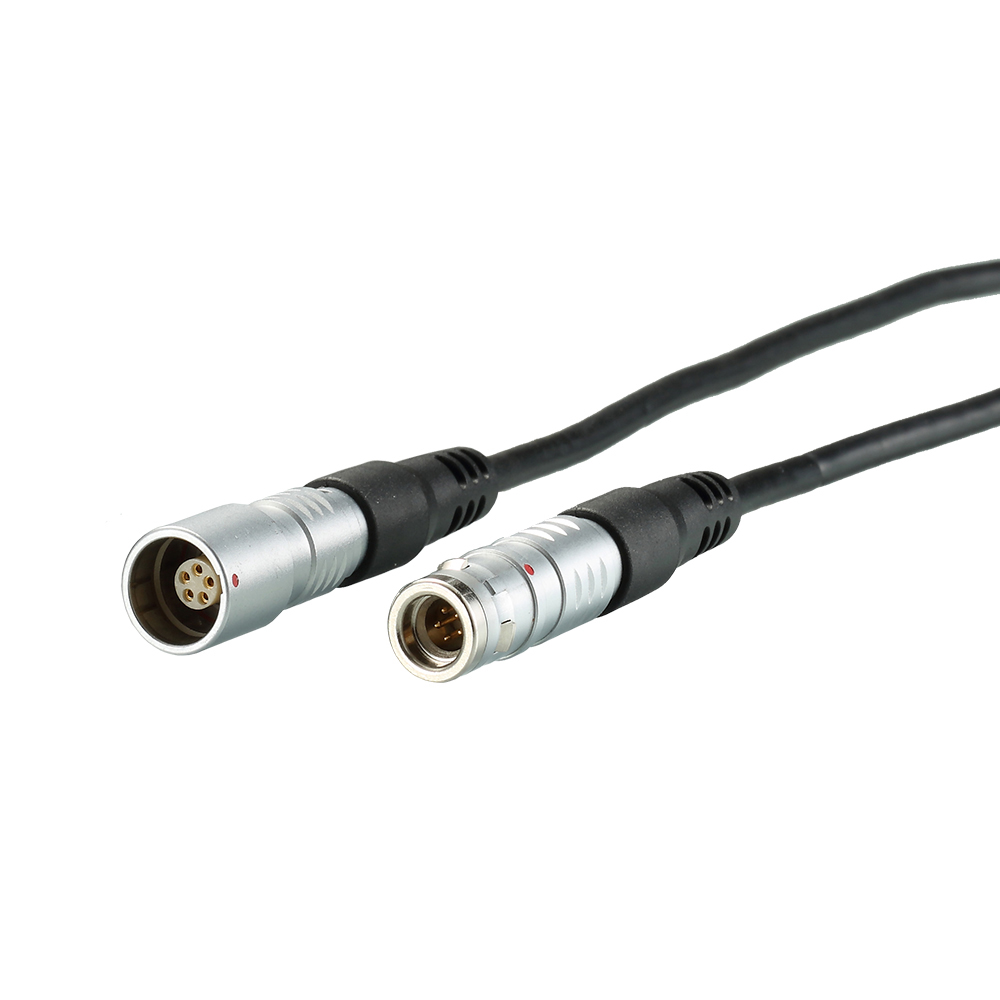
Stainless steel’s reputation as the ultimate material for every kitchen, medical, or outdoor task is largely a matter of marketing and habit. It resists rust, sure, but it also scratches under rough use, dents when dropped on rock or tile, and can develop pitting if exposed to salt water over time. In many daily situations, a carefully chosen carbon steel blade holds an edge longer, titanium weighs less without giving up corrosion resistance, and even high-quality plastic or wood handles offer better grip when wet. The default choice isn’t always the most thoughtful one.
Think about what actually happens when stainless steel fails quietly. A scratched surface isn’t just cosmetic; it creates microscopic grooves where bacteria can hide, and no amount of wiping reaches them. In coastal environments, the passive oxide layer that protects stainless steel isn’t invincible—chloride ions eat through it slowly, leaving behind rust streaks that surprise people who believed the “stainless” promise literally. Then there’s the thermal problem: many stainless alloys transfer heat unevenly, so a thin cookware base will scorch food in one spot while staying nearly cold in another. Materials that perform worse in a specific context shouldn’t be treated as universally safe just because they don’t visibly degrade within a week.
Choosing a material based only on its popular reputation is like buying shoes solely because they’re leather. Leather is great until you’re crossing a river or running on wet pavement; then you wish for something with drainage and grip. Stainless steel has its place—sanitary handles, marine fixtures far from salt spray, surgical tools that need frequent autoclaving. But for a camp knife, a bike frame, a coffee mug, or even a food container that goes into the dishwasher daily, alternatives often outperform it in weight, edge retention, thermal response, or maintenance ease. Safety isn’t a property of the metal itself; it’s a match between the material and the actual stresses it will face. Treating stainless as a default skips that matchmaking and ends with tools that let you down in predictable ways.
Plating and Coating Choices That Outlast Salt Spray and Washdowns
Salt spray chambers chew through standard zinc plating once the passivation layer cracks, so a zinc-nickel alloy with a trivalent chromium seal pays off quickly in marine and roadside exposure. A nickel content around 12-15% usually gives the best mix of galvanic protection and white rust resistance, but the post-plating seal often matters more than the alloy itself.
Washdown areas bring a different set of problems. High-pressure hot water, alkaline cleaners, and repeated heating and cooling cycles wear down ordinary coatings at edges and recesses. Electroless nickel with a high phosphorus content plates complex shapes more uniformly than electrolytic options and stands up to most cleaning chemicals. A PTFE co-deposit or thin epoxy topcoat keeps residue from bonding and cuts down the need for aggressive scrubbing.
When parts face both salt fog and frequent washdowns, a zinc-nickel base under an epoxy or ceramic topcoat tends to outlast either coating alone. Watch threaded fastener tolerances before adding extra layers, and bake hardened steel parts after plating to prevent hydrogen embrittlement. Matching the full coating stack to the actual cleaning chemistry and drying temperatures will do more than chasing a higher rating in a catalog.
Thermal Expansion Mismatches That Loosen Push Pull Couplings
When a push pull coupling connects parts made from different alloys or polymers, heating and cooling cycles rarely affect both sides equally. The higher-expansion component grows away from the mating surface, so the interference that keeps the coupling seated begins to fade. In practice the change can be small on a single cycle, but repeated temperature swings turn that small movement into a gradual walk, loosening the connection even when the parts were initially torqued or snapped in firmly.
The loosening mechanism is especially visible in aluminum-to-steel and brass-to-plastic combinations. A male stem that expands more than the female body can push the locking ring outward, while a housing that grows faster than the internal collet reduces the radial squeeze on the tube. Over time, the gripping edges or O-ring grooves lose their original bite, and cold-condition contraction may not restore the lost preload because light fretting or creep has already reshaped the contact faces.
A more forgiving design uses materials with closely matched expansion rates, or inserts a spring element that follows the changing gap instead of fighting it. Where mixed materials cannot be avoided, choosing a coupling with a wide temperature rating and rechecking pull-out resistance after thermal cycling is usually cheaper than letting the joint work itself loose in service.
Sealing Harsh Conditions Without Overbuilding the Connector
Sealing at the interface often fails because designers try to solve every possible environmental threat with heavier housings and extra gaskets. In harsh conditions, the real burden falls on the contact zone, not the bulk of the shell. A narrow, well-controlled sealing land with the right compression set can keep moisture and chemical spray out without adding another layer of metal or a bulkier flange. The connector only needs enough rigidity to keep that land dimensionally stable under clamping and thermal cycling; anything beyond that is dead weight.
Material pairings do more for long-term sealing than size. Choosing an elastomer that holds elasticity at low temperature and resists softening near the upper end of the rating lets a comparatively slim groove maintain its squeeze. Equally important is the finish on the mating face. A fine but not polished surface gives the seal something to bite into, reducing micro-leak paths without requiring constant high bolt loads. This approach avoids the usual overbuilt alternative where every surface is thickened just to create margin for a poorly matched seal.
The result is a connector that behaves more like a sealed joint than an armored enclosure. Drain slots, ribbing, and wall thickness are placed only where stress or fluid collection actually occurs. That keeps the outline small, the mating force reasonable, and the bill of materials simpler, while still passing spray, vibration, and thermal shock tests. Sealing harsh conditions, in this sense, is less about building the connector stronger and more about being precise in the few places that matter.
Lightweight Materials That Still Survive Constant Mating Cycles
Trimming grams off a connector housing usually means sacrificing wall thickness in exactly the spots that see repeated insertion and removal. Yet some of the most resilient designs now lean on liquid crystal polymer blends and glass-filled nylons that hold their latch geometry even after thousands of cycles. The trick isn't just choosing a stiff resin — it's tuning the fill ratio so the material flexes enough to release cleanly without cracking at the root of the snap feature.
Thin-wall molding of these compounds introduces its own headaches. Flow lines near the locking tab can become initiation points for fatigue, especially when mating forces shift slightly due to tolerance stack. One practical workaround is to move the weld line away from high-stress corners by adjusting gate location, something that costs nothing in weight but adds substantial cycle life. A well-placed gate lets the polymer chains orient along the load path instead of across it.
Field data from compact board-to-board links shows that a 0.8 mm pitch housing in a 30% short-glass PBT can still deliver reliable retention past 5,000 cycles when the latch arm thickness stays above 0.45 mm. Drop below that and you're into metal-reinforced territory or overmolded stainless clips. Neither is as light, but both beat the callbacks that come from a connector that feels fine on day one and goes limp by month six.
FAQ
The shell, contacts, and seals each face different stresses. A connector that performs fine in a cleanroom may corrode quickly on an offshore platform, so the material has to match the actual operating environment instead of only the electrical rating.
Stainless steel usually wins on corrosion resistance and mechanical strength, but it adds weight and cost. Aluminum with the right plating can reduce weight significantly, though it may need extra protection in salt spray or acidic exposure.
They can be, especially when weight, chemical resistance, or non-magnetic performance matters. High-grade PEEK or PPS can survive autoclave cycles and aggressive cleaning fluids, but they won't equal metal for impact resistance or EMI shielding.
Plating is often the first defense layer. Gold over nickel helps maintain stable contact resistance and fights corrosion, while chrome or PTFE coatings can reduce wear on the push-pull latching surfaces over repeated cycles.
Temperature cycling, UV exposure, and cleaning agents are frequently underestimated. Materials can crack or become brittle even when electrical performance looks fine on paper, so the full service environment needs to be evaluated.
Yes, but the choices narrow quickly. Stainless steel or certain high-performance polymers combined with medical-grade seals can withstand autoclave, gamma, or chemical sterilization, while standard platings and cable jackets may break down.
Marine bronze, stainless steel, or aluminum with heavy-duty anodizing paired with sealed interfaces are common. The real key is matching plating and seal materials to resist salt spray, constant moisture, and long-term UV.
Identify the exact failure risks of the environment and spend on materials only where they matter. That might mean stainless contacts and special seals with a more economical body material when exposure is moderate.
Conclusion
For custom push pull connectors, the body material has to earn its place against the actual environment rather than a generic 'harsh' label. Washdown cycles, salt-laden air, and chemical mists attack more than the outer shell; they work into latch grooves, thread clearances, and seal pockets where ordinary corrosion tests miss the real failure path. Stainless steel seems like the obvious choice, but in chloride-heavy or weight-critical designs it can cause galvanic trouble, add unnecessary mass, and still suffer crevice attack if the grade or passivation is wrong. A sealed anodised aluminum body or a reinforced polymer housing often holds up better because the protective layer is built into the surface and the connector can be tailored to the mating hardware without inviting dissimilar-metal corrosion.
Coatings matter only when they are matched to the cleaning and temperature cycle. Electroless nickel with a low-friction overcoat survives repeated washdowns without peeling, while some passivated alloys handle salt spray without thick, brittle plating. Thermal expansion differences between the shell, insert, and coupling ring are a more common cause of loose push pull latches than mechanical wear, so material pairs need similar expansion behavior or a clearance strategy that keeps the latch preload stable through hot and cold swings. Sealing should not mean adding bulky glands and heavy walls; a well-placed seal behind a shield or a controlled groove depth can exclude water without making the connector overbuilt. For connectors that endure constant mating, lightweight glass-filled thermoplastics and selectively reinforced metal shells preserve latch geometry and wear resistance longer than heavy all-metal designs. The result is a connector that survives the environment without carrying a penalty in weight, service life, or field handling.
Contact Us
Contact Person: Hayley Liang
Email: [email protected]
Tel/WhatsApp: +86 13480625451
Website: https://www.reunion-china.com/