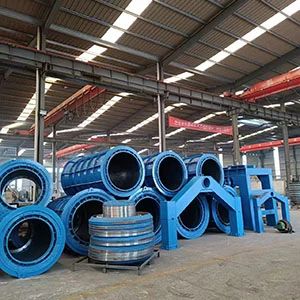

Concrete U-Shaped Water Channel Equipment from China Suppliers: Key Insights and Selection Tips
2026-08-15
Choosing the right concrete U-shaped water channel equipment from China suppliers can make or break your irrigation or drainage project. While the market is flooded with options, not all machinery delivers the same durability, precision, or after-sales support. In this guide, we cut through the noise to bring you practical insights and selection tips that save time, money, and headaches. Whether you're a contractor scaling up or a farm manager planning an upgrade, understanding key factors like mold design, vibration systems, and supplier reliability is essential. We also highlight trusted partners such as Qianfeng Electromechanical Equipment, known for robust engineering and consistent performance in the field. Read on to discover what separates a wise investment from a costly mistake.
U-Shaped vs Trapezoidal Channels and Why It Matters for Your Project
The cross-section you pick for a channel is not just a line on a drawing—it quietly determines how water behaves long after construction wraps. U-shaped channels, with their narrow and deep profile, keep the wetted perimeter small. That translates into higher flow velocity for the same cross-sectional area, which helps prevent suspended solids from settling out. If you are dealing with sewage, stormwater carrying fine sediment, or any flow prone to silting, that self-scouring tendency is a real operational advantage. But the deeper excavation required can clash with existing utilities or nearby foundations, and access for inspection becomes trickier.
Trapezoidal channels take a different path. Their gently sloped sides spread the soil pressure more evenly, so you can often build them with simple earthwork and minimal formwork—no precast units needed if site conditions allow. The wide, shallow shape also leaves room for vegetation on the banks, which matters when a project sits in an ecologically sensitive area or needs to avoid hard concrete edges. The trade-off shows up in slower flow and dead zones near the bottom corners. Silt and debris tend to accumulate there, so maintenance crews may find themselves clearing the channel more often than they would with a U-shaped alternative.
Choosing between the two rarely comes down to a simple cost table. In a narrow urban corridor or a site already crowded with pipes, the U-shape wins almost by default—the top width of a trapezoidal channel simply steals too much usable space. In open agricultural land or a large industrial campus, the trapezoid's forgiving construction tolerances and easier earthwork balance often tip the scale. Experienced designers also look past the hydraulics: if the maintenance team's vacuum truck or long-handled tools cannot physically reach the bottom of a deep U-channel, those excellent flow numbers become a daily headache.
What Most Buyers Misunderstand About Concrete Vibration and Mold Release
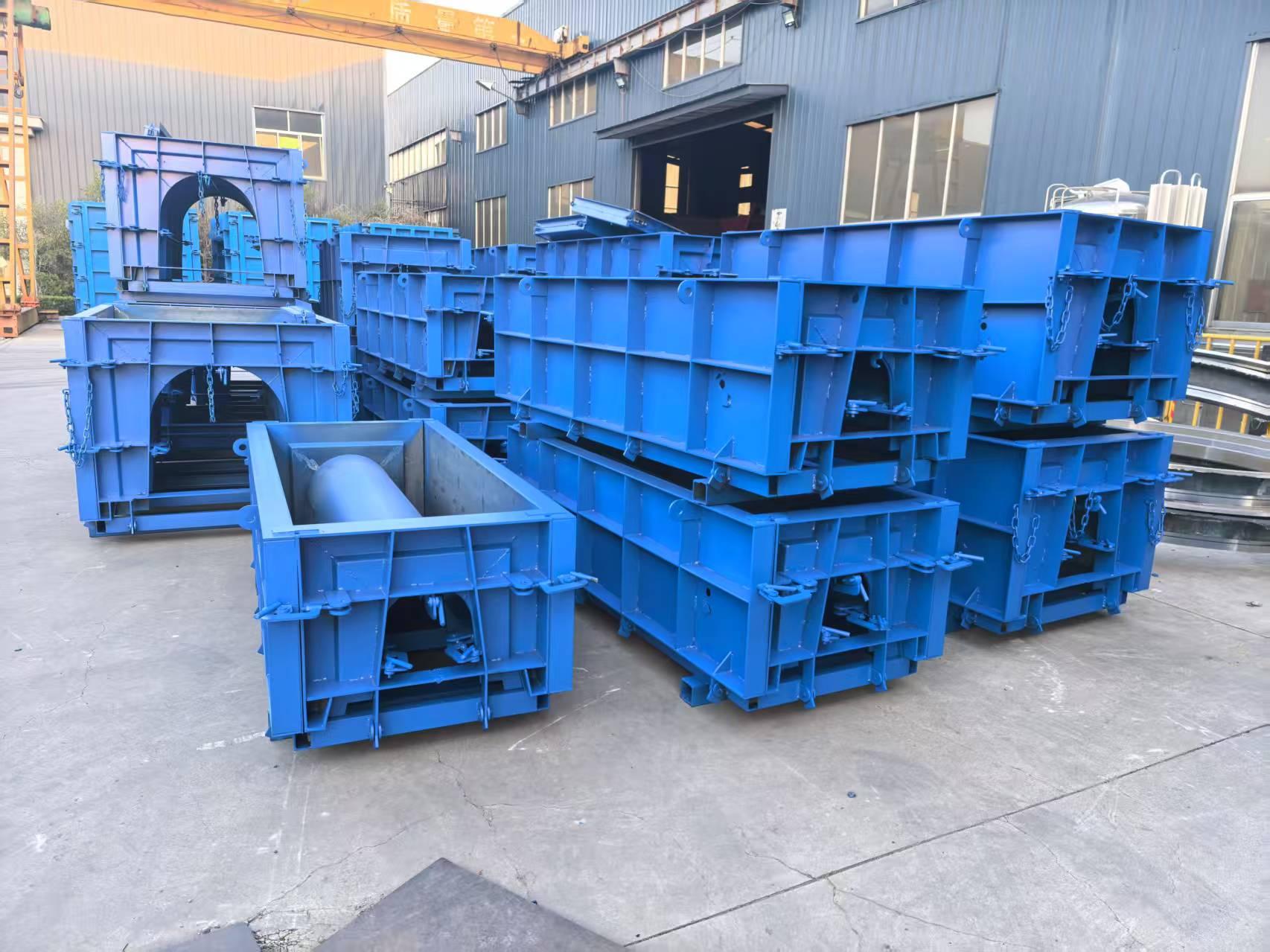
Many buyers assume that concrete vibration is simply about removing air bubbles, but the real goal is consolidation without segregation. Over-vibrating can push coarse aggregate to the bottom and bring too much fine material to the surface, weakening the finished piece. Under-vibrating leaves hidden voids that only show up after demolding, leading to costly repairs or rejects. The sweet spot depends on mix design, form geometry, and even ambient temperature — factors that are rarely considered at the purchasing stage.
A similar misunderstanding surrounds mold release agents. People often think any release agent will work if applied generously, yet using too much causes staining, pinholing, or a greasy film that interferes with curing. Using the wrong type for the mold material — say, a petroleum-based release on a urethane mold — can cause swelling or premature wear. The best results come from matching the release chemistry to both the form and the concrete mix, something that requires more than just grabbing the cheapest drum from the shelf.
What buyers frequently overlook is that vibration and mold release are interconnected. Poor vibration leaves surface voids that encourage over-application of release agent in an attempt to mask defects, which then creates its own set of problems. Conversely, a well-consolidated mix often needs far less release agent than expected. Understanding this relationship before purchasing equipment and materials can save significant time and frustration on the first pour.
Reading Between the Lines of a Supplier's Steel Thickness and Bearing Claims
A thick steel tube doesn't always mean a stronger bearing. Some suppliers lean on raw material numbers—wall thickness, overall mass, even yield strength printed on a spec sheet—to suggest their product will outlast anything else on the shelf. But the actual load path inside a bearing rarely follows the thickest cross-section. It follows the rolling elements, the raceway geometry, and the way the assembly handles misalignment under real torque. If a supplier keeps pointing to plate gauge instead of explaining contact stress distribution or internal clearance, you're probably looking at a marketing shortcut rather than an engineering advantage.
The hidden story lives in the heat treatment and the surface finish. A slightly thinner outer ring that's been properly case-hardened and honed will often survive longer than a chunky, poorly finished alternative. Ask about retained austenite levels, hardness gradients below the surface, and how the steel responds to shock loads at operating temperature. Suppliers who understand bearing life will talk about subsurface shear stress reversal and micro-pitting resistance, not just how many millimeters of steel they wrapped around the balls.
Finally, compare failure modes instead of spec sheets. A reputable manufacturer can show you spalled raceways, fretted fits, or cage fractures from their own testing—and explain what they changed in material selection or processing as a result. If the only evidence of quality is a thicker tube and a higher price tag, treat the claim with the same skepticism you'd apply to a bridge built from unverified concrete. Real bearing performance is earned in the details you can't see from the outside.
How Factory Demos Can Hide Real-World Demolding and Curing Issues
Walk into most factory demos and you’ll see a mold that’s been prepped like a show car—freshly cleaned, lightly lubricated, and handled by someone who has run that exact cycle all morning. The room is usually climate-controlled, the resin batch is fresh out of a sealed container, and the mold release agent is applied far more often than it ever would be on a production floor. These tightly managed conditions can make demolding look effortless and curing perfectly even, but they don’t tell you much about what happens when the same part is pulled at 2 a.m. by a tired operator using a mold with several hundred cycles on it.
Demolding issues start to appear only after the tooling picks up micro-scratches, residue, or uneven wear. A demo mold slides the part out cleanly because the surface is still flawless, so you won’t see the edge tears, drag marks, or ejector pin push-back that become common once the mold ages. Curing gets the same soft treatment: a thin demo part may cure completely because heat reaches its core fast, while a thicker production part with the same nominal cycle time can leave the press with a tacky center or slightly warped geometry. The short, pretty demo never pushes the material hard enough to expose that gap.
Most demos also happen under short, closely supervised runs. You get to see a couple of good parts, not a hundred consecutive ones. Real production brings batch-to-batch variation in resin viscosity, swings in shop temperature, and molds that cool unevenly after hours of continuous cycling. Those variables directly change how easily a part releases and whether the cure reaches full cross-link density. If you rely only on a polished factory demo, you may not find out about these problems until your own run is already in trouble.
Freight, Customs, and Site Prep Costs That Catch First-Time Importers Off Guard
Most first-time importers budget for the invoice price and maybe a rough freight quote, then get blindsided by a dozen line items that appear only after the cargo is already on the water. Ocean freight from Shanghai to Los Angeles might be $2,800, but that rarely includes the terminal handling charges, chassis fees, fuel surcharges, or the destination port's congestion fee. Then there's the drayage from port to warehouse: a short 20-mile haul can easily run $700 to $1,200 once you factor in chassis rental, gate fees, and wait time at the terminal. If you're shipping less than a full container, the cost per cubic meter jumps sharply because the forwarder's consolidation and deconsolidation fees are layered on top of the ocean rate.
Customs is another place where quotes are not what they seem. A standard customs bond and entry fee might be $150 to $300, but that doesn't cover the commodity-specific inspections, anti-dumping duties, or the random exams that customs can trigger. A tailgate exam or an intensive x-ray exam can add $500 to $1,500 in exam fees, storage, and handling—none of which the seller ever mentions. First-timers also forget about the customs broker's disbursement fees, the merchandise processing fee (which is based on the value of the goods, not the shipment weight), and the potential need for a single-entry bond if they don't have a continuous bond yet.
Then there's the site prep side, which gets ignored until the truck is backing into the driveway. If your warehouse or home has a standard dock-height door, you're fine. But if you're delivering to a residential address, a storage unit, or a building without a dock, you'll need a liftgate at minimum—often $150 to $250 extra—and possibly a flatbed with a piggyback forklift. If the driver has to wait because nobody is there to unload, detention charges start at $75 to $150 per hour after the first two free hours. And if your site needs a concrete pad, power for the container, or a gravel access road that can handle a 40-foot truck, those costs can dwarf the freight itself.
Building a Shortlist of Chinese Suppliers Without Chasing the Cheapest Quote
Finding the right Chinese supplier rarely comes down to picking the lowest number on a quote sheet. A shortlist built on price alone often collapses later under hidden costs: inconsistent quality, missed deadlines, or poor communication. Instead, start by identifying suppliers whose core capabilities match your product's specific requirements—whether that means precision machining, textile handling, or electronics assembly. Look for factories that have already produced similar items for other buyers, as this experience shows up in fewer production errors and smoother sample rounds.
Once you have a pool of potential partners, dig into their operational habits rather than their discounts. Request details on quality control procedures, typical defect rates, and how they handle last-minute changes. A supplier that volunteers information about past challenges and how they solved them is often more valuable than one that simply promises the cheapest unit cost. Pay attention to response speed and clarity during early conversations; these patterns tend to predict how problems will be handled after the order is placed.
Finally, narrow the shortlist by matching risk tolerance with your own business needs. A slightly higher quote from a factory with in-house testing labs, stable raw material sourcing, and a long track record with export markets can save months of rework and lost sales. Price always matters, but it works best as a secondary filter—used after you have already confirmed that the supplier can meet your quality bar, delivery schedule, and volume expectations without constant supervision.
FAQ
Most suppliers offer two broad categories: stationary steel molds for precast segments and self-propelled slipform pavers that cast channels in place. Some also provide auxiliary items like vibrating tables, lifting clamps, and batching systems. Ask whether the equipment is meant for small farm ditches or large irrigation trunk lines, because that determines the mold profile range and machine width.
Request a live video walkthrough of the workshop, not just brochures. Ask for close-ups of weld seams, plate thickness on the mold body, and the brand of hydraulic components and motors. A supplier that hesitates to show these details or only shares rendered images is often masking thin steel or weak vibration systems. Also ask for references in your region and contact them directly.
Reputable Chinese manufacturers can adjust channel width, depth, wall thickness, and even add mounting points for rebar or lifting anchors. You typically need to supply dimensional drawings or soil and water flow data. Expect to pay a tooling or design fee if the profile is non-standard; some absorb it for large orders.
Steel thickness and grade, hydraulic system brand, mold precision, and the level of automation are the main drivers. A machine with a domestic Chinese hydraulic pump may cost 30-40% less than one using imported components. Cheaper units often skimp on frame rigidity, which leads to distortion after repeated vibration.
For standard molds, 15-25 days is common. Customized slipform pavers or larger automated lines can take 45-60 days. Add another 2-4 weeks for ocean freight to most destinations. If a supplier promises delivery in under a week for a non-standard mold, treat it as a red flag.
Confirm whether they provide installation drawings, video commissioning, and a clear warranty on hydraulic and electrical parts. Ask how long they keep spare parts in stock and whether they can ship replacements by air. A good supplier will assign an engineer for WhatsApp or WeChat support during your first days of operation.
Yes. Many focus only on mold price and ignore the concrete mix design, vibration frequency, and form release agent. A cheap mold can produce acceptable channels only if the concrete slump and curing are right. Others forget to check local voltage and phase requirements before ordering a powered paver.
List the same specifications for every supplier: steel grade and thickness, mold dimensions, hydraulic brand, motor power, included accessories, and shipping terms. Then compare line by line. Ask for a detailed bill of materials; vague quotes with 'standard quality' often hide lower-grade materials.
Conclusion
Focusing on the physical shape first, U-shaped channels produce a smoother hydraulic profile than trapezoidal designs, but they also demand tighter mold tolerances and more precise vibration to avoid honeycombing along the curved base. Many buyers assume that simply adding more vibration time solves everything; in reality, over-vibration forces fine particles to the surface and weakens the concrete, while the wrong mold release agent leaves surface stains that no amount of cleaning will fix. Steel thickness claims deserve a second look too—suppliers often quote the thickest section of the flange while the load-bearing base is thinner, and bearing capacity numbers are frequently based on ideal lab conditions rather than real soil support. A well-produced factory demo can hide demolding and curing problems because the concrete has been allowed to set under controlled temperature and humidity long before you arrive, so ask for a cold-start demo or visit unannounced if possible.
On the commercial side, first-time importers rarely budget for the actual landed cost. Freight for these long, heavy steel molds often requires breakbulk or flat-rack containers, and customs classification can shift the duty rate by several percentage points if the equipment is wrongly described as general construction machinery. Site preparation is another hidden line item: a U-shaped channel mold needs a level, well-drained casting bed with enough crane or forklift reach, and many rural project sites lack that. Instead of chasing the cheapest quote, build a shortlist by asking suppliers for three reference projects with similar channel dimensions, then contact those buyers directly about mold life, after-sales response, and whether the supplier helped with demolding adjustments remotely. A supplier that is transparent about steel grade and willing to send a sample section for third-party testing is worth paying 10-15% more than one that only shares glossy brochures.
Contact Us
Contact Person: Bill
Email: [email protected]
Tel/WhatsApp: 8615063653526
Website: https://www.qianfengjd.com