

China Roller Conveyor Shot Blasting Machine Supplier You Can Rely On for Efficient Surface Preparation
2026-08-24
When surface preparation becomes the bottleneck in your production line, settling for anything less than a dependable roller conveyor shot blasting machine isn't an option. In China's competitive industrial landscape, PuHua has consistently delivered systems that strip away rust, scale, and old coatings with ruthless efficiency. This blog unpacks why leading manufacturers trust PuHua for faster cycles, lower operating costs, and consistent surface profiles—without the usual supplier guesswork.
The Real Reason Conveyor Blasting Beats Manual Prep Every Morning
Walk any shop floor at 6 a.m. and the difference shows up before the first coffee break. Manual prep relies on whoever grabbed the nozzle—arm angle, dwell time, blast pressure all shift with fatigue and mood. Conveyor blasting removes that variable entirely. The media hits the same profile at the same angle pass after pass, so the first part off the line carries the same anchor pattern as the hundredth.
Then there’s the pace. A conveyor doesn’t slow down after lunch, doesn’t take shortcuts on inside corners, and doesn’t need a breather after hoisting heavy components. It feeds parts through the blast zone at a steady clip, reclaims and cleans the abrasive automatically, and keeps the whole process moving while a manual operator would still be masking off edges.
The hidden advantage is repeatability under deadline pressure. When a rush order hits, manual prep drifts—corners get skipped, profiles go thin, rework piles up. Conveyor settings stay locked. Same wheel speed, same media mix, same throughput. That’s the real reason it wins every morning: not just speed, but a standard that doesn’t erode by 2 p.m.
What a Reliable Chinese Supplier Looks Like Before You Sign
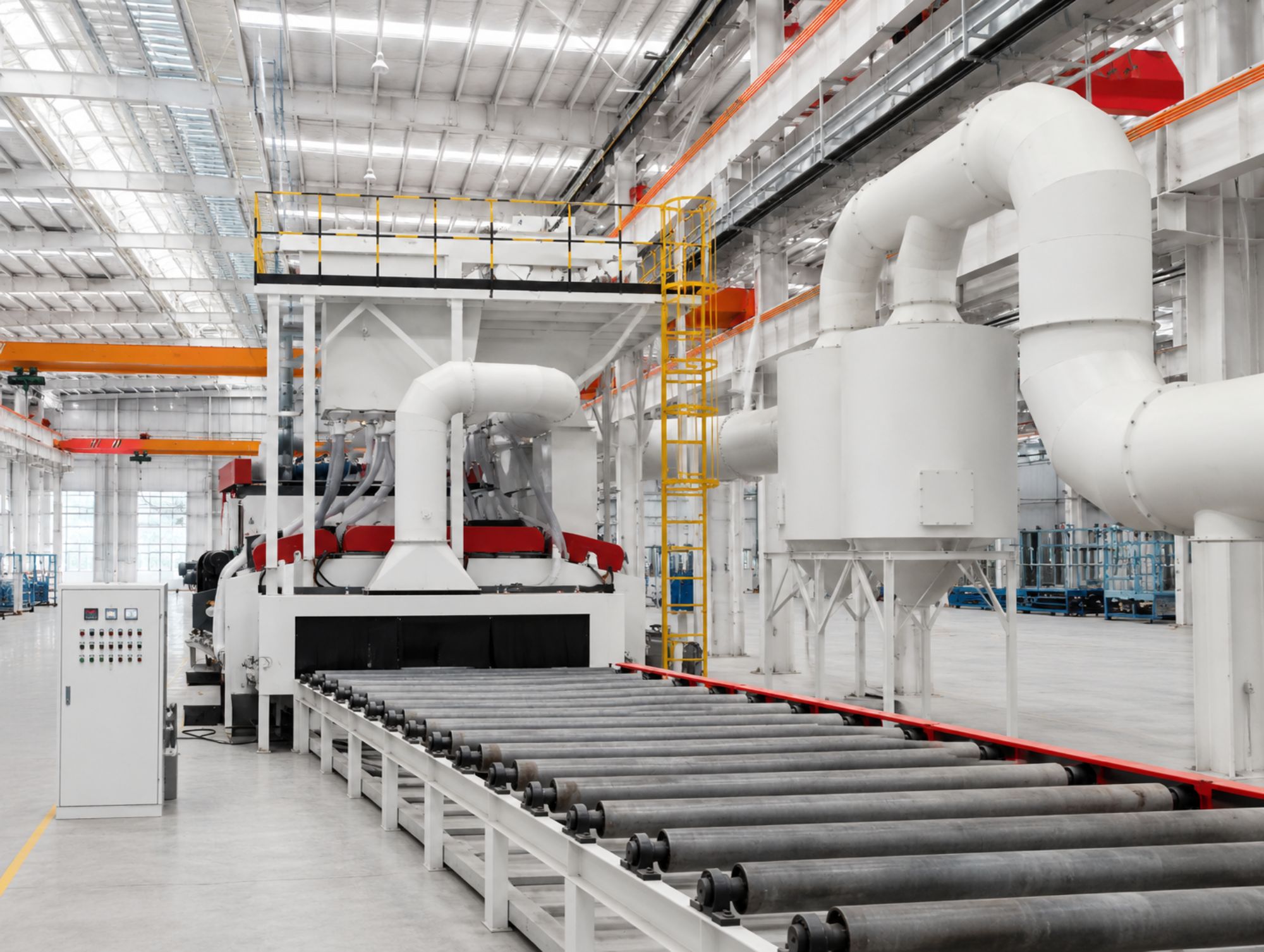
A genuinely dependable supplier won't dodge your requests for documentation. Before you sign anything, ask for a copy of their business license and check that the registered scope matches what they claim to produce. If they hesitate or send a heavily cropped scan, that's a red flag. Many factories also hold export licenses or ISO certificates—not proof of quality by themselves, but a sign they've gone through some form of third-party audit. Request the documents, then cross-check the company name against customs records or trade data if you have access. A supplier who has exported consistently under the same legal name for several years is less likely to vanish after your deposit clears.
Watch how they handle sampling. A reliable Chinese supplier will send a pre-production sample without excessive friction, but they'll also ask detailed questions about your specs—material, tolerance, packaging, even the target market's voltage or safety requirements. If they simply say "yes" to everything and promise perfection at the lowest price, be suspicious. Genuine manufacturers know their limits and will push back when a design is likely to fail in mass production. That pushback is a good sign. During the sampling stage, note whether they document changes, confirm timelines in writing, and respond to technical queries with specific answers rather than vague reassurances. A supplier who treats the sample seriously is far more likely to catch defects before they reach your container.
Before you sign, the payment terms tell you more than the contract itself. A factory that demands 100% upfront for a first order is signaling cash-flow trouble or worse. Standard practice is a 30% deposit with the balance against a copy of the bill of lading, though some established suppliers may ask for 50% on custom products. Also check how they define quality: do they reference AQL standards, specify raw material brands, or include a penalty clause for late shipment? If the contract is two pages and only covers price and quantity, ask for addendums. And whenever possible, do a live video walkthrough of the production floor before signing—not a polished promo video, but a real-time call where you can ask to see the machines, raw material storage, and even the QC area. A supplier who refuses that request is not one you want to wire money to.
Design Choices That Keep Your Blast Line From Becoming a Bottleneck
The usual culprit isn't the blaster itself; it's the hand-offs. If the blast cabinet sits at the end of a single conveyor with no accumulation between wash and unload, operators end up pacing the machine rather than the other way around. A simple change—installing a short buffer conveyor or a two-position shuttle—lets upstream stations keep working during load/unload.
Another overlooked choice is recipe handling. Lines that still make operators dial in air pressure, wheel speed, and pass count for every part number create tiny stalls that multiply across a shift. Pre-loading part-specific recipes into the controller and tying them to a barcode scan removes those micro-decisions. It also cuts down on rework caused by someone running a heavy casting on a setting meant for thin stampings.
Then there's the physical access issue. When maintenance has to crawl under the cabinet to clear a media jam, that's not a five-minute fix—it's a production stop. Putting clean-out doors at operator height, adding a spare wheel assembly on a cart, and designing the return conveyor so it can be reversed manually keeps most recoveries from turning into full line shutdowns.
Stripping Rust and Scale Without Eating Into Your Cycle Time
The hidden cost of rust removal isn't always the chemical—it's the clock. Conventional acid baths and abrasive blasting can add hours or even days between fabrication and coating. A part that sits too long in hydrochloric or sulfuric acid risks over-pickling, hydrogen embrittlement, and uneven surface etch, all of which quietly extend rework. Shorter cycle times come from tightening the variables you can control: acid concentration, bath temperature, inhibitor dosage, and agitation. When those are dialed in, flash rust and mill scale lift off in minutes instead of lingering until the next shift.
Some shops mistake aggressive chemistry for fast chemistry. That's rarely true. Overly strong acid can attack the base metal once scale is gone, forcing you to stop, rinse, neutralize, and re-blast. A better route is a staged approach: use a high-penetration descaler for the heavy oxide layer, then switch to a milder rust remover with a built-in inhibitor for the final pass. This keeps the profile consistent and avoids the downtime that comes from reworking over-etched surfaces. If your line is automated, add a simple conductivity or ORP probe to signal when the bath is spent—it prevents you from running parts through a dead solution and discovering it only after drying.
For mixed batches, don't treat every workpiece the same. Heavy mill scale on hot-rolled steel needs different dwell time than light rust on cold-rolled sheet. Batching by oxide thickness rather than part number lets you push the easy jobs through faster and reserve longer immersion for the hard cases. Even a modest change like pre-warming parts in winter or adding a rinse stage with air knives can cut total wet time by 20–30%. None of this requires new equipment; it's mostly tighter process control and a willingness to measure what's already happening on the floor.
Avoiding the Supplier Mistakes That Show Up Six Months Later
Most supplier failures don't announce themselves at the first delivery. They creep in after the relationship has settled—when the initial sample run was flawless, the price was right, and nobody thought to check whether the supplier's internal quality checks actually match what they promised. Six months later, you're staring at a batch of parts with inconsistent hardness or a packaging seal that fails in transit, and the real cause traces back to a process shortcut nobody looked for because everything seemed fine on the surface.
The suppliers worth keeping are the ones who can show you how they handle change, not just how they perform on a good day. Ask to see their raw material substitution records, their procedure for re-qualifying a new operator, or what happens when a key machine goes down. Those are the places where latent defects get baked in. If a supplier can't walk you through that history without hesitating, treat it as a warning sign that the quality you're seeing now may not survive the next production bump.
After the contract is signed, don't let the relationship drift into autopilot. Schedule short unannounced visits instead of relying on their monthly report, and randomly pull samples from the line rather than from the batch they prepared for inspection. Supplier issues that take six months to surface are rarely caused by a single bad decision—they build up through small, accepted deviations until the failure becomes too big to ignore. Catching those deviations early means watching the actual process, not just the paperwork.
A Maintenance Schedule That Actually Fits a Busy Line
Most maintenance plans assume you can shut down a line for a full shift. That rarely happens on a busy production floor, so we built a schedule around short, targeted windows instead. Every task is broken into 10–15 minute blocks that slot between changeovers or during planned slowdowns, not after hours when nobody wants to stay late.
Instead of a static calendar, the schedule shifts with actual throughput. When a line runs harder than expected, certain checks move up; when demand dips, we squeeze in deeper inspections. Operators see only the next three tasks on their screen, which keeps the list from becoming noise. The result is maintenance that happens without a shutdown, without overtime, and without the usual finger-pointing when something breaks.
We also stopped treating every asset the same. High-wear components get attention every few days, while low-risk items might go weeks. The schedule adjusts based on sensor data and recent failure history, so crews spend time where it actually matters. That means fewer surprise breakdowns and more predictable output, even on a line that never stops moving.
FAQ
It lets workpieces move through the blasting zone on a steady conveyor, so large or long steel parts get uniform cleaning without constant repositioning. That cuts manual handling and keeps cycle times predictable.
The conveyor speed and blast turbine settings can be adjusted to match the workpiece profile. Many models also include adjustable curtain seals and variable-frequency drives, which help smaller items and oversized beams get similar coverage.
Look beyond price and ask about the blast wheel brand, chamber liner thickness, and whether the supplier tests machines with actual customer parts before shipping. A factory that provides detailed layout drawings and past installation references usually saves time later.
With the right abrasive mix and settings, the machine can achieve Sa 2.5 cleanliness and a consistent anchor profile for coatings. Final results depend on abrasive selection, conveyor speed, and how well the dust collector maintains airflow.
Not if the supplier designs for easy access. Liners, blades, and control cages are wear items that should be replaceable without removing the whole turbine. Daily checks on abrasive level and separator screens prevent most unexpected downtime.
Yes, many suppliers offer options like loading and unloading cross conveyors, rotary brushes, blow-off stations, and special chamber lengths. Providing a part drawing and required output per hour helps the manufacturer propose a machine that fits the existing layout.
Structural steel fabricators, pipe coaters, wagon and trailer builders, and manufacturers of welded frames or profiles use roller conveyor machines because they need fast, repeatable cleaning before painting or galvanizing.
Installation often takes one to two weeks after the equipment arrives, depending on foundation work and crane availability. Commissioning and operator training may add a few days, and a good supplier stays available for remote support during the first production runs.
Conclusion
Conveyor blasting keeps a steady rhythm that manual prep simply can't match when you're pushing parts through every morning. The moment you load a beam or plate onto the rollers, the blast pattern hits every face without an operator having to stop, reposition, or fight inconsistent hand tools. That reliability usually starts with the supplier you choose before signing. A Chinese manufacturer worth trusting will walk you through their actual workshop, show you wear-plate thicknesses, turbine placement, and real clearance dimensions instead of just quoting a low price. If they can't explain how the screw conveyor and elevator are sized for your abrasive load, you're not looking at a partner who understands your line.
Good design keeps a blast line from becoming the bottleneck everyone blames at shift change. You want a cabinet with enough blast coverage but not so oversized that cleaning and abrasive recovery eat into cycle time. Stripping rust and scale should happen in one pass, not three, which means tuning the wheel speed and shot size to your material rather than treating every job the same. The supplier mistakes that hurt most often show up months later: cheap liners wearing through, dust collectors clogging because nobody thought about your humidity, or a control panel that can't handle daily start-stop abuse. A maintenance schedule that actually fits a busy line treats greasing bearings and checking blast wheel blades as quick, built-in routines instead of weekend projects. Those small habits keep the line moving, and they're what separate a machine that stays productive from one that quietly falls behind.
Contact Us
Contact Person: Bruce
Email: [email protected]
Tel/WhatsApp: +86 15166629468
Website: https://www.povalchina.com/