

China Motorcycle Seat Cushion Upgrades That Make Long Rides Feel Effortless
2026-11-27
Long-haul comfort starts where you sit. Most riders focus on engine performance or suspension, but the real game-changer is a seat cushion that keeps pressure points from turning a scenic ride into a nagging ache. China has become a quiet leader in motorcycle seat upgrades, blending dense memory foam, cooling gel layers, and pressure-relief contours that hold up mile after mile. If your current saddle leaves you shifting around by hour two, it is worth looking at what Kunbao and other local innovators are doing differently. The right cushion does not just soften the ride; it changes how long you can stay in the saddle before fatigue sets in.
How Denser Foam Changes the Last Hour of a Ride
Most riders judge a saddle in the first ten minutes, and denser foam rarely wins that test. It feels firm, almost unyielding at first, and it asks the sit bones to carry more of the load. The real difference arrives later. Softer padding tends to bottom out after an hour or two, letting pressure creep into soft tissue and leaving you shifting for relief. Denser foam resists that collapse, so the contact area stays more consistent as fatigue builds and your posture begins to drift.
In the last hour, that consistency matters more than initial plushness. A denser pad keeps weight on the bones instead of letting it sink into places that go numb. It also slows the slow sag that turns a comfortable saddle into a sling. The result is less squirming, fewer half-standing adjustments, and a calmer position when the road stays flat and the pace stays steady.
The trade-off is a short break-in period and a saddle shape that has to fit properly from the start. Once the foam settles, the final stretch changes character. It becomes less about managing hot spots and more about holding rhythm, which is the quiet advantage of a padding that stays put when the ride gets long.
Gel Layers That Keep Pressure Off Your Tailbone
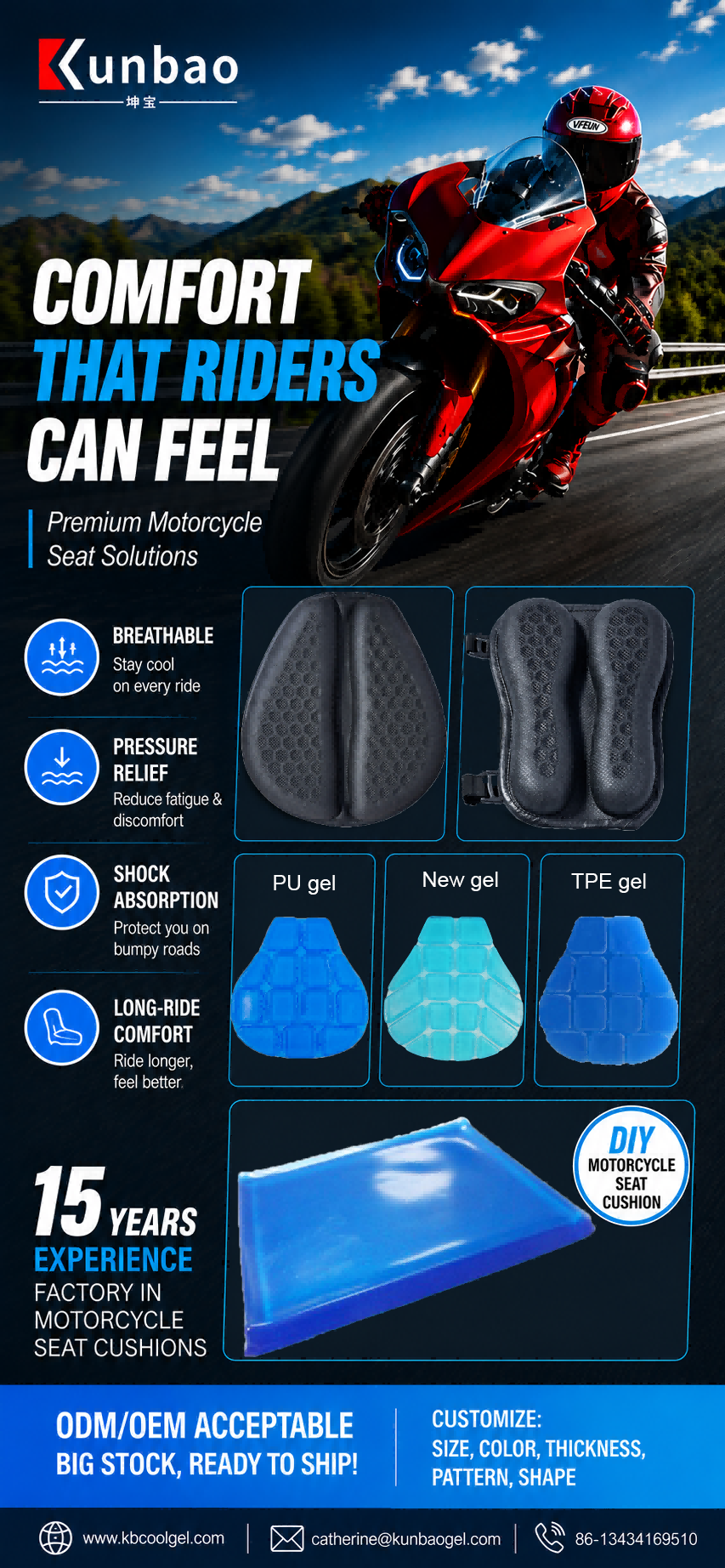
Sitting for long stretches often turns into a dull ache right at the base of the spine. The problem isn't always the chair itself, but the way a flat cushion forces the tailbone to take more than its share of body weight. A gel layer changes that by spreading the load across a wider surface, so the pressure doesn't settle into one stubborn point.
What makes gel different from plain foam is the way it responds. It gives just enough to let the hips sink slightly, then firms up to support the sit bones. That small shift in posture keeps the tailbone slightly lifted instead of pressed into the seat pan. The result is less numbness on long drives, fewer adjustments at a desk, and a seat that still feels comfortable by late afternoon.
Some designs go further by using a honeycomb or channeled gel pattern. Those cutouts aren't just for looks; they create a breathable path and leave an open zone directly under the tailbone. That combination of soft support and targeted relief is usually what turns an ordinary cushion into one you forget you're sitting on.
Seat Profiles Built Around Actual Riding Posture
Most seat designs treat the saddle as a shape to be sat upon, not a surface to move with. Here, the contour follows what your pelvis and thighs actually do when you lean forward, shift weight for a corner, or tuck in on a straight. The nose is narrowed where leg extension happens, the rear flare opens just enough for sit-bone support under load, and the mid-section drops subtly to reduce pressure on soft tissue. It feels less like sitting on a shaped pad and more like the bike grew a contact point around your natural position.
The profile changes depending on intended riding style. A tucked, aggressive posture gets a flatter rear and more gradual rise toward the nose, letting you slide forward without fighting the saddle. A more upright position gets a deeper rear pocket and a shorter nose, so the support stays under you instead of pushing against your inner thighs. These aren't cosmetic curves; each angle and transition is matched to how your spine angle changes the tilt of your hips, which changes where pressure builds over time.
What makes this approach different is that the seat isn't judged by how it looks on a showroom floor. It's tested by riders who stay out long enough for fatigue to reveal pressure points, numbness, or the urge to stand up every few miles. Adjustments come from those reports, not from a computer model alone. The result is a seat that disappears beneath you, letting you focus on the road, the trail, or the next turn instead of shifting around to find a comfortable spot.
Covers That Let Sweat Evaporate Instead of Soaking In
A cover that lets sweat evaporate doesn't rely on a rubbery or plastic-like shield. It's usually made with an open weave or ventilated panels that give moisture a clear path out. Once that vapor can escape, it stops collecting in the fiber and you avoid that cold, damp spot when you move.
The difference shows up over time. Instead of trapping body heat, the cover lets air move through and the top surface stays dry to the touch. You don't need extra gels or glossy coatings—just a material that isn't fighting the airflow.
When comparing covers, check the zones where you sweat most. Mesh or knit sections around the center of the cover tend to work better than solid, smooth fabric. If the weave looks tight and shiny, it's probably keeping moisture in rather than letting it leave.
Mounting Points That Don't Fight You Mid-Trip
Most racks assume you have the patience of a pit crew. These don’t. The mounting points are shaped so the strap falls into the slot before you’ve even tightened it, and the buckle clicks once instead of demanding three separate attempts.
Mid-trip, the real test is whether the load stays put without you glancing at the mirror every ten minutes. The anchor points are set slightly inboard, which keeps straps from wandering toward sharp edges. You adjust tension from the side, not underneath, so a quick stop doesn’t turn into a roadside wrestling match.
If something does shift, it announces itself with a low rattle rather than a sudden failure. The fittings are designed to warn before they loosen, and the contact surfaces grip harder as the strap settles. That means more time watching the road and less time pulling over to check the roof.
Seams and Coatings That Survive Rain, Dust, and Sun
Rain has a way of finding the one needle hole that was never sealed. No matter how water-resistant the main fabric is, a seam left untreated will wick moisture through the thread, into the backing, and eventually onto whatever sits underneath. The fix is not a thicker topcoat but a proper seam treatment. Taped seams work well on straight runs, while liquid sealants do a better job around corners and stress points. Whatever method is used, the seal has to bond with the coating rather than just sit on top of it, otherwise the first heavy downpour will peel it away in thin strips.
Sun exposure tends to age a coating faster than rain does. Unstabilized acrylics and low-grade polyurethanes start to chalk, crack, and lose adhesion after a season or two of direct light. Look for UV-stable formulations or two-part systems that hold their flexibility after repeated heating and cooling. Dust is often overlooked until it has already worked into the weave. Fine grit acts like sandpaper every time the fabric moves, so a smooth, closed surface with a slight dirt-release quality will last much longer in dry, windy conditions.
Treat the seams and the coating as one system, not two separate jobs. A new coating over a dirty, flaking seam will fail from the edge inward. Clean the joint, prime any exposed stitching, then apply the sealant and topcoat in thin layers rather than one heavy pass. After a storm season, check the stitching lines first. Small patches of bubbling, lifted edges, or dust collecting in a crease usually signal where moisture is getting trapped. Touching up those points early is cheaper than recasting the whole panel.
FAQ
Stock foam tends to compress unevenly after a couple of hours, creating pressure points right under your sit bones. Upgraded cushions usually combine multi-layer foam or gel inserts that spread weight more evenly and recover their shape faster, so you are not squirming by the third fuel stop.
Many of them have moved well beyond cheap vinyl wraps. High-quality versions use marine-grade vinyl, double-stitched seams, and UV-resistant coatings. If you pick a cushion designed for touring rather than a generic slip-on, it can handle weather and daily sun without cracking or fading quickly.
Most popular options are designed as direct replacements or strap-on pads. Direct replacements use the same mounting points as the factory seat, so you only need basic hand tools. Strap-on versions take about two minutes and can be removed when you want the stock look back.
Good ones do both. The base layer often absorbs road buzz before it reaches your lower back, while the top layer keeps you from bottoming out. It is not the same as adding a soft pillow; the support has to be firm enough to keep your spine aligned over hours.
Look for a slightly wider rear section and a flatter profile so you can slide back without hitting a ridge. For passenger comfort, choose a cushion with a non-slip texture and enough thickness to stop the pillion from feeling every expansion joint. Some replacements also raise the passenger area by a small amount, which helps knees on smaller bikes.
Gel tends to stay cooler and spreads pressure quickly, but it can feel firm at first. Memory foam conforms more to your shape but holds more heat. In hot climates, a gel topper or a breathable mesh cover makes a noticeable difference on long summer rides.
You can find decent strap-on pads for under $40, but a proper replacement seat with better foam and a durable cover usually runs between $80 and $200. That middle range is where the biggest comfort gain per dollar usually happens. Above that, you are paying for brand, custom shaping, or specialty materials.
Only slightly if it adds height. A thick seat can raise your seating position by half an inch to an inch, which matters on bikes where you are already on your toes. Some riders prefer a firmer, slightly lower profile cushion that keeps seat height close to stock while improving support.
Conclusion
When a ride stretches past the three-hour mark, the last sixty minutes usually expose every flaw in a stock seat. The denser foam used in newer Chinese upgrades is not just firmer; it resists collapsing under the sit bones, so the saddle keeps its shape instead of bottoming out. That change is most noticeable late in the day when softer factory foam has already packed down. A gel layer under the hips handles a different problem, spreading load away from the tailbone and easing that hot, bruised feeling on rough pavement. The profile has been reworked as well. Instead of copying a generic cruiser dish, several designs are cut with a slight rise at the rear and a narrower front, matching how riders actually sit in stop-and-go traffic and on open stretches.
Comfort that fades after two weekends is not much of an upgrade. That is why the covers now use perforations or coarse mesh to let sweat evaporate instead of soaking in, which keeps the surface cooler and less slippery. Mounting hardware has shifted toward hooks and straps that stay put without constant re-tensioning, so the cushion does not twist during a climb or a hard stop. Seams and surface coatings are also built for weather exposure, resisting rain, dust, and direct sun rather than cracking or fading after one summer. Put together, these changes make the saddle feel less like an add-on and more like part of the bike, which is what turns a long ride into something closer to effortless.
Contact Us
Contact Person: Catherine Peng
Email: [email protected]
Tel/WhatsApp: +86-13434169510
Website: https://www.kbcoolgel.com/