

China Hybrid Servo Press Brake Advances Precision Metal Bending
2026-10-04
Ask any fabricator what separates a profitable job from scrap, and precision usually tops the list. For decades, press brakes forced a trade-off: power or accuracy. China's hybrid servo press brake technology finally breaks that deadlock, and HUNSONE is leading the charge. By pairing hydraulic force with servo-driven exactness, these machines are turning previously difficult bends into everyday work. If you’re still relying on conventional systems, here’s why this matters.
Why China’s Hybrid Servo Press Brakes Are Gaining Global Attention
A quiet shift is underway in metal fabrication shops from Stuttgart to Ohio. Where conventional hydraulic press brakes once dominated, more operators are now unbolting their old machines and rolling in Chinese-built hybrid servo models. The reason isn't a single breakthrough, but a bundle of practical gains that compound on the shop floor: cycle times drop by nearly a third, energy meters spin slower, and the oil leaks that used to stain the concrete become rare enough to forget.
Part of the appeal is that these machines don't ask users to relearn bending. The control interfaces borrow familiar layouts from European and Japanese systems, while the hybrid drive—pairing a servo motor with a small hydraulic power unit—keeps the ram movement crisp and repeatable. For a mid-size job shop watching margins tighten, the math lands hard: lower utility bills, less maintenance downtime, and enough precision to hold ±0.5 degrees on stainless without shimming.
What really turns heads, though, is how quickly Chinese manufacturers iterate. Feedback from overseas distributors gets folded into the next production batch within months, not years. That pace, combined with aggressive pricing and shorter lead times than many legacy brands, is pushing buyers to ask a different question—not whether a Chinese hybrid servo press brake can match the old guard, but how much longer they can justify paying double for a nameplate that no longer guarantees a clear edge.
Servo-Driven Pump Technology Brings New Levels of Bending Precision
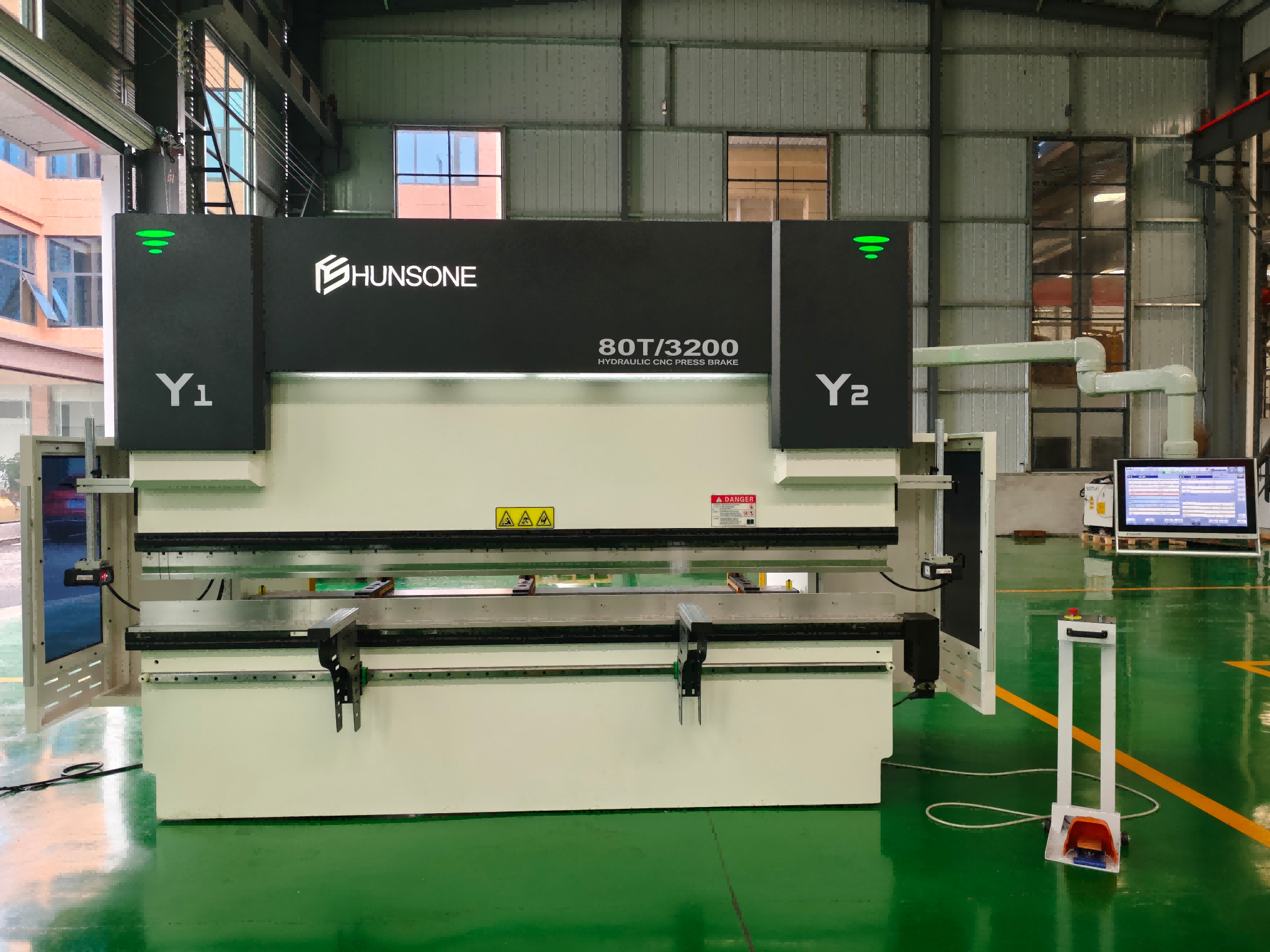
The shift to servo-driven pumps marks a quiet departure from the older fixed-displacement hydraulic systems that dominated press brakes for decades. Instead of a constant motor spinning regardless of demand, the servo motor only runs when the ram actually needs to move. That means oil flows precisely when and where it's called for, eliminating the lag, overshoot, and thermal drift that used to force operators to chase their bend angles all afternoon.
What you notice first is how the machine settles into a bend. There's no rush of fluid slamming into the cylinder, no audible groan as the beam fights to hold position. The servo loop reads position and pressure in real time, adjusting flow within milliseconds. On thin materials or tight radius work, that translates into repeatability within a few microns across an entire shift.
The practical upshot is less scrap, shorter setup times, and the ability to run complex part families without constant angle corrections. Shops that previously reserved their best operators for difficult forming jobs find that a wider range of staff can hold tolerances, because the pump technology is handling the fine adjustments rather than relying on feel and experience alone.
How Hybrid Systems Keep Bending Accuracy High Without Overheating
In many hybrid bending setups, the work is split between a servo-driven axis for fast, precise positioning and a hydraulic or pneumatic stage that only engages during the actual forming stroke. Because the pump or intensifier is not running flat out the entire cycle, there is far less energy dumped into the fluid. That lowers the thermal drift that normally throws off bend angles after long runs, so the machine holds its setpoints without needing constant compensation.
Closed-loop feedback on the electric side gives the controller high-resolution position data, while the hydraulic portion is triggered only for the short high-force window. Instead of a continuous high-pressure bypass that heats the oil, the flow is controlled on demand. The result is a much flatter temperature curve during a shift, which keeps the frame, tooling, and guides more stable. Bend repeatability stays tight even when the cell runs unattended for hours.
Compared with a traditional fully hydraulic machine, the hybrid approach moves the main heat source away from a constantly churning pump and distributes it in smaller, manageable bursts. Some systems also use variable-speed servo pumps or accumulators to store and release energy only when the bend requires it. That combination prevents the viscosity changes and seal swelling that typically degrade accuracy in hot oil, so the process remains consistent without frequent cool-down pauses.
The Energy Advantage of Hybrid Servo Press Brakes in Metal Fabrication
Most hydraulic press brakes spend a surprising amount of energy just holding pressure, even when the ram isn't moving. Hybrid servo systems eliminate that constant draw by using a servo motor to drive the pump only when force is needed. The result is a machine that idles at near-zero consumption between bends, which adds up quickly in shops running multiple shifts.
Beyond the idle savings, the servo control allows for precise speed and pressure modulation during the bending cycle. Instead of dumping excess hydraulic energy as heat, the system delivers only what the bend requires. That reduction in heat also means less strain on cooling components and hydraulic fluid, extending maintenance intervals and keeping the work area cooler.
For fabricators comparing operating costs, the difference shows up in the monthly electric bill. Hybrid servo press brakes can cut energy use by half or more compared to conventional hydraulic models on the same workload, without sacrificing tonnage or repeatability. It's a case where the efficiency gain comes from smarter control rather than a compromise on performance.
Smart Angle Correction and Real-Time Feedback for Tight Tolerances
Angular drift in five-axis machining rarely announces itself. A tool holding fixture may lose 0.03 degrees over a shift, but that is enough to push a bore outside a ±5 micron window. Instead of relying on post-process inspection and manual offset tables, the angle correction system mounts a compact MEMS gyroscope and a pair of strain gauges directly behind the spindle nose. It samples attitude 1,800 times per second, compares the live vector against the programmed toolpath, and sends a trim command to a three-point piezoelectric ring that nudges the shank back into line. The correction happens during the cut, not after the damage is done.
What makes the feedback useful is not just the adjustment itself but how it handles gradual changes. The system tracks the residual angle error over thousands of cycles and notices when a collet starts to relax or a cutting edge wears unevenly. It then shifts the compensation baseline before the part drifts out of tolerance. Operators see a simple strip chart on the control panel: green when the angle error is under 20% of the allowed band, amber when it crosses 50%, and red only if the piezoelectric travel is near its limit. That kind of early warning replaces guesswork with a predictable envelope, especially when running small batches of expensive alloys where one bad part can erase the margin on the entire job.
What to Expect When Switching from Hydraulic to Hybrid Servo Bending
Switching from a traditional hydraulic press brake to a hybrid servo system changes more than just the power source—it alters how the machine responds, how predictable your bends become, and how much of your operating budget goes toward idle time. The first thing most operators notice is the absence of constant hydraulic pump noise and the drop in ambient heat around the machine. Because the servo motor only runs when the ram actually moves, standby energy consumption falls sharply, often by more than half compared to older hydraulic setups. That also means fewer heat-related oil viscosity shifts, so bend angles stay consistent from the first part of a morning run to the last.
You can expect a learning curve mostly tied to speed and flow settings rather than basic bending technique. Hybrid servo drives deliver faster approach and return strokes, but the real gain is in controlled forming speed and repeatability at the bottom of the stroke. Operators used to compensating for hydraulic lag or warm-up drift may need time to trust that the machine will hit the same position every cycle. Maintenance also shifts: there are fewer hydraulic hoses, less oil to filter, and fewer seals to leak, but the servo drive and its electronics require cleaner power and occasional firmware updates. Overall, the transition tends to pay off through quieter operation, lower energy bills, and less dimensional variation across long production runs.
FAQ
A hybrid servo press brake combines a servo motor with a hydraulic pump, so the motor only runs when the ram actually needs to move. Unlike fully conventional hydraulic machines that keep a main motor spinning continuously, this setup cuts idle energy use and gives much finer control over ram positioning. The result is less heat build-up in the oil and more repeatable bends.
Chinese builders have invested heavily in CNC controls and precision-ground tooling, which lets them offer hybrid servo machines that compete on accuracy with established European brands. Many also provide faster customization for specific tooling or automation needs, and the local supply chain keeps lead times shorter. That combination of capability and responsiveness is hard to ignore.
With servo-driven back gauges and closed-loop ram positioning, repeatability often lands within a few hundredths of a millimeter depending on the model. The hybrid design reduces hydraulic lag, so the ram stops and reverses more predictably at the bottom of the stroke. This translates to tighter angle consistency across long production runs.
Because the servo motor only draws power during actual bending and rapid traverse, standby consumption drops to a fraction of what a traditional hydraulic system uses. Some users report cutting energy costs by half or more on busy shifts, and there is less waste heat to manage in the shop. The on-demand power delivery also means smaller oil reservoirs and coolers can be used.
Sheet metal job shops, electrical enclosure manufacturers, and appliance producers see immediate gains because they run diverse small-to-medium batches where fast setup and repeatable angles matter. Automotive and aerospace suppliers also benefit when forming high-strength materials that demand precise force control. Essentially any shop that wants tighter tolerances without slowing down is a good candidate.
Since the hydraulic pump is not running constantly, oil degrades more slowly and seals last longer. There are fewer mechanical components under continuous load, which reduces the frequency of valve and pump rebuilds. Many users also appreciate that diagnostic information from the servo drive can flag issues before they cause downtime.
Generally no, and in some cases cycle times actually improve because the servo responds faster to control signals than a conventional valve. Tonnage ratings are available up to several thousand kN, so most bending jobs are well covered. The main adjustment is getting operators comfortable with the different sound and feel of the machine, which usually happens within a few days.
Hybrid servo press brakes pair naturally with modern CNC controllers, so operators can program a full sequence of angles and back-gauge positions in one setup. The servo's precise pressure control helps maintain consistent results even when material thickness varies slightly within a batch. This makes it easier to run complicated parts without stopping to tweak settings between bends.
Conclusion
China's hybrid servo press brakes are rapidly changing how metal fabricators approach precision bending. Instead of relying on conventional hydraulic valves that continuously circulate oil, these machines pair a servo motor with a fixed-displacement pump, delivering oil only when the ram actually moves. That might sound like a small detail, but it translates into smoother motion, far less heat buildup, and bending accuracy that stays consistent over long production runs. The reduced thermal load is a key reason why operators see fewer angle deviations as the day progresses, and it also cuts energy consumption noticeably compared with older hydraulic systems.
On top of the mechanical improvements, smart angle correction and real-time feedback have become standard in many Chinese-built models. Sensors measure the actual bend angle and automatically adjust ram depth or crowning to compensate for material springback and thickness variations, keeping tight tolerances without constant manual tweaking. For shops moving from traditional hydraulic press brakes, the switch to hybrid servo bending feels less like adopting a new process and more like getting better control over the process they already know. The machines run quieter, require less hydraulic oil maintenance, and offer faster setup, while still delivering the high tonnage needed for thick plate work. That practical mix of precision, energy savings, and affordability is why these machines are earning attention well beyond China.
Contact Us
Contact Person: James Chen
Email: [email protected]
Tel/WhatsApp: 86 13770803946
Website: https://www.hunsone.com/