

China Highly Specialized Wire Rolling Mills for Unmatched Precision in Metal Forming
2026-08-26
Precision in metal forming doesn't happen by accident. It takes specialized wire rolling mills engineered to the tightest tolerances—and that's exactly what China's leading manufacturers deliver. Among them, GRM stands out for its uncompromising focus on accuracy and durability. If you're evaluating equipment for high-stakes wire production, understanding what sets these mills apart is the first step. Here's what you need to know.
Roll Pass Geometry Tuned to the Micron
The pass schedule isn't just a series of grooves cut into rolls; it's a map of how metal flows under pressure. When the geometry is tuned to the micron, the difference shows up in the way a bar holds its shape after the final stand. Small corrections in the relief angles and entry radii keep the material from wandering, which means the cross-section stays true without extra finishing passes.
Roll pass design at this level relies on direct feedback from laser scans and profile measurements taken between stands. Instead of relying on nominal dimensions, the team adjusts the fill ratio and groove depth in increments that most shops would consider negligible. Those increments add up, especially on high-carbon grades where a few microns of overfill can create edge defects that only appear after cooling.
The practical payoff is less about hitting a spec sheet and more about consistency from billet to billet. With the roll geometry locked to the micron, the mill can run longer campaigns without dressing the rolls, and the downstream operations stop seeing the subtle twist or bow that usually comes from uneven reduction. It turns a rough forming step into something closer to a precision process.
Material Handling That Keeps Alloy Properties Intact
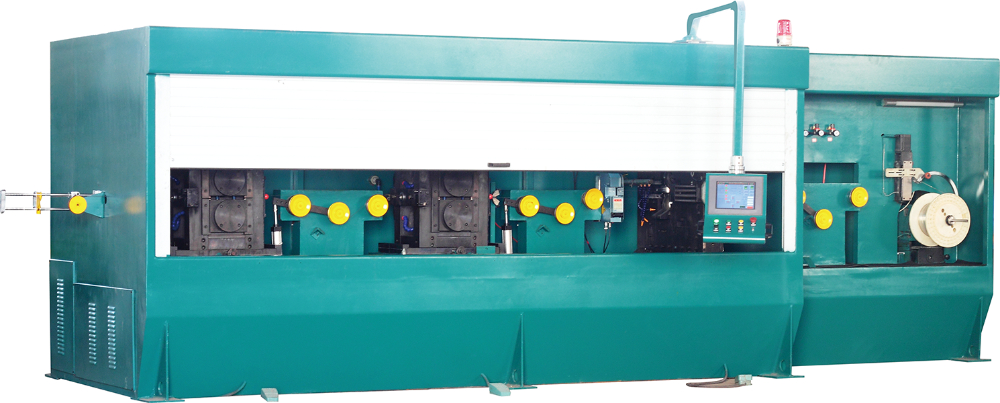
Even minor mishandling during transport or storage can compromise the tailored microstructure of specialty alloys. Scrapes, dents, and exposure to moisture or chlorides often initiate localized corrosion or stress risers that later undermine performance. Our handling protocols treat each heat as a precision component, not just raw stock. Materials move on padded racks, remain sealed in vapor-phase inhibitors until staging, and are never contact-lifted with bare steel slings. This prevents surface contamination and preserves the exact grain structure and residual stress profile you specified.
Temperature swings and rough forklift maneuvers are silent killers of alloy integrity. We keep indoor receiving bays within a narrow thermal band and require operators to use non-marking polyurethane wheels. Every incoming lot is checked for edge dings, rust bloom, or oil film discontinuity before it enters quarantine. If a single bar shows handling damage, the entire heat is flagged for review, not spot-repaired. That may sound rigid, but it is why our customers never see a fatigue crack traced back to a warehouse bump.
Preserving alloy properties also means controlling how long material sits in unheated staging. We rotate inventory on a first-in, first-out basis tied to the original mill certificate, and only cut samples with water-jet or bandsaw methods that avoid work hardening. No torches touch the stock. The result is a chain of custody where the alloy you receive behaves exactly like the test coupon from the mill, with no hidden degradation introduced between their dock and yours.
Repeatable Tolerances Across Long Production Runs
Holding tight tolerances for a few dozen parts is easy. Doing it across thousands of parts without drift requires paying attention to tool wear, thermal expansion, and raw material variation. On long runs, we check critical dimensions at fixed intervals and adjust offsets before the process shifts out of spec. This approach shifts the goal from catching bad parts to preventing them.
A practical example: on a batch of 5,000 aluminum housings, the boring bar wears by about 3 microns per 100 parts. By measuring every 50th part and updating the tool offset automatically, we keep the bore diameter within ±0.015 mm from start to finish. Material hardness changes between coils can also throw off the process, so we recalibrate the probe whenever a new coil is loaded. The result is not a lucky run—it's a repeatable system.
Custom Roll Profiles Without Long Lead Times
Getting a custom roll profile used to mean waiting weeks for tooling and paying a premium for small runs. Not anymore. We keep a modular set of roll forming stations and pre-engineered insert sets on hand, so most custom shapes can be set up in days instead of months. You don’t need to compromise on the cross-section just to hit a deadline.
The real difference is in how quickly design changes move from drawing to production. Our in-house CNC machining and wire EDM let us cut and finish custom rolls on the same schedule as standard runs. If a profile needs a slight tweak after the first sample, we can recut a roll set and be back in production without restarting the quote process.
Because we don’t treat every custom shape as a one-off project, the tooling cost stays predictable. That means you can test multiple profile variations in the same lead time others would quote for a single custom run, and then scale up without switching suppliers.
Integrated Cooling and Lubrication for Consistent Surface Quality
Maintaining a stable temperature at the tool-workpiece interface is often the quiet difference between a flawless finish and a costly rework. By routing coolant through internal channels rather than flooding the surface, heat is pulled away at the source, preventing thermal expansion from skewing dimensions mid-cut. This direct approach keeps the cutting edge cool without washing away the thin lubrication film that prevents micro-welding and built-up edge.
Lubrication, when delivered precisely where the chip forms, does more than reduce friction. It creates a predictable shear zone, so each pass removes material with the same force and leaves behind the same texture. Inconsistent lubrication leads to variable surface roughness—sometimes polished, sometimes torn. Pairing a metered oil mist with targeted coolant keeps the contact conditions uniform across long production runs.
The real payoff shows up in hard-to-machine alloys that punish sloppy thermal control. A steady heat extraction and consistent lubrication film allow higher spindle speeds without sacrificing surface integrity. Operators notice fewer random tool failures, less need for post-polishing, and a surface quality that stays repeatable from first part to last. That consistency is what customers actually see and feel.
Rigidity and Vibration Control From Chinese Mill Builders
Chinese mill builders have shifted away from simply thickening castings to achieve stiffness. Instead, many now rely on asymmetric rib layouts inside the base and column, tuned through modal analysis rather than uniform grid patterns. The goal is to push the first natural frequency well above the spindle's excitation range, so that even at aggressive feed rates the structure doesn't get into resonance. Some shops have started using polymer concrete fills in the hollow sections, not as a replacement for iron but as a constrained-layer damper—this subtly changes how vibrations decay, which matters more than static deflection in hard milling operations.
Vibration control goes beyond the frame itself. Spindle builders have moved toward shorter, stiffer nose designs and preloaded angular contact bearings that resist chatter without excessive heat. On the control side, adaptive feed override tied to accelerometer feedback is becoming common—when the system detects the onset of regenerative chatter, it momentarily drops the feed before the tool starts leaving visible marks. This approach doesn't just protect surface finish; it lets operators run closer to the stability limit without constantly babysitting the machine.
FAQ
A specialized mill is built around a narrow set of wire diameters and profiles, so the roll pass design, guide system, and cooling layout are all tuned for that range. Standard lines try to cover too much and end up compromising on surface finish and dimensional consistency. With a focused setup you can hold tighter ovality and reduce the number of correction passes.
It comes from a combination of rigid housing materials, precision-ground roll shafts, and closed-loop tension control between stands. Many factories in China now use CNC roll lathes and laser alignment during assembly, which removes the small misalignments that normally eat into tolerance budgets. The result is repeatable micrometer-level control across long production runs.
For common sizes between 2 mm and 12 mm, you can reliably hold ±0.02 mm on diameter and keep ovality below 0.03 mm. Some high-end lines with post-forming sizing stands push that down to ±0.01 mm, but that depends on the alloy and the number of finishing passes.
They handle carbon steel, stainless steel, copper, brass, aluminum, and a growing range of nickel and titanium alloys. The key is matching the roll material and lubrication system to the workpiece, so a mill configured for hard stainless wire will not be the same as one set up for soft copper. Most suppliers offer dedicated configurations rather than a one-size-fits-all approach.
Customization is actually one of the main reasons buyers choose specialized Chinese manufacturers. You can specify hexagon, square, flat, half-round, or even asymmetric profiles, and the mill builder will cut the roll passes accordingly. Just be prepared to share detailed cross-section drawings and the target mechanical properties, because the pass schedule has to be engineered for the specific material flow.
You see them in fastener production, welding wire, spring manufacturing, medical guidewires, automotive cable, and precision machining feedstock. Basically any application where a small diameter variation or surface defect can cause downstream problems. The tighter the user's quality requirements, the more likely they are to invest in a specialized mill rather than a general-purpose line.
Conclusion
The latest generation of specialized wire rolling mills from China has moved well beyond generic metal forming. These machines are built around roll pass geometries that can be tuned to the micron, allowing operators to shape wire and rod with a level of control that was once reserved for laboratory-scale equipment. What sets them apart is not just the precision of the rolls, but how the entire line handles the material. Alloy properties remain intact throughout the process because the handling system avoids unnecessary stress, heat, or surface damage, ensuring that the final product stays true to its metallurgical design. Over long production runs, the mills hold repeatable tolerances that would make older equipment drift, thanks to a combination of rigid frames and active vibration control developed by Chinese mill builders.
Custom roll profiles are another area where these mills shine. Instead of waiting months for tooling, many Chinese manufacturers now deliver tailored profiles in a fraction of the time, using in-house design and machining capabilities. The payoff shows up in the surface quality as well. Integrated cooling and lubrication systems apply fluids precisely where they are needed, preventing hot spots and oxidation while keeping the wire surface consistent from the first meter to the last. This blend of rigidity, thermal management, and rapid customization means that a single mill can switch between different alloys and product specifications without sacrificing accuracy, making it a practical choice for producers who need both flexibility and unmatched precision in metal forming.
Contact Us
Contact Person: Rayna
Email: [email protected]
Tel/WhatsApp: 86 -173 1474 6343
Website: https://www.grmrollingmill.com/