
China Dongba Culture Lijiang: Unveiling the Mystical Naxi Heritage and Sacred Pictographs
2026-09-16
Most travelers come to Lijiang for the old town. But just a short drive away, Jade Water Village holds a secret that most never see—the last living threads of Naxi Dongba culture, told through sacred pictographs that predate many written languages. Step inside, and you’ll enter a world where symbols speak louder than words.
Pictographs That Outlived Dynasties: The Dongba Script's Quiet Survival
High in the gorges of northwest Yunnan, the Dongba script does not announce itself from monuments or imperial edicts. It survives in the margins—on coarse paper bound with hemp thread, on ritual cards smeared with pine soot ink, on the lips of a priest reciting a creation myth to a room of villagers. While one Chinese dynasty standardized its writing and the next simplified it, this pictographic system kept drawing snakes with forked tongues, mountains with snow caps, and figures dancing with raised arms. The symbols still look like what they mean, a trait most writing shed thousands of years ago.
The script’s endurance owes less to institutional power than to its deliberate distance from it. Dongba was never the language of tax registers, legal codes, or trade contracts, so no conqueror needed to replace it. The priests who used it, called dongba, trained for years through oral instruction and endless copying of manuscripts, often in remote villages reached only by footpaths. Isolation helped—the fast currents of the Jinsha River and the steep trails around Jade Dragon Snow Mountain kept outside influence thin. A writing system that served ritual rather than administration could be passed from master to apprentice without ever passing through a schoolhouse.
Today the survival has shifted shape. Many elderly dongba have died without full successors, and the young often leave for cities in search of work. Yet the same roads that took them away also bring travelers, and the script now appears on shop signs, embroidered cloth, and classroom projects in Lijiang. Whether that counts as living tradition or cultural residue is debated. What remains certain is that a set of several thousand pictographs is still being written—not in a museum case, but by people who insist on tracing the old shapes, one careful stroke at a time.
Reading the Sacred: How Naxi Priests Decode Symbols Older Than Memory
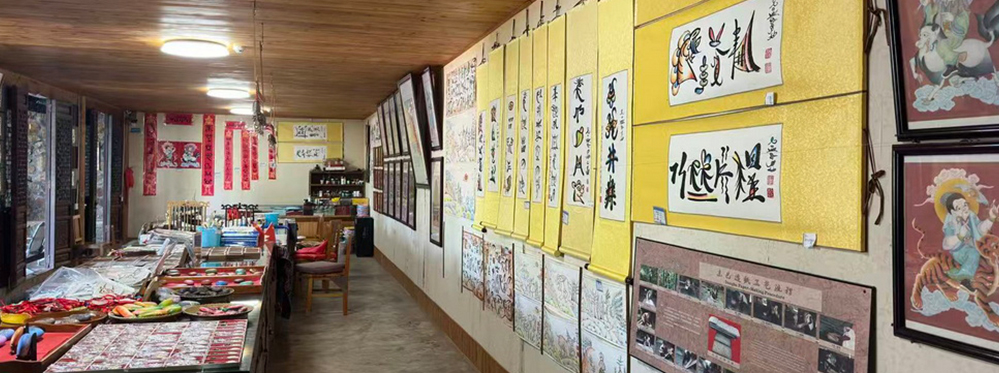
In the eastern Himalayas, Naxi priests known as dongba open manuscripts covered in pictographs that seem simple at first glance: a circle for the sun, a crescent for the moon, a stylized bird. But these figures are not illustrations. They work more like compressed ritual instructions. A single glyph can shift meaning depending on the symbols around it, the chant it accompanies, or even the time of year. What appears as a deer in one text might guide a soul through the afterlife in one village and mark a seasonal hunting restriction in another.
Learning to read this code takes decades, and not because the script is large. Apprentices copy the same characters while reciting verses with a master, until the shape of a sign, its tone, and its rhythm fuse into one memory. Later, when the priest sees that sign during a ceremony, he does not simply recall a definition. He reconstructs the original scene: the place where the glyph was first taught, the smell of the incense, the cadence of the elder’s voice. The symbols become triggers for a shared ritual memory that reaches back further than any individual’s lifespan.
This is why the dongba tradition cannot be preserved by photographing manuscripts alone. The pictographs rely on the Naxi language’s tonal contours and on local environmental clues—certain plants, river bends, star patterns—that are not written down. A priest must know which mountain pass appears in a creation story or which flower is offered to a specific spirit before the text makes sense. Deprived of that living context, the symbols go silent. With it, they become a readable message from ancestors who encoded their world long before the first written chronicles.
Ceremonies in the Mountain Air: Where Dongba Chants Still Call the Spirits
The first time I heard a Dongba chant, it rose from a stone courtyard in Yuhu village, threaded through juniper smoke and disappeared into the face of Jade Dragon Snow Mountain. The old priest, his robe patched with symbols I couldn't read, swayed as he recited—not for an audience, but for the sky itself.
These ceremonies don't follow a printed schedule. They happen when the barley needs blessing, when a child loses sleep for a week, when someone remembers a dead father's laugh. The chants, written in pictographs that look like dancing sticks and birds, carry names for spirits that live in specific winds, particular rock shadows. No two rituals sound exactly the same because the mountain air moves through the words.
Outsiders come looking for authenticity, but what they find is less tidy: a half-drunk assistant forgetting a line, a chicken wandering through the incense, a sudden gust scattering paper horses down the valley. The Dongba don't mind. They say the spirits are already listening, and the mountain air does half the chanting anyway.
Lijiang's Old Town as a Living Archive: Scripts on Stone, Paper, and Skin
Walking through Lijiang's Old Town, the usual distinctions between monument and document begin to blur. Stone bridges carry inscriptions that have survived floods and centuries, their carved characters softened by footfall but still legible to those who pause. Inside courtyard homes, paper scrolls hold family genealogies, contracts, and poetic exchanges, often stored in wooden chests that smell of camphor and dust. These are not museum pieces behind glass; they are touched, copied, and argued over. The town behaves less like a static heritage site and more like an archive that keeps adding layers.
The Naxi tradition of pictographic writing, known as Dongba, pushes this archival quality onto skin and bark. Ritual specialists once recorded divinations on cured animal hides, while paper manuscripts served as teaching aids for younger practitioners. Some of these scripts remain untranslated, not because the language is lost but because local lineages guard their meanings. A single hide may hold records of weather, trade disputes, and funeral rites, yet it is read only in specific contexts, often aloud and with gestures. Knowledge here is not fully extracted from its material; the skin or paper itself matters as much as the marks on it.
What makes Lijiang's archive unusual is that it is still being written. Stonecutters repair worn inscriptions, families commission new calligraphy for weddings, and Dongba scribes adapt old characters to describe modern events. The town's alleyways function like reading rooms where one can move from a Qing-dynasty stele to a shop ledger from the 1980s to a freshly carved signboard, all within a few steps. This living quality unsettles the idea of a fixed historical record. Instead, Lijiang offers a messy, ongoing conversation between stone, paper, and skin, each medium keeping time in its own way.
Young Naxi Reviving a Fading Tongue: From Village Classrooms to Digital Fonts
In the stone-paved lanes of Lijiang's old town, a handful of Naxi teenagers are doing something their grandparents never imagined: teaching their own language as if it were a secret worth keeping. They gather in a converted granary twice a week, using hand-painted flashcards of Dongba pictographs and improvised call-and-response games. There's no ministry mandate here, no glossy curriculum—just a borrowed whiteboard and the stubborn conviction that a tongue spoken by fewer than 300,000 people shouldn't quietly dissolve into Mandarin's shadow.
The real rebellion, though, happens on their phones. A loose network of young coders and calligraphers has spent the past two years reverse-engineering the Naxi script into digital form, building a font set that maps hundreds of ancient symbols onto modern keyboards. They've also launched a WeChat mini-program that turns everyday phrases into Dongba animations, letting village kids see their grandmother's proverbs light up a screen. One contributor, a 19-year-old from Baisha, taught himself Unicode fundamentals from YouTube tutorials after discovering that no existing standard could properly encode the ritual texts he'd grown up watching his uncle recite.
What drives them isn't nostalgia but a quiet defiance: the sense that a language belongs to the living, not museum plaques. They know the odds—urban migration, exam pressures, the sheer convenience of Chinese—but they're betting that small, stubborn acts of creation can outlast neglect. When a six-year-old in a mountain classroom traces the glyph for "star" with her finger on a tablet, and then runs outside to point at the actual sky, something clicks that no language policy could ever legislate.
Beyond the Tourist Trail: Sitting with a Dongba Master to Learn the Marks
The afternoon light slants through a cracked wooden lattice in a courtyard just beyond Lijiang's old town, and I'm sitting cross-legged on a low stool while a Dongba master drags a bamboo pen across rough mulberry paper. His hand moves without hesitation, turning a simple curve into a bird, a mountain, a sun with rays like bent reeds. He doesn't ask me to copy him yet. First, he points to each stroke and names the thing it once resembled—not as a lesson, but as a way of letting the marks settle into my eyes before my fingers try to repeat them.
When I finally pick up the pen, the ink bleeds unevenly under my pressure, and my first attempts look like clumsy scratches next to his fluid lines. He laughs, not unkindly, and takes my hand to slow the stroke, teaching me that the mark for "water" must ripple, not jerk. What surprises me most is how the script refuses to become a mere alphabet in my head. Each symbol keeps its own small story: the sign for "home" is a roof over a pig, he explains, because in the old Naxi houses, livestock lived below and people above. Learning becomes less about memorizing shapes and more about listening to the way a culture once saw its world.
Hours pass in that shaded corner, and by the time I stand up, my fingertips are stained black and the sheet in front of me holds a row of awkward but honest marks. The master rolls it up and hands it to me without ceremony, and I realize this sitting was never meant to produce a perfect copy. It was an invitation to sit quietly inside a living tradition—one that can't be photographed into understanding or rushed through on a day trip. Beyond the route most visitors walk, these marks have their own pace, and the only way to learn them is to stay long enough to let your hand be corrected, again and again, by someone who carries them in his bones.
FAQ
Unlike the monastic structure of Tibetan Buddhism, Dongba practice is rooted in animism and shamanistic rituals tied to specific mountains, springs, and village deities. The priests are usually part-time farmers or craftsmen, not celibate monks, and much of the knowledge passes orally within clans.
They occupy a strange middle ground. A single character can suggest a whole phrase or story, so two priests might read the same manuscript slightly differently depending on their training. That flexibility kept the tradition alive in isolated valleys but also makes translation tricky.
Small Naxi villages in the foothills, especially around Yuhu and Baisha, sometimes hold ceremonies for harvest, healing, or funerals during the lunar calendar. Ask a local guesthouse owner rather than a big tour desk; they often know which family has invited a priest that week.
There's a real race to record oral lineages. Some young Naxi are studying the script at institutes in Lijiang, but the deeper problem is losing the context: knowing the chants without the associated rites, herbal lore, and community obligations leaves the texts half-alive.
Yes, and it's one of the better ways to engage. Several cultural centers offer short workshops where a native speaker explains the logic behind the characters. The respectful approach is to treat them as living religious symbols rather than just decorative tattoos or logos.
Many assume Naxi culture is frozen in some ancient past, but it has always absorbed outside elements—Tibetan Buddhism, Han Confucian schooling, even modern tourism. The Dongba revival in Lijiang is partly young people reclaiming an identity their grandparents were pressured to hide, not a pure survival from centuries ago.
Skip the crowded old-town shops and head to Baisha in the morning for the murals, then drive up to Yuhu village to see Joseph Rock's old house and walk through barley fields where Dongba characters still appear on gateposts. End with a meal in a family-run courtyard rather than a themed restaurant.
Conclusion
Few writing systems feel as stubbornly alive as the Dongba script. While other ancient pictographs hardened into museum pieces, these symbols—part drawing, part riddle—still move through Naxi hands in and around Lijiang. A dongba priest does not simply read them; he listens for the older sound beneath each stroke, the way a farmer reads weather in cloud lines. Ceremonies often unfold in mountain air, where chants rise with incense smoke and the names of spirits are spoken in a language that predates written memory. Walk through Lijiang's old town and you'll find the script scratched into stone, brushed onto paper, even inked into leather—not as decoration for tourists, but as a working archive.
Younger Naxi are now pulling the language back from the edge, carrying it from village classrooms into digital fonts and phone keyboards. The shift is subtle but real: a script once reserved for ritual is becoming a daily act of identity. Yet the deepest lessons still happen away from crowded lanes. Sitting with a Dongba master, copying marks onto rough paper, you realize the characters are not just information—they are gestures, breath, and silence arranged in order. The master corrects your hand, not your meaning, because in this tradition the way a line bends matters as much as the word it forms. That quiet apprenticeship is where the culture refuses to become a postcard.
Contact Us
Contact Person: Changhong He
Email: [email protected]
Tel/WhatsApp: 086-0888-5190152
Website: https://vip.e-baixing.com/ysh