

China Air Damper Solutions for Optimizing Airflow and Energy Efficiency
2026-07-09
Behind every efficient HVAC system lies an unsung hero: the air damper. In China, where industrial scale and energy demands collide, optimizing airflow isn't just a technical detail—it's a strategic advantage. From pharmaceutical cleanrooms to sprawling commercial towers, the right damper solution can slash energy waste and fine-tune environmental control with surgical precision. But not all dampers are created equal, and that's where THT changes the game. What if your airflow management could adapt in real time, self-regulate, and cut costs without sacrificing performance? Let's explore the innovations reshaping China's approach to smarter, greener air distribution.
How Air Dampers Improve Ventilation Efficiency in Modern Buildings
At their core, air dampers act as adjustable gates within ductwork, giving building management precise command over airflow distribution. Rather than forcing a one-size-fits-all approach, dampers allow ventilation to be dialed back in unoccupied conference rooms or boosted in densely packed office areas. This targeted delivery prevents the common waste of conditioned air, ensuring that energy isn’t spent heating or cooling spaces that don’t need it. The result is a system that breathes with the building’s actual rhythm, not a fixed schedule.
Modern dampers often integrate with sensor networks and building automation, responding in real time to carbon dioxide levels, occupancy, or even outdoor air quality. For instance, when a meeting room fills up, sensors can trigger the damper to open wider, immediately ramping up fresh air intake. This dynamic reaction maintains indoor comfort without overventilating, slashing fan energy use and reducing strain on HVAC equipment. It’s a subtle but powerful shift from reactive to proactive climate control.
Beyond just saving energy, well-tuned dampers help maintain consistent pressure balances across a building’s zones. Without them, some areas might feel stuffy while others become drafty, causing occupants to tamper with thermostats or prop open doors—actions that sabotage efficiency. By keeping air where it’s needed and preventing uncontrolled leakage, dampers uphold both comfort and the intended performance of the ventilation design. In essence, they’re the silent coordinators that let fresh air reach every corner without waste.
Key Design Features That Enhance Performance and Longevity
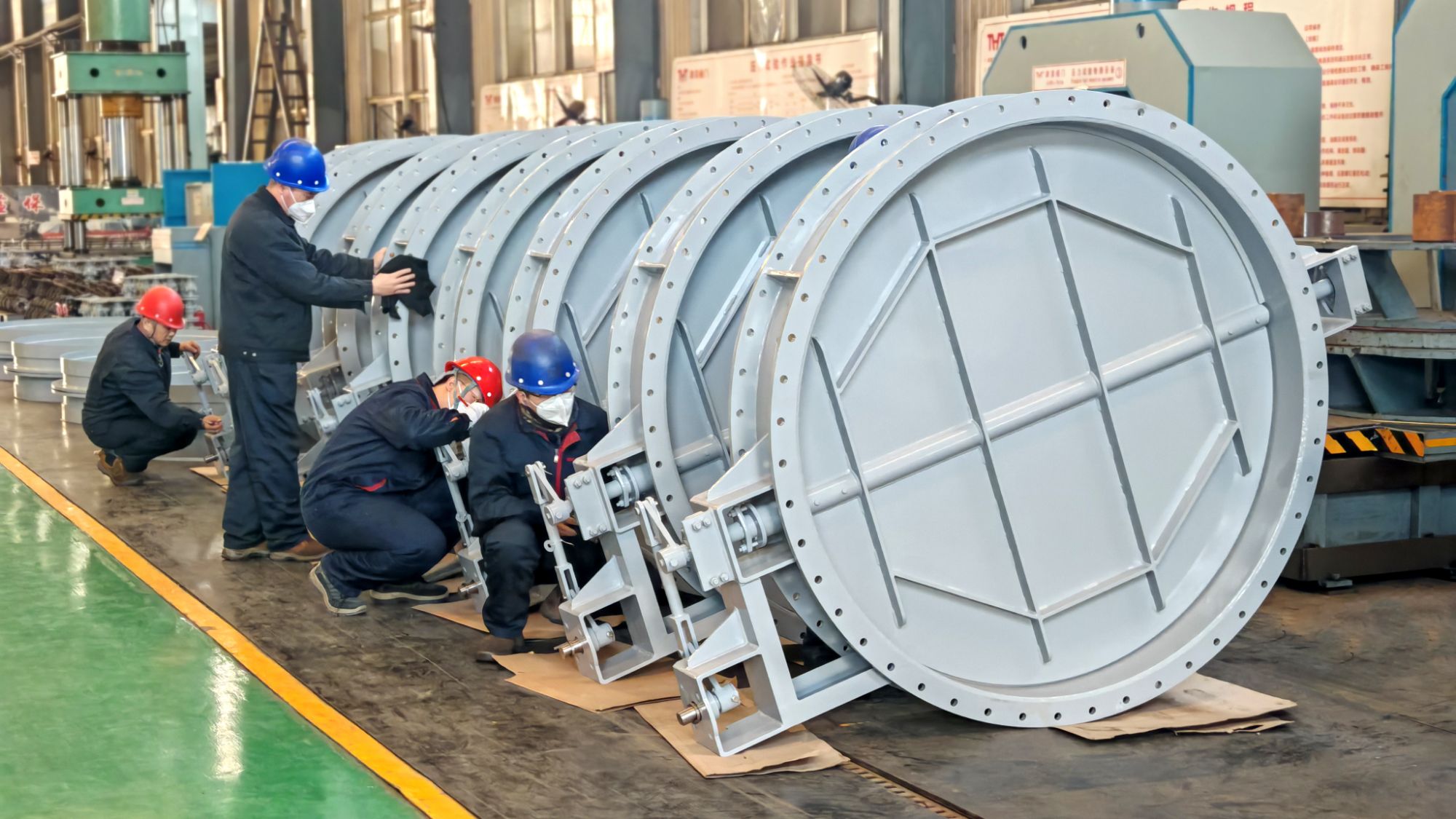
The way internal components are arranged and shielded directly impacts how well a device holds up under strain. Thoughtful partitioning of high-heat areas away from sensitive electronics curbs thermal runaway, while reinforced mounting points prevent microfractures from everyday vibrations. Even the choice of fasteners—like opting for locking thread designs over standard screws—can eliminate gradual loosening that leads to premature failure.
Materials aren’t just selected for cost or weight; they’re chosen for how they age. Engineers increasingly favor composites that resist galvanic corrosion when dissimilar metals meet, and surface treatments that shed moisture before it seeps into seams. Sealing rings with a memory effect, which return to their original shape after years of compression, keep out dust and damp far longer than conventional gaskets. It’s these subtle material pairings that separate a product that lasts a decade from one that degrades within months.
Intelligent pathing also plays an undervalued role. Rounded internal channels for airflow, rather than sharp right-angle bends, reduce hotspots without adding fan bulk. Embedded redundancy—like secondary signal traces that take over if primary ones corrode—ensures consistent function even in harsh environments. This kind of anticipatory design means the device doesn’t just survive peak loads; it maintains peak performance through them with minimal wear.
Adapting to Diverse Industrial Needs with Customizable Solutions
Industrial environments rarely fit into neat, pre-defined boxes. A production line in automotive manufacturing has fundamentally different requirements from a pharmaceutical cleanroom, and neither resembles the rugged demands of field-based operations in mining or energy. Off-the-shelf equipment often falls short, forcing teams to build clumsy workarounds or accept compromises that erode efficiency. Customizable solutions step into this gap by letting engineers tailor core functionality—whether it's material composition, sensor arrays, connection protocols, or even physical dimensions—to match the specific stressors and workflows of a given facility. This isn't about adding unnecessary complexity; it's about stripping away the generic assumptions baked into mass-produced tools so the final product genuinely serves its purpose from day one.
The real advantage of this adaptive approach emerges over time. As production goals shift, regulations evolve, or new technologies appear, a customizable platform can be reconfigured much more easily than a rigid, all-in-one system. For instance, a modular inspection unit might swap out a vision sensor for a thermal imager when detecting overheating components becomes a priority, without replacing the entire station. Maintenance teams can also benefit from designs that allow field-replaceable subassemblies, reducing downtime in remote locations. By treating the initial deployment not as a fixed endpoint but as a flexible starting point, companies avoid the costly cycle of full replacements and can extend the operational life of their capital investments in ways monolithic products seldom permit.
Beyond hardware adaptability, the integration of software and data handling often determines whether a solution truly fits. Many industries need to bridge legacy machinery with modern analytics platforms, requiring customizable communication translators that speak everything from decades-old serial protocols to contemporary IoT standards. Others require strict access controls and on-premises data processing to comply with confidentiality agreements or export control laws—something impossible with a generic cloud-dependent device. When a supplier offers genuine configurability across these layers, it shifts the conversation from "what does this machine do?" to "what do you need it to do in your unique ecosystem?" The result is a smoother collaboration that respects each facility's accumulated know-how and operational realities, rather than trying to force a square peg into a round hole.
Real-World Applications in HVAC Systems and Beyond
Temperature sensors are the unsung heroes of modern climate control, tirelessly monitoring and adjusting environments to maintain comfort and efficiency. In a typical commercial building, networks of sensors feed real-time data to the HVAC brain, enabling zoned cooling that slashes energy waste—think of a sun-drenched conference room getting extra airflow while an empty hallway idles. This isn't just about avoiding stuffiness; it's about slashing operational costs and meeting sustainability targets without occupants ever noticing the machinery humming behind the scenes.
Beyond climate control, these sensing technologies have found surprising footing in industries where precision is non-negotiable. Pharmaceutical storage, for example, relies on cascading sensor arrays to keep vaccines and biologics within a fraction of their safe temperature ranges—a single degree off could ruin millions in product. Even in agriculture, sensor-driven microclimate management is emerging, allowing vertical farms to tune their HVAC systems for optimal plant growth rates, turning warehouses into hyper-efficient year-round growing ops.
The real magic happens when sensor data gets untethered from the building itself. Fleet refrigeration units now upload temperature logs to cloud dashboards, alerting logistics managers the moment a reefer drifts out of spec and triggering corrective actions mid-route. It's a shift from reactive maintenance to predictive orchestration, where a simple sensor becomes the difference between a fresh delivery and a woeful insurance claim.
Achieving Energy Savings Through Precision Airflow Control
Precision airflow control eliminates the guesswork in managing cooling and ventilation systems. Instead of running fans at constant speeds or relying on broad temperature setpoints, sensors and adaptive controllers dynamically adjust airflow based on actual demand. In data centers, for instance, this means delivering cool air only where servers are generating heat, rather than flooding entire rooms. The result is a direct cut in fan energy, which can account for up to 30% of a facility's electrical load. Beyond the energy savings, components last longer when they aren't strained by unnecessary operation, reducing maintenance needs and downtime risks.
In commercial buildings, precision airflow tackles the common problem of over-ventilation. Many HVAC systems bring in more outside air than needed, which then must be heated or cooled to indoor comfort levels—a huge energy waste. By using CO2 sensors and intelligent dampers, airflow can be matched to occupancy levels in real time. A conference room that is empty most of the day doesn't need the same airflow as a packed lobby. Such adjustments happen automatically, often shaving 15-20% off heating and cooling bills without anyone noticing a difference in comfort. When scaled across a portfolio of buildings, the cumulative savings are substantial and contribute meaningfully to carbon reduction goals.
Quality Assurance and Compliance in Manufacturing
In the intricate world of manufacturing, quality assurance serves as the bedrock of operational integrity. It extends far beyond mere inspections; it's a holistic system designed to embed precision into every phase of production. From the meticulous calibration of machinery to the rigorous training of personnel, each element is aligned to minimize variability and prevent defects before they occur. This proactive approach ensures that the final product not only meets but often surpasses both internal benchmarks and customer expectations, fostering a culture where excellence is the standard, not the exception.
Compliance, on the other hand, weaves a complex tapestry of regulatory demands and industry standards that manufacturers must navigate. It covers a spectrum of obligations—from environmental protocols and safety regulations to ethical sourcing and data protection. Staying compliant is not a static achievement but a dynamic process that demands constant vigilance and adaptation. Companies that treat compliance as a strategic advantage embed it into their DNA, using it to build trust with stakeholders and preempt risks. This commitment transforms regulatory adherence from a burden into a distinctive capability that safeguards reputation and ensures long-term viability.
FAQ
Air dampers are mechanical components installed within ductwork to regulate, redirect, or completely stop airflow. In HVAC systems, they fine-tune air distribution by modulating volume, pressure, and direction. This precision ensures consistent indoor comfort, protects equipment from strain, and maintains fresh air circulation. Without them, balancing room temperatures and controlling ventilation would be impractical, leading to energy waste and uneven climates.
China has developed a robust industrial base for air dampers by merging advanced manufacturing with cost-effective production. Local providers often offer deep customization, from blade design to actuator integration, tailored to regional building codes and climate demands. Continuous investment in R&D has also led to innovative materials and smart control features, making Chinese solutions competitive for both domestic and international projects.
By adjusting damper positions, engineers can route conditioned air precisely where needed, reducing pressure imbalances and eliminating dead zones. Multi-zone applications benefit from staged airflow management—dampers can partially close in low-occupancy areas to boost supply elsewhere. This dynamic adjustment also supports demand-controlled ventilation, matching fresh air intake to occupancy levels without overworking fan systems.
A well-matched damper minimizes air leakage and system resistance, directly cutting fan power consumption. Low-torque designs with tight seals reduce energy lost through parasitic loads. When paired with variable air volume systems, dampers allow fans to slow down during partial loads, achieving significant savings. Over a building’s lifecycle, these incremental efficiency gains translate into noticeably lower utility bills and reduced carbon footprint.
Butterfly dampers are simple and cost-effective for basic open/close tasks in low-pressure ducts. Louver dampers, with multiple parallel blades, give smooth proportional control for air mixing boxes and VAV terminals. Guillotine dampers provide tight shut-off in industrial extraction or isolation scenarios. Backdraft dampers prevent reverse airflow in exhaust stacks, while combination smoke/fire dampers add a safety barrier in duct penetrations.
Start with the pressure class and face velocity your system operates at, because undersized dampers create noise and oversized ones waste space. Material compatibility matters—galvanized steel suits most comfort HVAC, while stainless steel resists corrosive kitchen exhaust. Actuator type (manual, electric, pneumatic) depends on whether you need basic balancing or automated modulation. Leakage ratings under AMCA standards should align with the energy goals of the facility, and fire-rated models must meet local life-safety codes.
Several firms are integrating IoT-ready sensors into damper assemblies, enabling real-time performance tracking across a building’s air network. Some have adopted low-emission seal materials and aerodynamic blade shapes that reduce noise while increasing flow measurement accuracy. In the realm of high-rise ventilation, proprietary pressure-relief mechanisms are now being used to prevent stack-effect issues, demonstrating a shift toward smarter, systems-oriented designs.
Conclusion
China's air damper solutions are engineered to elevate ventilation efficiency in modern buildings by enabling precise modulation of airflow. Through advanced design features such as blade aerodynamics and durable sealing, these dampers not only enhance performance but also ensure longevity under demanding conditions. Customizability is a cornerstone, allowing adaptation to diverse industrial needs—from HVAC retrofits to specialized cleanroom environments—where exact airflow control is critical. By integrating smart actuators and responsive control algorithms, these systems maintain optimal indoor air quality while minimizing energy consumption, a balance achieved by fine-tuning damper positions based on real-time demand.
In real-world applications, Chinese air dampers prove their value across HVAC systems, data centers, and industrial exhaust networks, seamlessly bridging comfort and functionality. The precision airflow control they offer translates directly into tangible energy savings, reducing operational costs and carbon footprints for facility managers. Underpinning this performance is a commitment to quality assurance and strict manufacturing compliance, with rigorous testing for leak rates, pressure resistance, and material integrity. As a result, these solutions not only meet but often exceed international standards, providing reliable, long-term operation that supports sustainable building practices without compromising on system responsiveness or user comfort.
Contact Us
Contact Person: Su Zhang
Email: [email protected]
Tel/WhatsApp: +86-25219206
Website: https://www.tht-valve.com/