

Best TECO Electromotor Options for Reliable Industrial Performance
2026-09-10
When a motor fails on a busy factory floor, every minute of downtime costs real money. That's why engineers keep coming back to TECO electromotors—they're built to shrug off heat, dust, and continuous duty cycles. But even the best motor needs the right sourcing partner. Soochee, a specialized supplier with deep TECO inventory and technical know-how, can help you match the exact frame size, efficiency class, and mounting to your application. In this post, we'll break down the top TECO options for rock-solid industrial performance.
TECO Motors in Wet, Dusty, or Corrosive Settings: What the IP Ratings Actually Guarantee
When a TECO motor carries an IP rating like IP55 or IP66, it is not a vague promise of toughness. The first digit after IP refers to solid particle protection, and the second to liquid ingress. For example, IP55 means the enclosure keeps out dust in amounts that would interfere with operation and resists low-pressure water jets from any direction. IP66 goes further, guarding against powerful water jets, which matters in washdown areas or heavy rain. In corrosive environments, though, the IP rating alone does not cover chemical resistance—TECO often pairs these ratings with epoxy paints, stainless steel shafts, or sealed bearings to handle salt spray or acidic fumes.
Dusty settings pose a different failure mode: fine particles can pack into cooling fins or block ventilation, causing heat buildup even if the windings stay clean. TECO motors with a 6 as the first digit, such as IP65 or IP66, are fully dust-tight, so internal components stay isolated. For wet or humid conditions, the second digit tells you how much water the motor can take before it becomes a hazard. An IP67 unit can survive temporary immersion, but continuous submersion is still outside its design envelope. Reading the rating correctly means understanding that it guarantees protection under specific test conditions—not every possible field scenario.
Right-Sizing Your TECO Motor: Avoiding the Hidden Costs of Overspecification
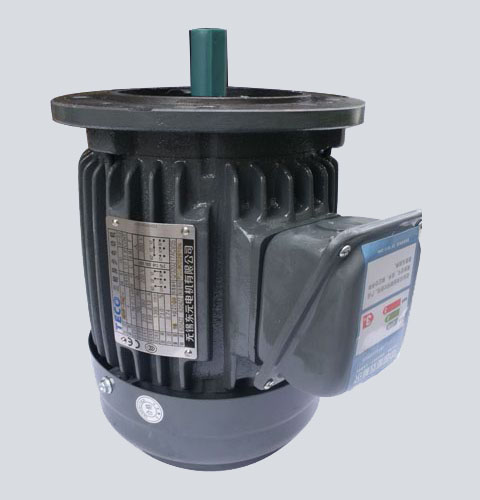
Choosing a TECO motor with more horsepower than the load requires might feel like a safety margin, but that cushion quietly drains money. The initial purchase price climbs with frame size, and so does the cost of the starter, wiring, and circuit protection. Oversized motors also tend to run at partial load, where efficiency and power factor drop off in ways that show up as higher energy bills month after month.
The operating penalty is easy to miss because the motor still turns the shaft without complaint. At 40–50% load, a motor that was efficient at full load can waste enough reactive power to trigger utility penalties or force unnecessary capacitor investments. Mechanical components may face added stress too, as larger rotors and fans carry more inertia, making every start a little harder on belts, couplings, and driven equipment.
Right-sizing starts with honest load calculations, not habit. Look at actual torque requirements, duty cycle, and peak demand rather than copying a previous spec. Field measurements or a quick review of process data often reveal that a smaller frame TECO motor will handle the job with better efficiency and lower total cost of ownership.
Insulation Class and Voltage Spikes: Why TECO's Winding Choices Matter for Uptime
TECO motors are wound with insulation systems that anticipate the harsh reality of drives-generated voltage spikes. Rather than treating insulation as a commodity layer, the winding choices focus on how materials behave under rapid voltage rise times. The magnet wire, slot liners, and phase separators are selected so their partial discharge inception voltage stays above the peak voltages seen at the motor terminals, even when cable lengths push spikes higher than the DC bus voltage.
This matters because once partial discharge starts, it erodes organic insulation quietly until a turn-to-turn fault takes the motor offline. TECO's approach pairs thicker corona-resistant wire coatings with slot fill techniques that reduce void content. That combination keeps electric field stress below the damage threshold under typical pulse-width modulated waveforms, adding real margin where standard windings would begin to degrade.
For plants that measure uptime in hours of production, the difference shows up as fewer random winding failures and less unplanned maintenance. The winding choice is not about meeting a minimum standard; it is about avoiding the cumulative damage that voltage spikes quietly cause over years of operation.
TECO's Built-in Thermal Protection: How It Prevents Burnout Before It Starts
TECO motors don't wait for heat to become a problem. Their built-in thermal protection acts like a silent watchdog, constantly monitoring the winding temperature as the motor runs. The moment things start getting too hot, the protection circuit steps in and cuts power before the insulation even has a chance to degrade. This isn't just about avoiding a sudden failure; it's about stopping the slow, invisible damage that repeated overheating causes over months of service.
What sets this apart is how seamlessly it integrates with the motor's own design. The thermal sensors are embedded directly into the stator windings, not tacked on as an afterthought. That means they're reading the actual temperature at the source of the heat, not somewhere downstream. When the threshold is reached, the system can either trigger an alarm for a controlled shutdown or, in many cases, automatically reset once the motor cools, so your line can get back up without manual intervention.
For anyone running pumps, fans, conveyors, or compressors, this protection means fewer surprises. Overloads, blocked airflow, voltage imbalances—all of these push a motor toward burnout, but with thermal protection already built in, TECO turns what could be a catastrophic failure into a brief pause. It's the difference between replacing a $50 sensor and replacing a $5,000 motor, and it's one less thing keeping you up at night.
Vibration and Noise Control in TECO Frames: A Practical Look at Bearing and Rotor Design
In most TECO frame motors, bearing selection sets the baseline for low-frequency vibration. A deep groove ball bearing with C3 clearance will tolerate thermal expansion, but it can also introduce audible rattle at the fan end if the housing fit is even slightly loose. Switching to a C0 or CM clearance and holding the shaft-to-housing interference between 0.005 mm and 0.012 mm cuts radial play without risking seizure during hot restarts. On the non-drive end, a wave washer preload dampens the micro-oscillations that would otherwise travel into the frame panels and show up as a low hum.
Rotor design matters just as much as bearing choice. A rotor balanced to ISO 21940 G2.5 at operating speed can still produce a tonal whine if its first bending critical speed lands too close to the running frequency. For TECO frames in the 132 to 280 size range, shortening the rotor and increasing its diameter raises that critical speed enough to create a safe margin. Pressing the end rings and then finish-machining them on the shaft improves concentricity and reduces residual unbalance. Adding a one-stator-slot-pitch skew to the rotor slots suppresses slot-pass harmonics that often line up with frame natural frequencies.
After assembly, a quick hammer test on the complete frame with the rotor installed reveals which panels are amplifying vibration. Sometimes a fan cover or terminal box resonates near twice line frequency, and tightening its bolts to a different torque pattern shifts the response enough to quiet it. In several drive-end bearing housings, adding ribs near the load path has proven more effective than thickening the entire frame wall. Ribs add stiffness exactly where the bearing transfers force, without the extra mass that would lower a panel's critical frequency and make things worse.
From Centrifugal Pumps to Conveyors: Matching TECO Torque Curves to Your Load
Every driven machine asks for a different kind of effort from its motor. A centrifugal pump starts with relatively low resistance, then builds demand as flow rate climbs. A conveyor, by contrast, often needs a solid breakaway jolt to overcome static friction before settling into a steadier pull. Trying to run both with the same motor characteristics rarely ends well. TECO's torque curves let you see exactly where the motor's available torque crosses the load's requirement at each speed—so instead of guessing, you can place that intersection where your process actually operates.
Look closely at the shape of the load curve. Pumps and fans follow a quadratic trend, light at low speed and steepening rapidly. Conveyors, crushers, and reciprocating compressors may start with a nearly flat or even spiked profile. Matching the motor's pull-up torque, breakdown torque, and full-load torque to those inflection points means the motor never stumbles during acceleration or gets trapped below its design speed. A TECO curve sheet gives you those numbers directly, without hiding them behind generic catalog ratings.
The payoff shows up in the field. A pump motor with a torque curve matched to the impeller's ramp avoids unnecessary heating during long starts. A conveyor motor with enough locked-rotor torque won't trip its overloads when material piles up on the belt. The goal isn't just any motor that spins—it's one whose torque signature fits the load's own rhythm, so the system starts cleanly, runs without sag, and survives the occasional overload without drama.
FAQ
The MAX-E1 series is a solid starting point for round-the-clock operation. Its NEMA Premium efficiency and reinforced bearing system reduce heat buildup and wear, so equipment like pumps and compressors keep running without frequent teardowns.
TECO builds many models with inverter-duty insulation, which handles the voltage spikes and harmonics that VFDs can produce. The MAX-E2 and E510 series, in particular, maintain stable torque at low speeds without overheating, even in demanding conveyor or fan applications.
Yes, the TECO MAX-PE series uses epoxy paint and sealed bearings to resist moisture and mild chemical exposure. For food processing or outdoor washdown areas, pairing these motors with stainless steel hardware and a drip cover gives you extra peace of mind.
Most current TECO three-phase models meet or exceed NEMA Premium efficiency standards. In real terms, that means less energy lost as heat and lower operating costs over the motor's life, especially on large horsepower units that run constantly.
Look beyond horsepower and check the motor's breakdown torque and service factor. TECO's severe duty series often provide higher starting torque, and matching the frame size to your load's peak demand prevents nuisance tripping and premature winding failure.
Not really. Standard practices apply: keep vents clear, check bearing grease intervals, and inspect alignment yearly. One thing that helps is TECO's widely available replacement parts, so you can swap bearings or caps without waiting weeks.
Many TECO designs include a Class F insulation system with a Class B temperature rise, which gives extra thermal margin when voltage is slightly unbalanced. For larger imbalances, you still need correction, but the motor won't fail at the first sign of trouble.
TECO strikes a balance between upfront cost and long-term reliability. Their motors often include features like regreaseable bearings and cast-iron frames as standard, while some competitors treat those as add-ons, which matters when budgets are tight and downtime is not an option.
Conclusion
A TECO motor that survives a cement plant's dust or a wastewater facility's humidity isn't picked by accident. The IP enclosure rating tells you exactly what the frame can keep out, but too many buyers stop at the first two digits without matching them to the actual contaminant. For wet or corrosive washdown areas, an IP55 or IP56 housing paired with epoxy-coated windings makes more sense than a generic open drip-proof unit. Oversizing to 'be safe' adds cost, wastes energy, and can push the motor out of its optimal load band, so match nameplate horsepower to the driven equipment instead of guessing high. On the electrical side, inverter-duty insulation matters because modern drives create voltage spikes that older Class B windings won't tolerate. Choose TECO designs with Class F insulation and a 155°C thermal margin, and look for embedded thermistors or PTC sensors that trip the control circuit before winding temperature reaches burnout. That protection is not a luxury add-on; it is what separates a one-shift motor from one that runs three shifts without attention.
Mechanical quietness and bearing life come down to frame stiffness, rotor balance, and how the motor handles the load's radial and axial forces. In TECO's cast-iron frames, tighter bearing fits and precision-machined end bells keep vibration below what you would feel in the mounting base, which means less wear on seals and couplings. For high-inertia loads or frequent starts, check the speed-torque curve rather than the nominal kW rating: a centrifugal pump needs a different torque profile at startup than a belt conveyor, and choosing a design with the right locked-rotor and pull-up torque prevents stalling or belt slip. Matching that curve to the driven machine also avoids nuisance trips and unnecessary soft-start equipment. Taken together, the most reliable TECO option is rarely the most expensive on paper. It is the one where enclosure, insulation, thermal trip points, bearing arrangement, and torque behavior all line up with the actual operating conditions—not with assumptions from a datasheet.
Contact Us
Contact Person: Jenny Jaa
Email: [email protected]
Tel/WhatsApp: 0086 152 9510 6006
Website: https://www.china-motor-supplier.com