

Best Metal Shredder for Heavy-Duty Scrap Metal Recycling
2026-10-05
When scrap metal piles up faster than your current machine can chew through it, the search for a reliable heavy-duty shredder stops being optional. The right equipment doesn’t just reduce volume—it protects your throughput, cuts downtime, and turns stubborn steel into manageable, sellable fractions. That’s where Shengzhong Shredder earns its place on the shortlist. Built for high-torque, continuous processing of dense scrap, it handles everything from sheet metal and radiators to aluminum castings and mixed ferrous loads without flinching. In this guide, we’re breaking down what actually makes a metal shredder “best” for heavy-duty recycling—so you can skip the marketing noise and invest in a machine that keeps up when the feed never stops.
What Actually Happens Inside a Heavy-Duty Metal Shredder
Once the scrap clears the feed throat, it drops into a chamber dominated by rows of hardened steel hammers mounted on a spinning rotor. Those hammers don’t cut so much as bludgeon and rip. A car door or refrigerator panel gets hit hundreds of times per second, each blow peeling away strips of metal, fracturing cast components, and sending a spray of sparks across the liners. The chamber walls themselves are lined with replaceable wear plates, and the clearance between hammer tip and anvil is often just a few inches—tight enough that material cannot simply ride around untouched.
As the shredded fragments tumble through the machine, they pass over a grate or screen at the bottom. Anything small enough falls through and moves on to magnetic separation, while larger chunks are kicked back up into the hammer path for another round of abuse. This recirculation is not random; it’s driven by rotor speed and the geometry of the deflectors. By the time a piece finally exits, it may have been struck dozens of times, which is why the output is oddly uniform despite the chaos inside.
Matching Shredder Power to Your Scrap Stream
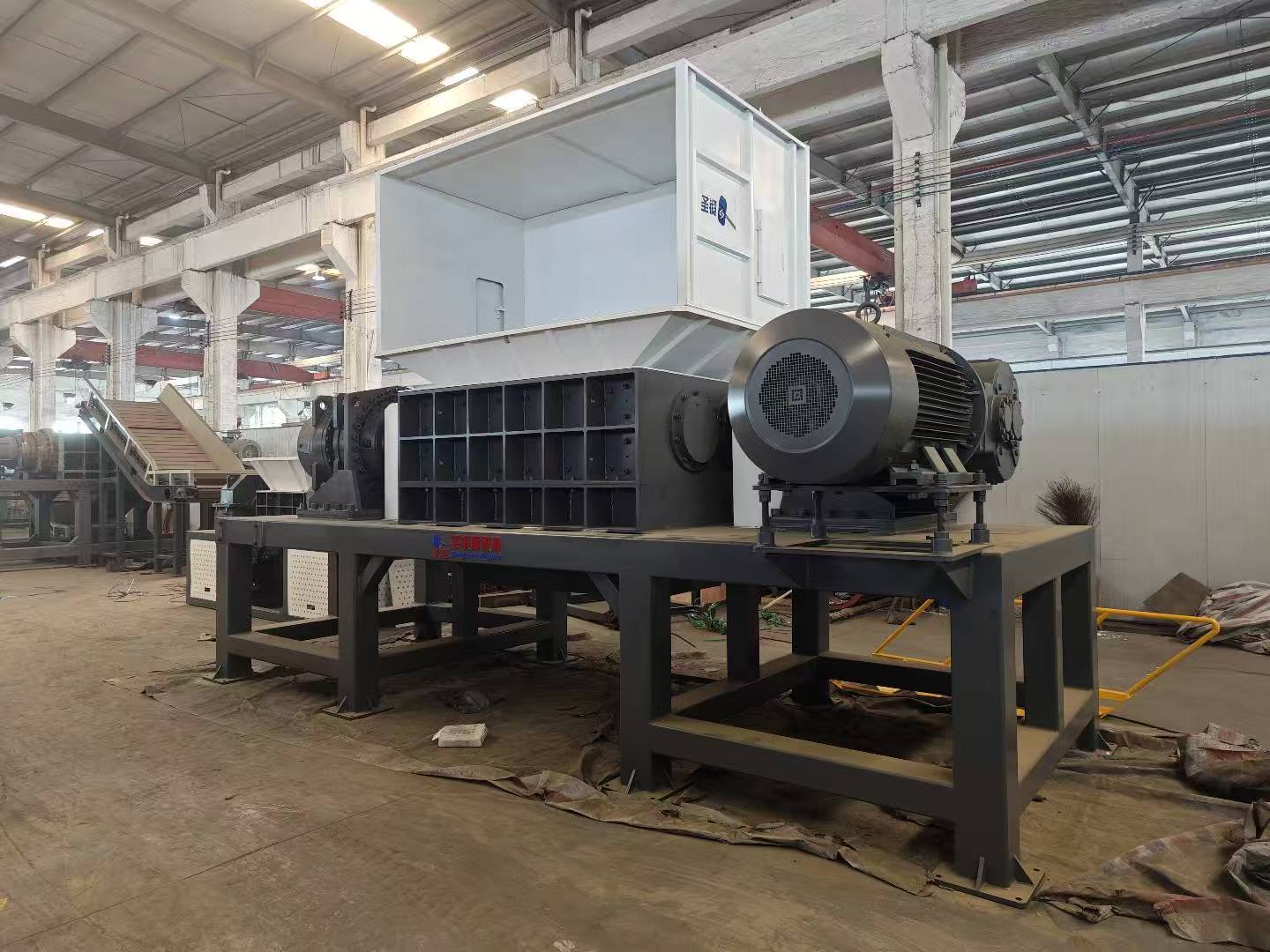
Getting the horsepower right on a shredder isn't about buying the biggest motor you can afford. It comes down to what's actually rolling across your floor. Light, fluffy materials like plastic film or aluminum cans need far less torque than dense steel turnings or tangled copper wire. Undersized power means constant jams, stalled rotors, and operators forced to meter feed by hand. Oversized power just wastes electricity, chews through gearboxes, and often turns bulky scrap into dust you didn't want.
The real trick is to map your scrap stream before you spec the drive. Look at the hardest item you'll ever feed, not the average. A shredder that handles ninety percent of your volume perfectly will still choke on the occasional cast iron elbow or solid shaft if the motor can't spike torque when needed. Also consider feed rate: a fast conveyor dumping material nonstop requires more sustained power than a batch loader. Soft rubber and thick-walled HDPE behave completely differently under the knives, and mixed loads with abrasive grit will drag down any motor that's already near its limit.
A good starting point is to ask your supplier for a demo with a representative sample of your own scrap. Run it for a full shift, note the amperage draw, and watch for heat buildup. If the motor rarely exceeds seventy percent load, you could downsize or speed up the rotor. If it's constantly cycling near its peak, you need more headroom or a variable frequency drive to widen the torque band. The goal is a shredder that eats whatever you throw at it without drama, not one that wins a spec sheet contest.
Blade Steels That Survive Mixed Metals
Mixing metals in a knife can be a recipe for corrosion, but certain blade steels shrug off the challenge. When a blade sits in a pocket next to copper coins, aluminum tools, or stainless fixtures, galvanic reactions can attack weaker alloys. Steels with high chromium and molybdenum content form a passive oxide layer that resists electron transfer, keeping the edge intact even in damp, salty environments. This is why alloys like LC200N and Vanax SuperClean are favored by saltwater anglers and emergency responders who carry multiple metal objects daily.
Not all stainless steels handle mixed metal contact equally. Budget grades such as 420HC or AUS-8 may stain or pit when pressed against brass or nickel silver bolsters, especially after sweat exposure. The real differentiator is the steel’s pitting resistance equivalent number, or PREN, which accounts for chromium, molybdenum, and nitrogen. A PREN above 25 generally indicates a blade that can survive prolonged contact with dissimilar metals without developing rust freckles or edge degradation.
Heat treatment and surface finish also influence mixed metal survival. A well-tempered blade with a satin or stonewashed finish offers fewer microscopic crevices for galvanic corrosion to start. Users who frequently carry knives alongside keys, flashlights, or multitools should look for nitrogen-enriched powder metallurgy steels. These modern compositions maintain high hardness while delivering the chemical stability needed to coexist with a pocket full of mixed metals.
Hidden Costs of Cheap Shredders
A low sticker price rarely tells the whole story with shredders. The blades on budget models dull fast, especially if you feed them anything beyond plain paper. Once that happens, you’re stopping every few sheets to reverse a jam or pull out half-cut strips, and a five-minute cleanup can stretch into twenty. The motor often overheats after a short run, so you end up working in annoying bursts instead of clearing a stack in one go.
Then there’s the replacement math. Sharpening or swapping blades on a cheap unit usually isn’t worth it, so you buy another shredder within a year or two—spending more than a decent mid-range model would have cost upfront. The cut quality also drops off, leaving larger pieces that a determined person could reassemble, which defeats the purpose of shredding sensitive paperwork in the first place.
Torque vs. Speed: Which One Matters for Scrap Metal
Ask any yard operator what separates a machine that chews through engine blocks from one that stalls on sheet steel, and they'll point to the torque curve long before they mention top speed. Scrap metal isn't uniform—it's a mix of thick cast iron, thin aluminum, tangled copper wire, and the occasional surprise like a buried axle. High RPM looks impressive on a spec sheet, but it doesn't help when a chunk of dense metal resists the initial bite. That's where low-end torque does the real work, letting the rotors dig in, maintain pressure, and tear material apart without bogging down.
Speed still has a role, just not the one most buyers assume. Once the metal is caught and fractured, faster rotor movement clears the chamber quicker and keeps throughput high on light, consistent feedstock. The problem is that speed without adequate torque turns into a liability—blades glaze over, flywheels lose momentum, and energy gets wasted as heat instead of cutting force. For mixed scrap yards that never know what's coming down the line, a machine biased toward torque with enough speed to stay productive will rarely disappoint. Chasing peak RPM alone usually means a lot of downtime and a pile of half-chewed metal.
Maintenance Routines That Add Years to a Shredder
Most shredders die young because they get ignored between uses. A quick pass with shredder oil every time you empty the bin—or at least once a month for light use—keeps the cutting heads from gumming up with paper dust and adhesive residue. Run the reverse function for ten seconds after oiling, then shred a plain sheet to soak up the excess.
Heat is the other quiet killer. Give the motor a cool-down break after long runs, and don't feed more sheets than the listed capacity just to save time. Pull out anything that isn't paper—staples, credit cards, plastic windows—unless the manual explicitly says the model can handle them. Clearing the teeth with a small brush every few weeks also prevents the sensor from misreading a jam and forcing an early shutdown.
FAQ
The core difference comes down to the drive system and rotor construction. Heavy-duty units use a low-speed, high-torque gearbox that can bite through thick steel without stalling, while standard machines often rely on speed to tear material. Look for a solid one-piece rotor or a segmented rotor with replaceable teeth, plus reinforced chamber walls. If the manufacturer doesn't openly list the maximum material thickness and torque rating, that's usually a sign it's not built for relentless scrap work.
Start by sorting your feedstock into rough categories: thin sheet, heavy structural steel, aluminum, and occasional white goods. A machine optimized for one type will wear unevenly on another. For mixed streams, choose a shredder with adjustable cutters and a reversible rotor so you can work through tough spots. Pay more attention to the throat opening and the discharge sizing screen than to the marketing horsepower. Real throughput drops quickly when you feed material that doesn't fit the chamber cleanly.
Daily visual checks of the hammers or teeth, plus a weekly torque check on the rotor bolts, prevent most catastrophic failures. Keep the hydraulic system clean and monitor oil temperature because heat is the silent killer of shredder gearboxes. Replace worn liners before the chamber walls get exposed. Many operators ignore the infeed conveyor alignment, which causes uneven loading and premature bearing wear. A simple log of vibration readings will tell you more about rotor balance than any manual.
Yes, but only if it has a variable-speed drive and properly gapped cutters. Ferrous scrap tends to be tougher and benefits from higher torque at lower speed, while aluminum and copper are softer and can be processed faster. The machine needs a quick way to adjust the sizing screen, because non-ferrous metals produce more fines when shredded too aggressively. If your operation processes large volumes of both, a shredder with a dual-motor setup and independent rotor control gives you the flexibility without sacrificing throughput.
Forget generic lockout/tagout checkboxes—every machine has those. Look for a hydraulic ram that automatically stops and reverses when it senses an overload, not just a warning light. A closed-loop cooling system for the gearbox is essential to prevent fires when processing oily scrap. The discharge area should have a sealed conveyor to contain flying metal fragments, and the control panel needs an e-stop within arm's reach of the operator station, not mounted on the far side of the frame. Also ask about a maintenance mode that disables all power to the rotor before anyone opens the chamber.
The key is torque density, not just total horsepower. A machine with a high-speed, low-torque motor can shred thin sheet metal all day but will stall when a solid axle or thick plate enters. Heavy-duty scrap requires a low-speed gearbox that multiplies torque, often with a flywheel to smooth out shock loads. The rotor's moment of inertia also matters: a heavier rotor stores energy and powers through dense material. If the specs list horsepower but no torque curve or rotor weight, don't assume it will handle your toughest feedstock.
They focus on the purchase price and ignore the cost of wear parts over five years. A cheap shredder with non-standard cutters will eat your profit in replacements. Another mistake is choosing a machine based on a single material type and then expanding into different scrap without testing. Some buyers also underestimate the foundation and power requirements—these units need a reinforced concrete pad and a dedicated high-voltage feed, not a standard workshop circuit. Finally, skipping a trial run with your own scrap is the fastest way to end up with an expensive anchor.
Conclusion
Inside a heavy-duty metal shredder, the process is far more violent and precise than most people imagine. Mixed scrap—everything from crushed car bodies to tangled sheet metal and thick structural steel—gets pulled into a chamber where massive hammers or interlocking blades tear, shear, and fracture the material into fist-sized chunks. The real challenge isn't just chewing through steel; it's doing so without sending a single piece of tramp metal through the wrong way. That's why the best machines for heavy-duty recycling are built around a torque-dense drive train. High-torque, low-speed shredders handle bulky, odd-shaped scrap without stalling, while high-speed units make sense only for thin, uniform sheet. If your scrap stream varies day to day, you need a shredder that can adapt its power curve to the load, not the other way around. Blade material matters just as much, since mixed metals will chew through ordinary tool steel in weeks. Look for blades made from proprietary alloys with deep hardening and the ability to shed impacts without chipping—anything less turns into a recurring replacement bill.
Cheap shredders hide their flaws until the first major breakdown. Thin frames flex under load, bearings fail early, and the blades dull faster because the metallurgy wasn't designed for abrasive, mixed scrap. The purchase price looks good until you factor in downtime, replacement parts, and the labor to swap blades every few hundred hours. A genuinely heavy-duty shredder should have a maintenance routine that's boring—grease points you can reach without disassembly, reversible blades, and wear liners that can be replaced in an afternoon. Torque and speed settings also need to be matched to the material, not just set to the maximum. Run too fast on thick steel and you'll glaze the cutting edges; run too slow on light scrap and you waste energy. The best machines earn their keep by surviving years of mixed metal abuse with nothing more than routine blade rotation and the occasional liner swap. When you're shopping for a shredder, ask what the second owner will pay for it—that tells you more than any spec sheet.
Contact Us
Contact Person: Leon
Email: [email protected]
Tel/WhatsApp: 8615385558866
Website: https://www.shred-waste.com